Am I a Good Invisalign Candidate?
If you’ve been thinking about straightening your teeth, you’ve almost certainly come across Invisalign. It’s the most widely used clear aligner system in the world, and for good reason – it’s discreet, removable, and produces genuinely impressive results for a wide range of cases. But one of the first questions people ask is whether they’re a good Invisalign candidate, or whether they are suitable for any other clear aligner systems.
The honest answer is that most adults and older teenagers make a good Invisalign candidate. The treatment has advanced enormously over the past decade, and cases that once required fixed braces can now often be treated with aligners. That said, suitability does depend on a number of factors, and a proper clinical assessment is always the starting point.
Here’s what we consider when assessing whether you’re an Invisalign candidate at The Briars.
Invisalign is highly effective for a broad range of alignment issues – crowding, spacing, mild to moderate overbites and underbites, crossbites, and open bites. In skilled hands, it can also manage more complex movements that many people assume require fixed braces.
At The Briars, Invisalign treatment is led by Victoria Holden, a Platinum Invisalign provider with over ten years’ experience. That level of clinical expertise matters when it comes to assessing more complex cases, because experienced providers can often achieve results with clear aligners that a less experienced clinician might refer to fixed braces. Complexity alone is rarely a reason to rule out Invisalign candidacy without a proper consultation.
Where fixed braces are genuinely more appropriate – for example, in cases requiring very precise torque control or significant vertical movement – we’ll tell you that honestly. Our goal is always the right outcome, not the most convenient one.
To be a suitable Invisalign candidate, your gums and the supporting bone around your teeth need to be in good health before treatment begins. Active gum disease, significant bone loss, or untreated decay can all affect how teeth respond to orthodontic movement and increase the risk of complications.
This is why your assessment at The Briars doesn’t start and end with whether your teeth are straight. We look at the full picture. If gum disease is present, we have Sharmila Khopade, our specialist periodontist, in-house – which means any periodontal treatment needed before your aligners begin can happen at the same practice, without the disruption of being referred elsewhere.
Invisalign is designed for adult teeth. For younger teenagers, Invisalign offers a specific Teen product, but treatment is generally most appropriate once the adult dentition is fully established. For children with primary or mixed dentition, orthodontic treatment typically takes a different form.
If you’re considering Invisalign for a younger family member, a consultation will help establish whether the timing is right or whether it’s better to wait.
This is worth being straightforward about. Invisalign works because the aligners apply continuous, controlled pressure to your teeth – and that only happens if they’re being worn. The general guideline is 20 to 22 hours per day, removing them only to eat, drink anything other than water, and clean your teeth.
Being an Invisalign candidate isn’t just about clinical suitability; it’s about lifestyle fit too. If you know you’d struggle to wear the aligners consistently, or if there are situations where compliance would be very difficult, it’s worth discussing this at your consultation. There’s no judgement – it simply helps ensure you get the best possible outcome.
The British Orthodontic Society has useful guidance on clear aligner treatment and what to expect, which is worth a read if you’re weighing up your options.
There’s no upper age limit for being an Invisalign candidate. Adults of all ages straighten their teeth with Invisalign, and it’s increasingly popular amongst people in their 40s, 50s, and beyond who perhaps didn’t have access to this kind of treatment when they were younger, or who have seen their teeth shift over time.
The main consideration for older patients is gum and bone health, as mentioned above – but with a thorough assessment, age alone is rarely a barrier.
If you’ve had orthodontic treatment before and your teeth have since moved – a very common situation if retainers weren’t worn consistently – Invisalign can often be used to realign them. In some cases, this is a relatively straightforward short course of treatment. In others, a more comprehensive plan may be needed.
If you had treatment as a teenager and have noticed gradual shifting over the years, you’re likely still a strong Invisalign candidate. A scan and consultation will give you a clear picture.
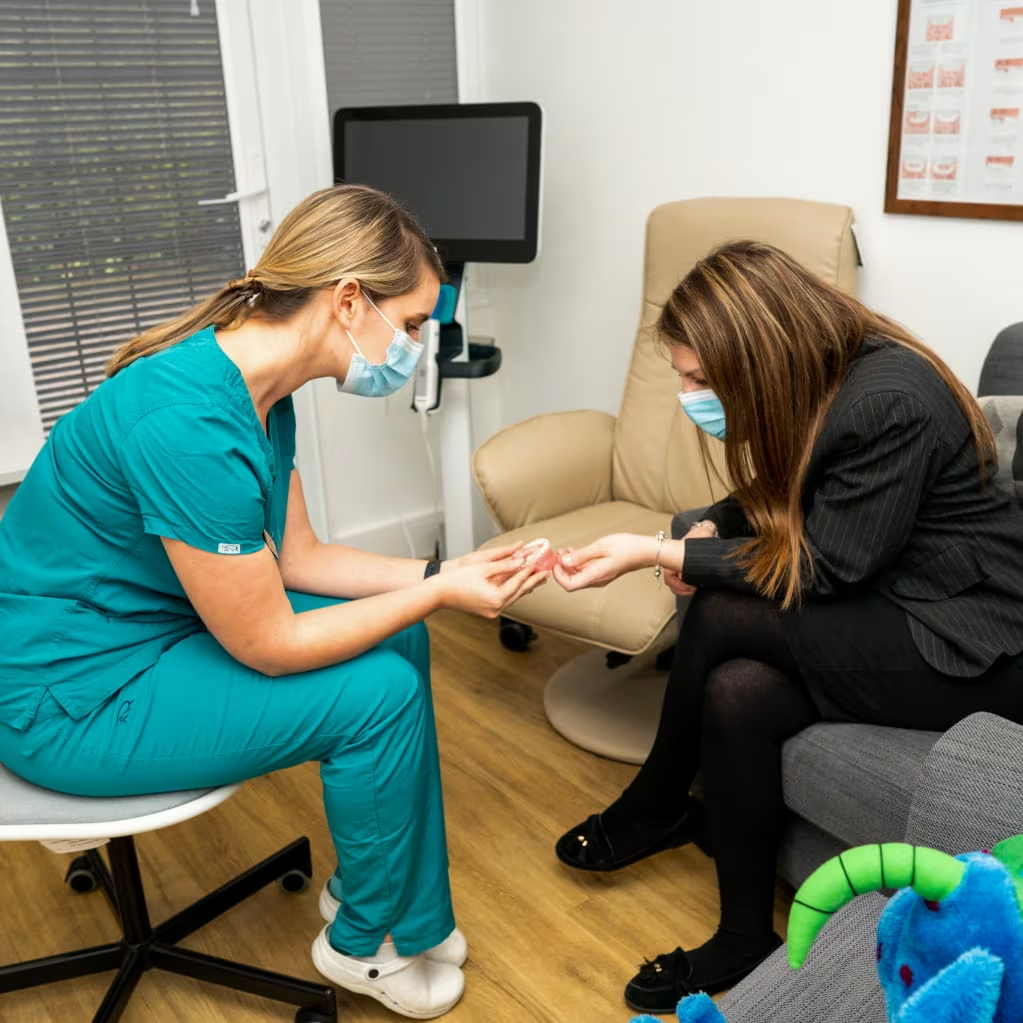
All new patients are invited to meet with our Treatment Coordinator before any clinical assessment begins. This is a free, unhurried appointment where you can talk through your concerns, ask questions, and get a sense of whether The Briars is the right fit for you – with no obligation to proceed.
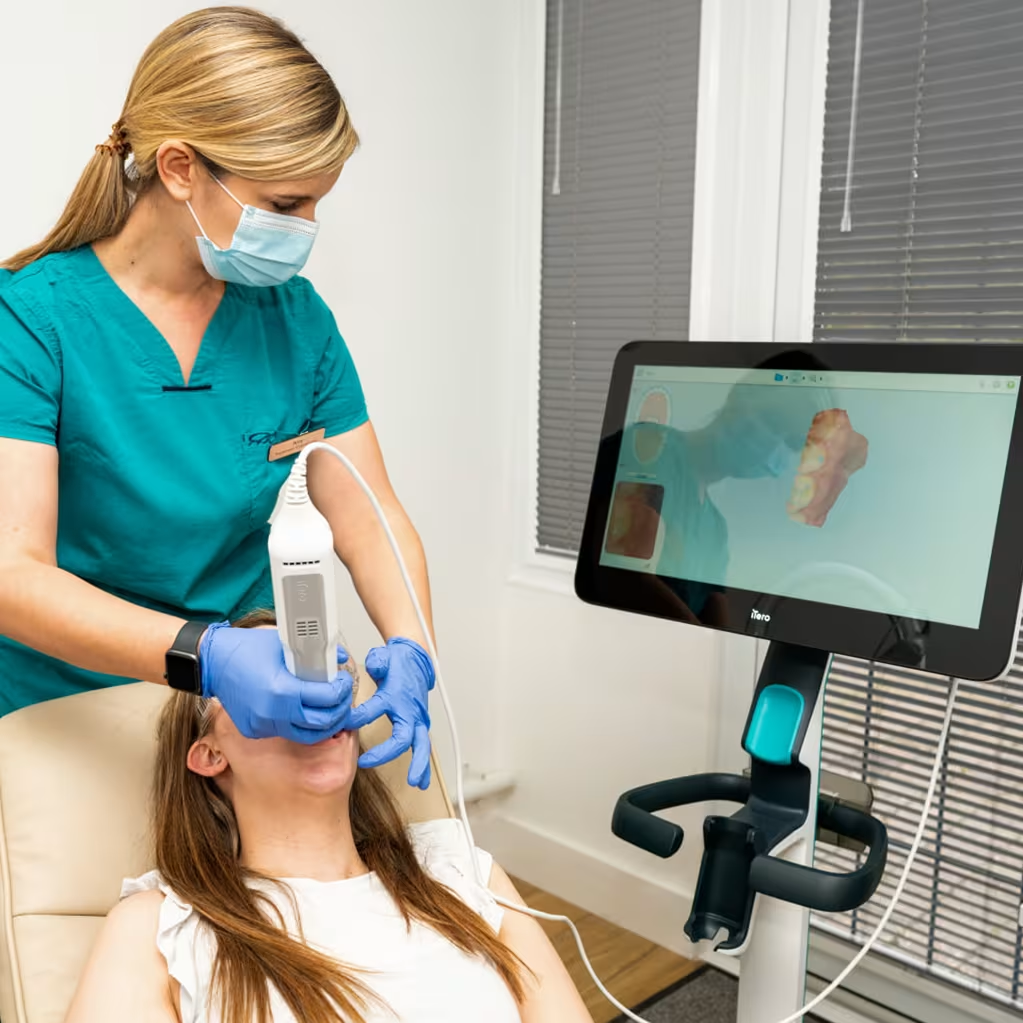
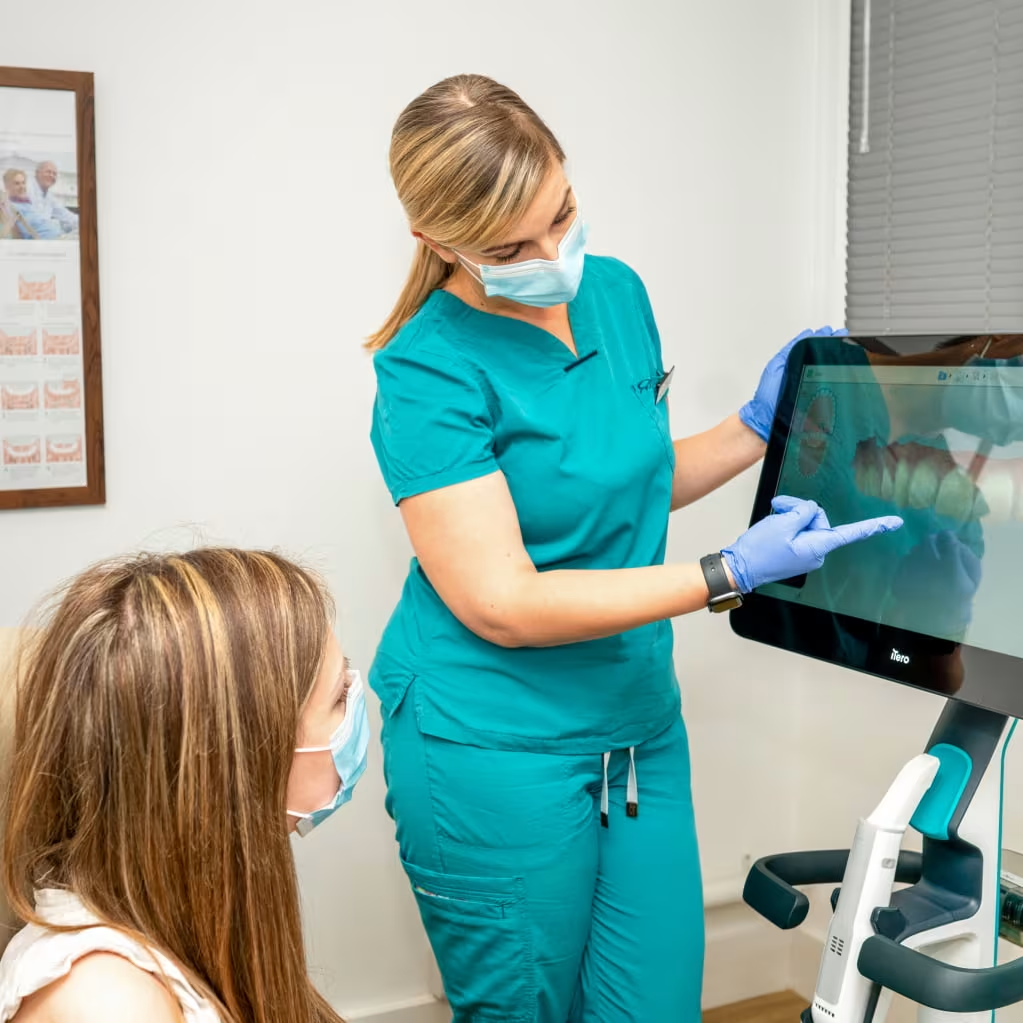
From there, if you’re a suitable candidate, a consultation is arranged with Victoria, and digital planning can begin. Treatment length varies depending on complexity, but many cases are completed within 12 to 18 months.
We also offer ClearCorrect as an alternative aligner system for cases where it’s clinically the better fit. Which system is recommended is always a clinical decision made by Victoria based on your specific needs – not a patient preference or a cost-cutting measure. Both systems are capable of excellent results in the right hands and the right cases.
The only way to know for certain is to have a proper assessment. Online quizzes and checklists – including this article – can give you a useful starting point, but they can’t replace a clinical examination, a full set of records, and the judgment of an experienced clinician.
If you’re curious about whether Invisalign or ClearCorrect could work for you, the best next step is to book a consultation with our Treatment Coordinator. It’s free, there’s no pressure to commit, and you’ll leave with a much clearer picture of your options – a full circle answer to the question – am I an Invisalign candidate?
You can find out more about Invisalign on the Invisalign UK website, or get in touch with our team to arrange your consultation at The Briars.
Back to blog