Clear aligners have become one of the most popular ways to straighten teeth, and it’s easy to see why. Discreet, removable, and increasingly capable of treating a wide range of orthodontic issues, they offer a lifestyle-friendly alternative to fixed braces that appeals to adults and teenagers alike. But are clear aligners right for everyone?
The honest answer is: not always — and a practice that tells you otherwise isn’t doing you any favours.
At The Briars Dental Centre, our clear aligner services are led by Victoria Holden, a Platinum Invisalign provider with over ten years of experience in clear aligner treatment. That depth of expertise means we can give you a genuinely informed answer, rather than a sales pitch. We offer both Invisalign and ClearCorrect (from the Straumann Group) — two of the world’s leading aligner systems — which gives us the flexibility to match the right system to the right patient, rather than fitting you around what we have available.
So what actually determines whether clear aligners are suitable for you? Here are the seven factors that matter most.
Clear aligners can treat a wide variety of conditions — and the range of what’s achievable has expanded significantly with advances in planning technology and aligner materials.
Mild to moderate crowding, spacing, and tooth rotations are well within the capability of modern aligner systems. Overbites, underbites, crossbites, and even some open bites can also be treated with aligners, depending on their severity. ClearCorrect, backed by Straumann’s engineering, is specifically designed to handle both simple and more complex presentations, with its ClearQuartz tri-layer material engineered to maintain consistent force throughout the wear period — something that matters considerably in more involved cases.
That said, there are situations where fixed braces remain the more predictable option, or where orthodontic treatment needs to be combined with other specialist input. Severe skeletal discrepancies — where the issue lies in jaw position rather than tooth position alone — may require a surgical or combined approach that aligners cannot address independently.
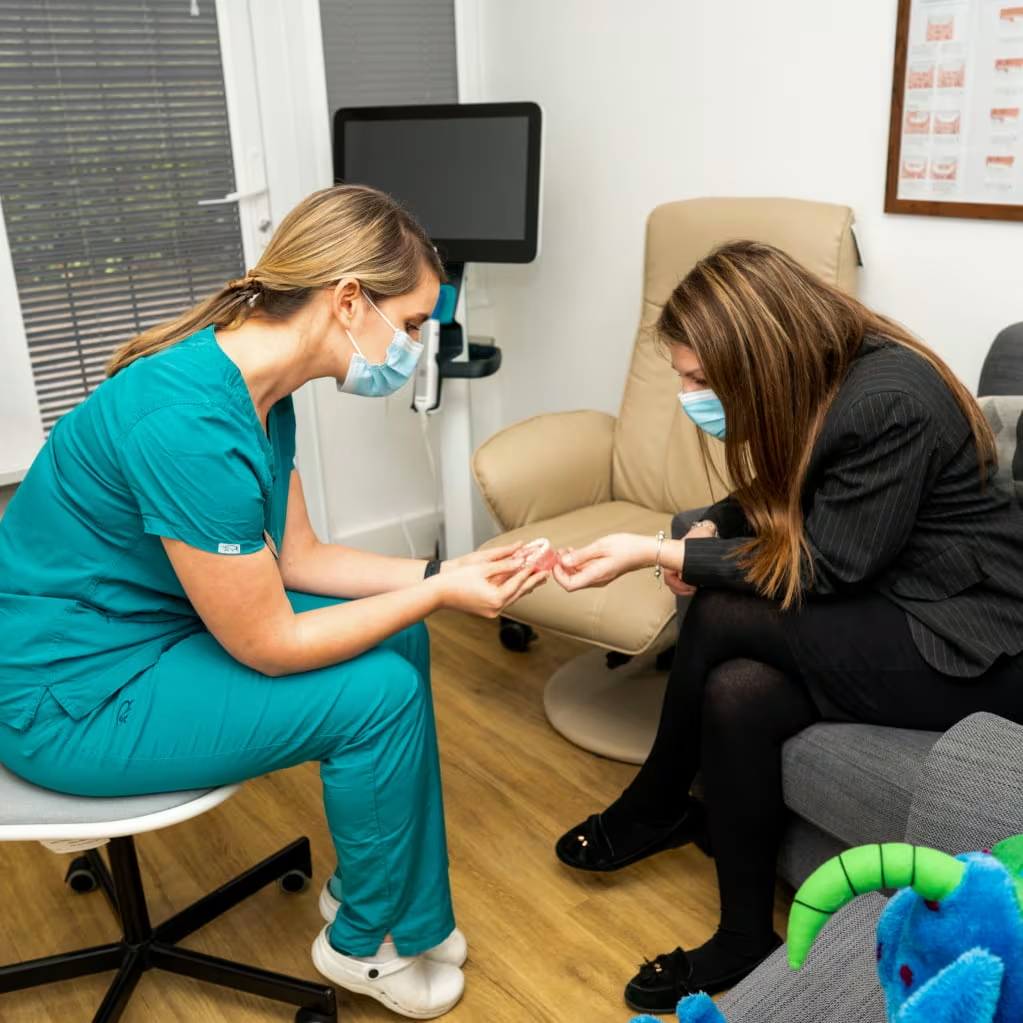
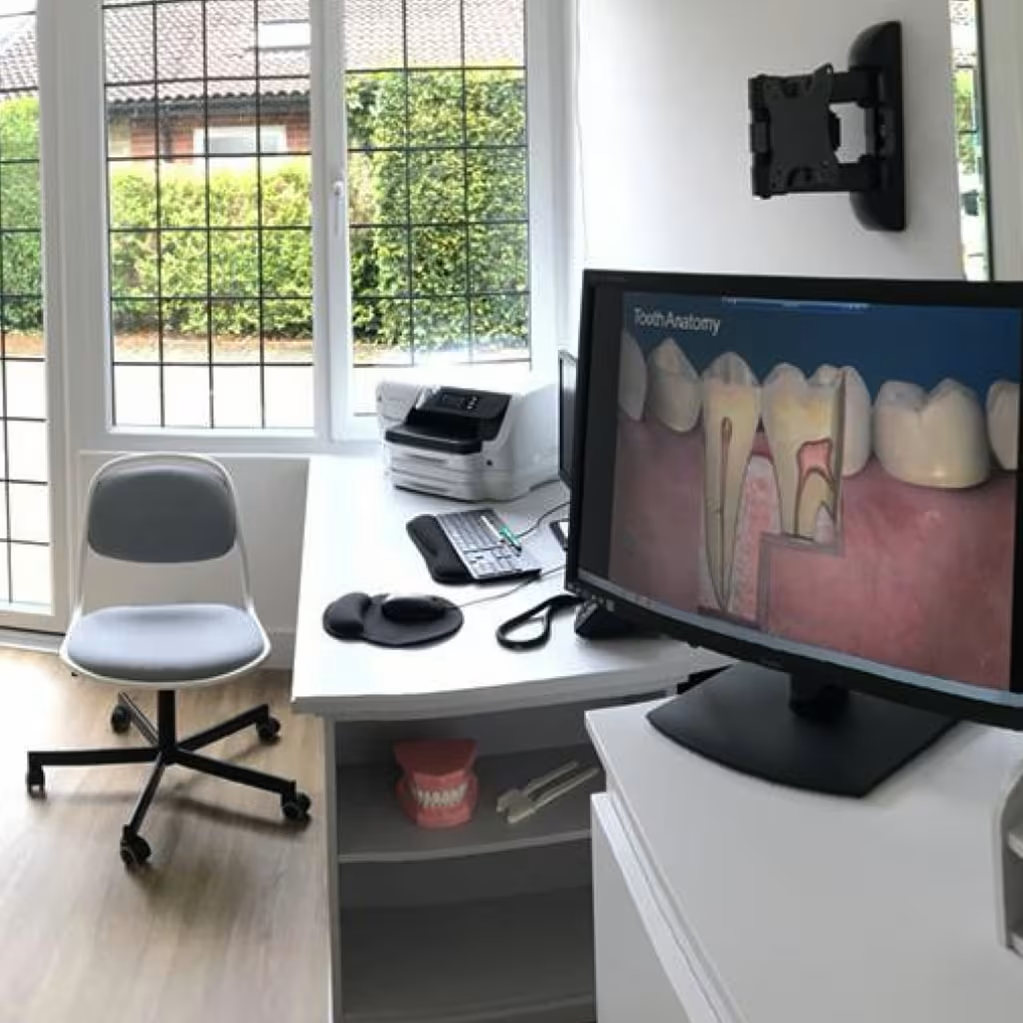
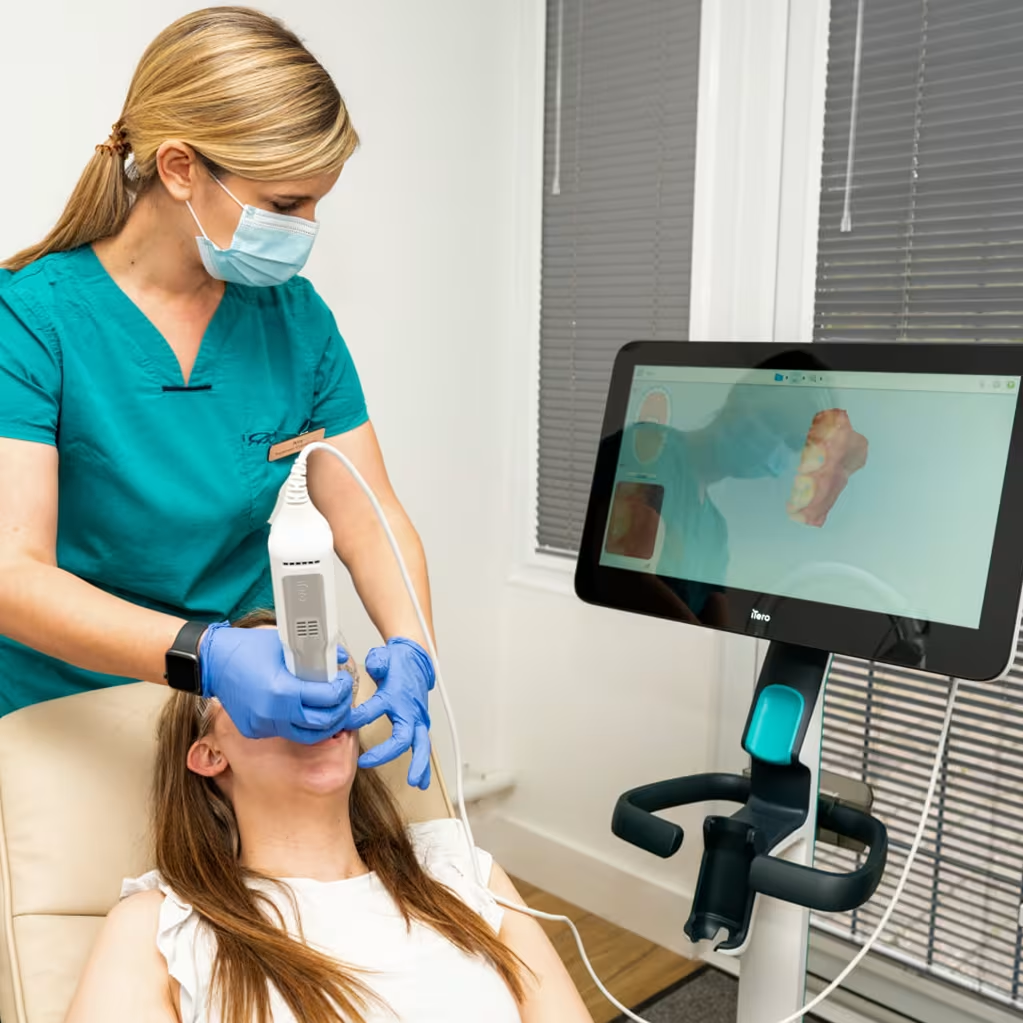
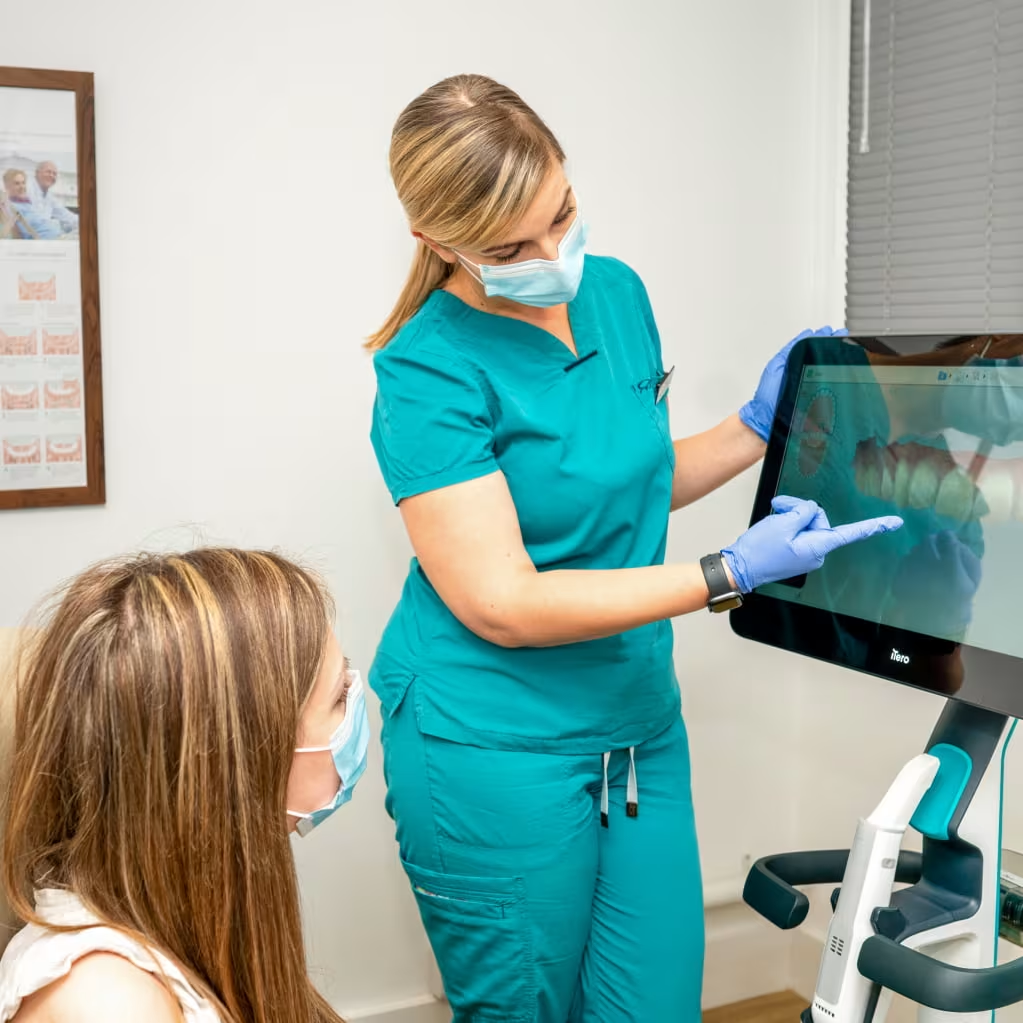
This is why a thorough clinical assessment matters. A good clinician won’t tell you what you want to hear; they’ll tell you what the evidence supports. At The Briars, our consultations use iTero digital scanning to capture precise impressions of your teeth, giving Victoria a detailed, three-dimensional picture of your dentition before any treatment is planned.
Healthy gums and sufficient bone support are essential prerequisites for any orthodontic treatment, including clear aligners. Moving teeth through bone that is compromised by periodontal disease is clinically unsafe and can accelerate bone loss rather than reverse it.
If there are signs of active gum disease — bleeding on probing, pocketing, or bone loss visible on radiographs — this needs to be treated and stabilised before orthodontic treatment begins. At The Briars, we have a significant advantage here: Sharmila Khopade, our specialist periodontist, works alongside our orthodontic team to ensure patients with a history of gum disease are properly assessed and supported before and during treatment.
For patients who have had gum disease in the past but have it well controlled, aligner treatment can often proceed — but it requires careful monitoring. This is an area where experience and specialist access genuinely make a difference.
Crowns, bridges, veneers, and implants can all influence clear aligner suitability, though they don’t automatically rule it out.
Implants, in particular, cannot be moved — they are fused to the bone. If an implant is in the wrong position, aligner treatment will need to be planned around it. Bridges connecting multiple teeth can also create challenges, as the connected units cannot be moved independently.
Heavily restored teeth may have limited surface area for attachments (the small tooth-coloured components that help aligners achieve more precise movements), which can affect treatment planning. All of this needs to be assessed as part of your initial consultation, with any relevant X-rays or CBCT imaging reviewed to give a complete picture.
Clear aligners are suitable for adults and older teenagers whose jaws have finished growing. For younger patients, early treatment may be indicated — but in a different form, and typically under the guidance of an orthodontist.
Invisalign does offer a product designed specifically for teenagers, which includes compliance indicators and accounts for erupting teeth. ClearCorrect for Teens is similarly available. However, suitability still depends on the individual case, and younger patients often benefit from a discussion about timing — sometimes waiting until more teeth have erupted leads to a simpler, more effective treatment outcome.
For adults, there is no upper age limit. Many of our patients at The Briars begin aligner treatment in their forties, fifties, and beyond — often motivated by a desire to improve both the function and appearance of their smile ahead of other cosmetic or restorative work.
This is perhaps the factor that most often catches patients off guard — because aligner treatment only works if you actually wear them.
Invisalign and ClearCorrect are both designed to be worn for 20 to 22 hours per day. They are removed for eating and drinking anything other than water, and for cleaning your teeth. That’s a considerable discipline, and for some patients — particularly those who travel frequently, have demanding social schedules, or simply find it difficult to build new habits — it can be a genuine challenge.
Fixed braces work whether you think about them or not. Clear aligners require active participation. If you know from experience that you struggle with compliance-based treatments, it’s worth discussing this honestly at your consultation rather than discovering it three months into treatment.
At The Briars, patients on Invisalign have access to Invisalign Virtual Care as standard, with the option to add Dental Monitoring — a remote monitoring system that uses AI to track your tooth movements between appointments and flag any concerns early. This adds a layer of accountability and oversight that many patients find genuinely helpful.
Clear aligners are often chosen for lifestyle reasons — they are significantly less visible than fixed braces, they don’t restrict what you eat, and they tend to be more comfortable against soft tissue. For professionals, public speakers, or anyone with an image-conscious reason to avoid a visible appliance, they represent a compelling option.
However, there are situations where fixed braces may suit your lifestyle better. If you play a contact sport at a competitive level, for example, the repeated removal and reinsertion of aligners between training sessions can become disruptive. If you have a very irregular eating schedule, aligner management may feel more cumbersome than it does for patients with structured routines.
The right choice isn’t always the most obvious one — and having a clinician who is experienced across multiple systems means the recommendation you receive is genuinely tailored, not simply aligned to what’s on offer.
Not all clear aligner systems are the same, and the choice between them isn’t just a matter of brand loyalty.
Invisalign is the world’s most widely used clear aligner system, with an extensive evidence base and a highly sophisticated treatment planning platform. Victoria’s Platinum provider status reflects both the volume and the complexity of the cases she treats, placing The Briars in the top tier of Invisalign practices globally.
ClearCorrect, developed by Straumann — one of the most respected names in implantology and digital dentistry — brings a different set of clinical strengths. Its ClearQuartz tri-layer material is engineered to retain force more consistently over the wear period, and its high trimline design offers enhanced retention, particularly useful in cases where additional engagers would otherwise be required. ClearCorrect also integrates with Digital Smile Design workflows, which is especially relevant at The Briars given our existing DSD partnership — meaning your aligner treatment can be planned within the same facially guided, aesthetically considered framework as any other smile transformation work we undertake.
Offering both systems means we are not bound to a single approach. Your treatment plan is built around your teeth, your goals, and your clinical presentation — not around the product we happen to be promoting.
The only way to know with certainty is a thorough clinical assessment. At The Briars, this means a conversation with Victoria, digital scans using our iTero technology, and a review of any relevant X-rays or imaging — all in one of our seven surgeries in the heart of Newbury.
If clear aligners are suitable for you, we will be able to show you a simulation of your anticipated result before treatment begins. If they are not the right option, we will explain why and discuss what alternatives might serve you better.
For further reading on orthodontic treatment suitability, the British Orthodontic Society offers excellent patient guidance, and the Oral Health Foundation has accessible information on the range of teeth-straightening options available.
To find out whether clear aligners could work for you, speak to our team or book a consultation online.
Back to blog