When a tooth is lost – whether through extraction, accident, or decay – you’re faced with a decision that will affect your oral health, your confidence, and your daily life for years to come. The three main options for replacing missing teeth are dental implants, dental bridges, and dentures, and patients often come to us having researched all three without feeling much clearer about which is right for them.
This article aims to change that. We’ll walk through each option honestly, including the drawbacks, because understanding the limitations of a treatment is just as important as understanding its benefits.
What we won’t do is tell you what to choose. That’s a conversation that belongs in a consultation room, not on a webpage. But we can give you the information you need to arrive at that conversation well-prepared.
Table of Contents
It’s tempting to leave a gap, particularly if it’s at the back of the mouth and not immediately visible. But the consequences of an untreated missing tooth extend well beyond aesthetics. The bone that once supported the tooth root begins to resorb — to shrink — within months of the tooth being lost. Neighbouring teeth can drift into the space over time, and opposing teeth may over-erupt. The longer a gap is left untreated, the more complex and costly the eventual solution is likely to be.
Whichever option you choose, replacing a missing tooth promptly is almost always the right clinical decision.
A dental bridge is a fixed prosthetic that spans a gap by anchoring to the natural teeth on either side. A crown is placed on each adjacent tooth — known as abutment teeth — with the false tooth, or pontic, suspended between them. The result is a fixed, non-removable replacement that looks natural and functions reasonably well for eating and speaking.
Bridges have genuine advantages. Treatment is faster than implants, typically completed over a few appointments. There is no surgery involved, which makes them accessible to patients who are not suitable for or do not want a surgical procedure. And for patients whose adjacent teeth already require crowns for other clinical reasons, a bridge can address multiple needs in one treatment.
The significant drawback is what happens to those adjacent teeth. Preparing them to receive crowns requires permanently removing healthy tooth structure — they must be filed down to accommodate the crowns that will anchor the bridge. This is irreversible. You are, in effect, compromising two otherwise healthy teeth to replace one missing one. Over time, those prepared teeth may become more vulnerable to decay and sensitivity, and the bridge itself will likely need replacing within ten years.
Bridges also do nothing to address bone loss at the site of the missing tooth. Because there is no root replacement, the underlying bone continues to resorb beneath the pontic, which can eventually affect the appearance of the gum and the stability of the bridge itself.
Dentures are removable appliances — either full, replacing an entire arch, or partial, replacing several teeth within an otherwise intact dentition. They are the most accessible option in terms of cost and the absence of any surgical requirement, and for patients missing all or most of their teeth, they can restore function and appearance meaningfully.
However, dentures come with limitations that are worth understanding clearly. Because they sit on top of the gum rather than being anchored within the jaw, they can move during eating and speaking — something many patients find uncomfortable or embarrassing. They require removal for cleaning, and the daily maintenance routine is more involved than caring for natural teeth or implants.
Crucially, like bridges, dentures do not address bone loss. In fact, the pressure of a denture resting on the gum can accelerate resorption over time, which means the fit of the denture changes as the jawbone shrinks. This typically requires periodic adjustments and eventual replacement.
For patients who are missing all of their teeth and for whom implants are not an option, dentures remain a valid and well-established solution. But for patients who are missing one or a few teeth and who have otherwise healthy jaws, dentures are rarely the optimal long-term answer.
If you’ve found yourself in the situation of hating your denture, you may find our article on implant-supported alternatives useful reading.
Dental implants are widely regarded as the gold standard for tooth replacement, and that status is clinically earned rather than simply marketed. A titanium post is placed into the jawbone, where it integrates with the surrounding bone through a process called osseointegration. Once integration is complete — typically over several months — a custom crown is attached, creating a replacement tooth that looks, feels, and functions like a natural one.
The defining advantage of an implant over a bridge or denture is that it replaces the tooth root, not just the visible tooth. This is what makes it biomechanically distinct. The jawbone is stimulated by the implant in the same way it would be by a natural root, which means bone loss is prevented rather than just delayed. Neighbouring teeth are left entirely untouched. There is no irreversible preparation of healthy tooth structure.
A dental implant is also the most durable option available. With appropriate care and maintenance, a well-placed dental implant can last decades — and in many cases, a lifetime. The crown attached to the implant may need replacement at some point, as crowns do wear, but the implant itself is designed to be permanent.
There are, of course, factors that determine suitability. Sufficient healthy jawbone is required to place a dental implant, though bone grafting can address deficiencies in many cases. Certain medical conditions and habits — including smoking and uncontrolled diabetes — can affect dental implant success rates and will need to be discussed at consultation. And implants involve oral surgery under local anaesthesia, which means the treatment timeline is longer than a bridge, typically spanning several months from first assessment to final crown.
Cost is also a consideration. A dental implant presents a higher upfront investment than bridges or dentures. For a transparent breakdown of what’s involved, our dedicated guide to dental implant costs explains the factors that affect pricing at The Briars.
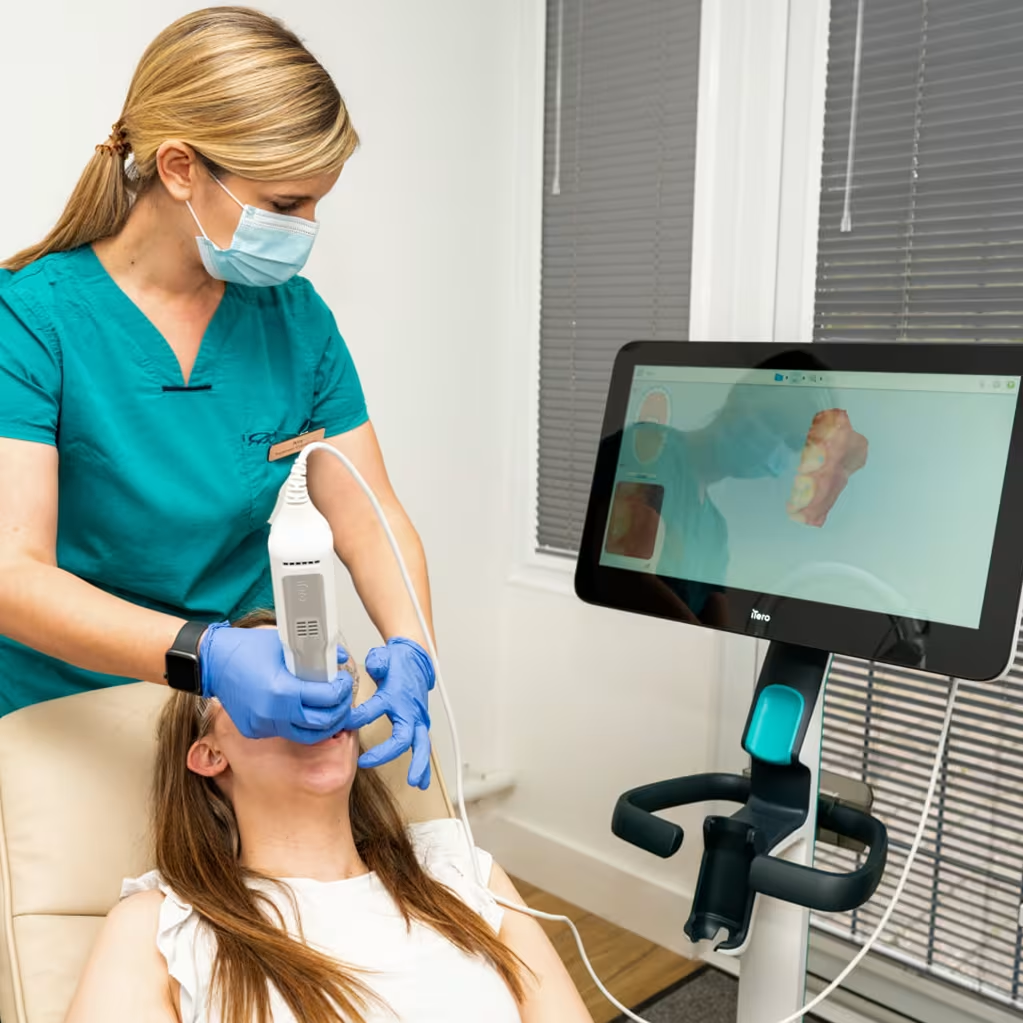
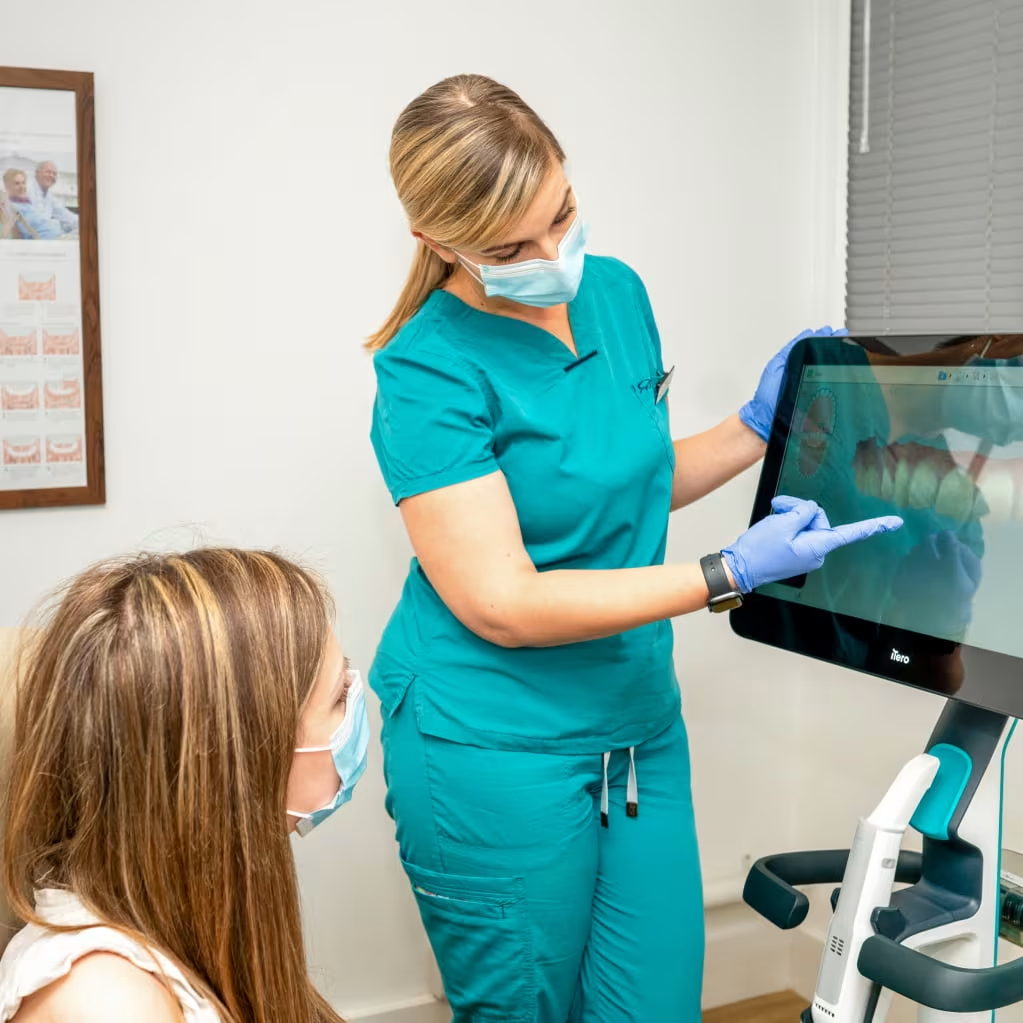
At The Briars, dental implant treatment is led by Dr Nick French, who collaborates with Dr Dave Veige on more complex surgical cases including sinus lifts and full-arch procedures. Every dental implant case is planned using CBCT imaging for precision and safety, and treatment is coordinated across our multidisciplinary team where clinical need requires it — including our in-house specialist periodontist, Sharmila Khopade, for patients whose gum health needs to be optimised before dental implant placement begins.
Each option has its place. Bridges can be the right choice where adjacent teeth already require crowns, or where surgery is not appropriate. Dentures provide a viable solution for patients with extensive tooth loss or where a dental implant is contraindicated. But for patients who are good candidates, implants offer something that neither bridges nor dentures can: a root replacement that preserves bone, protects neighbouring teeth, and delivers long-term stability without compromise.
The honest summary is this — bridges and dentures restore the appearance of missing teeth, while implants restore the function of the tooth from the root up.
There is no single correct answer that applies to every patient, and any practice that tells you otherwise without examining you first is not giving you honest advice. The right option depends on how many teeth are missing, the condition of your surrounding teeth and bone, your medical history, your lifestyle, and your long-term goals.
What we’d encourage is a proper conversation with a clinician who can assess your situation thoroughly and present all options with equal honesty. At The Briars, that process begins with a complimentary consultation with our Treatment Coordinator, followed by a clinical assessment with Dr Nick French if implants are being considered.
The Association of Dental Implantology is a useful independent resource for patients researching implant treatment in the UK, and their guidance on finding a qualified provider is worth reading before you make any decisions.
If you’re at the beginning of this journey, we’d be glad to help you navigate it. Get in touch with our team to book your initial consultation.
Back to Blog