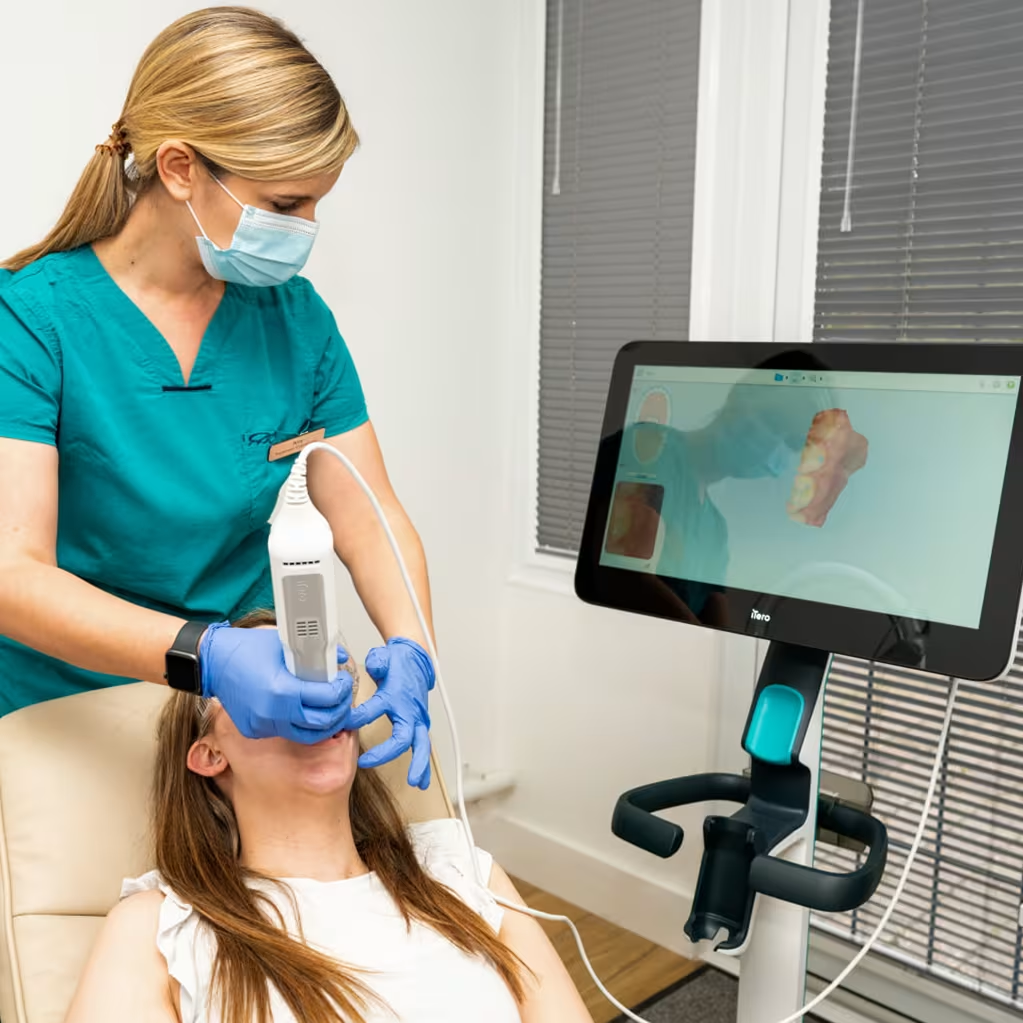
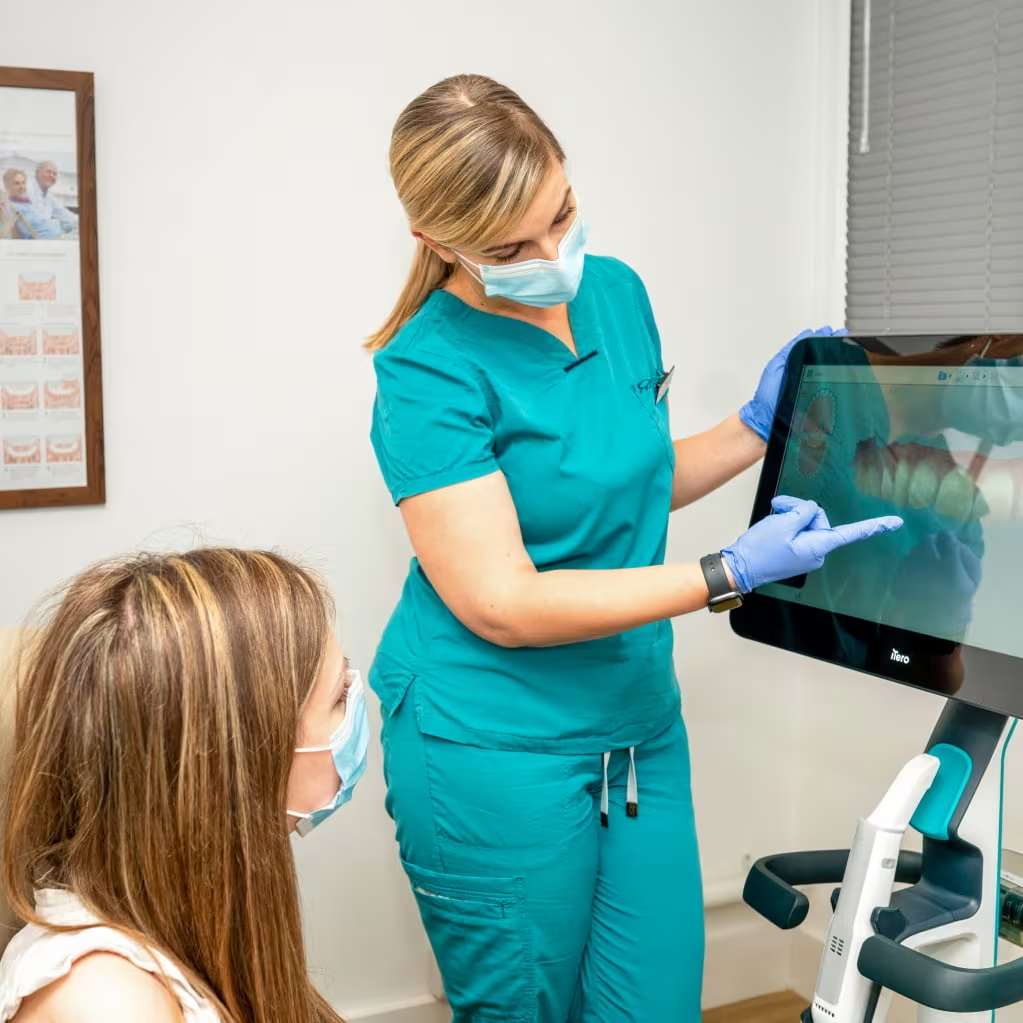
If you’ve been booked in for a GBT appointment — or if you’re considering Guided Biofilm Therapy for the first time — you might be wondering what actually happens during the visit. Most patients arrive with a vague sense that it’s a more thorough version of a regular hygiene clean, which is true, but the experience is quite different from a traditional scale and polish in ways that tend to pleasantly surprise people.
This article walks you through a GBT appointment at The Briars from start to finish, so you know exactly what to expect and can arrive feeling calm and prepared rather than uncertain about what’s ahead.
Table of Contents
Guided Biofilm Therapy is a clinically structured approach to professional oral hygiene that follows a specific protocol — developed by EMS, the Swiss dental technology company behind the AIRFLOW system — designed to remove biofilm, staining, and calculus as effectively and comfortably as possible.
The key difference from a traditional scale and polish is that GBT targets biofilm first. Biofilm is the soft, sticky layer of bacteria that forms on teeth and around the gumline — it’s what most people know as plaque — and removing it thoroughly before any other intervention is both clinically more effective and significantly more comfortable for the patient. Rather than scraping calculus from a tooth surface that still has biofilm present, GBT works systematically through a defined sequence that produces better results with less discomfort.
If you’d like a more detailed explanation of the science behind GBT before your appointment, our dedicated article on what GBT is covers the background in full.
A routine GBT appointment at The Briars runs for 30 minutes, though appointments of 40 or 60 minutes are scheduled where clinical need requires it. The length of your appointment is determined by your hygienist based on factors including the extent of biofilm and calculus present, the health of your gums, and whether you are attending for routine maintenance or following a period of more intensive periodontal treatment.
If you’re unsure how long your appointment is booked for, our reception team can confirm this for you in advance. Whatever the length, the same structured GBT protocol is followed — a longer appointment simply allows more time to address more complex needs within the same clinical framework.
The Plaque Disclosure: Seeing Is Believing
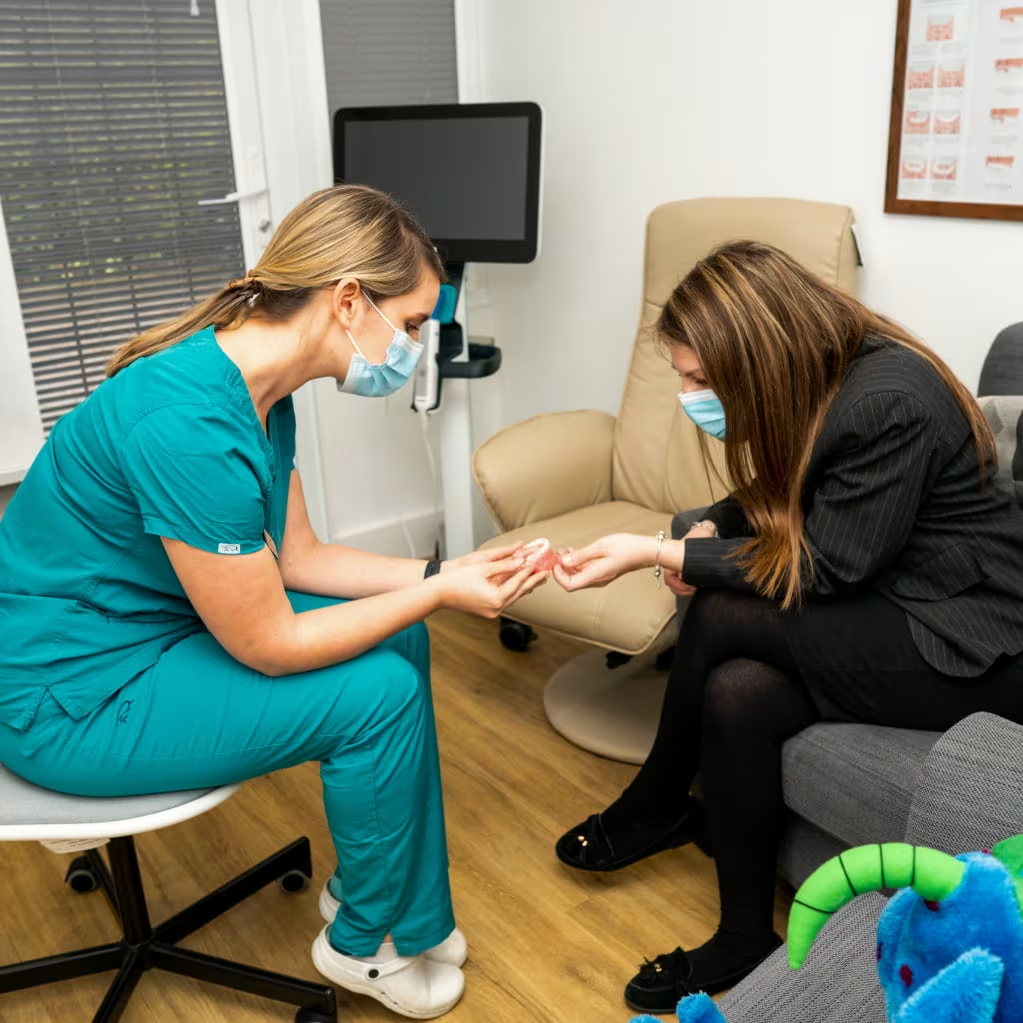
One of the first things that happens at your GBT appointment — and one of the most memorable for most patients — is the plaque disclosure stage. Your hygienist will apply a disclosing solution to your teeth, which temporarily stains the biofilm present so that it becomes clearly visible. You’ll then rinse and look in the mirror together with your hygienist to review exactly where biofilm has accumulated.
For most patients, this is a genuinely eye-opening moment. Areas that feel clean and that you brush carefully every day can still harbour biofilm in places that are difficult to reach — along the gumline, between teeth, and around the backs of molars. Seeing it clearly, rather than being told about it in general terms, makes the oral hygiene advice that follows feel far more relevant and personal.
This isn’t about making you feel you’ve been doing things wrong. It’s about giving you accurate, visual information so that any adjustments to your brushing or interdental cleaning routine are targeted and meaningful rather than generic. Your hygienist will use the disclosure findings to tailor their advice specifically to what they can see in your mouth, which is a much more useful conversation than a standard brushing lecture.
The AIRFLOW Stage: Warm Water and Fine Powder
Once the disclosure has been reviewed, the AIRFLOW stage of your GBT appointment begins. This is the part of the treatment that most patients find surprisingly comfortable — and the warm water is usually the first thing people mention afterwards.
AIRFLOW uses a controlled stream of warm water, compressed air, and a fine erythritol powder to remove biofilm and staining from tooth surfaces, the gumline, and the spaces between teeth. The warmth of the water is deliberate — it significantly reduces sensitivity during treatment compared to the cold water used in traditional cleaning, and most patients find the sensation far more pleasant than they were expecting.
The erythritol powder used in GBT is exceptionally fine — finer than the powders used in older air polishing systems — which means it is gentle on both teeth and gum tissue while still being highly effective at biofilm removal. It leaves teeth feeling clean and smooth, and for patients with surface staining from tea, coffee, or red wine, the improvement in appearance after AIRFLOW alone is often very noticeable.
Piezon: Where Needed, Never Routine
Following the AIRFLOW stage, your hygienist will assess whether calculus — the hardened mineral deposits that cannot be removed by AIRFLOW alone — is present and where. The Piezon ultrasonic scaler is then used specifically and only in those areas, rather than being applied across all teeth as a matter of routine.
This targeted approach is one of the defining principles of GBT and one of the main reasons patients find it more comfortable than traditional scaling. Piezon uses ultrasonic vibrations with warm water irrigation to break down and remove calculus efficiently, but because it is used selectively rather than universally, the overall treatment is far less intrusive than a conventional scale and polish where instruments are used across the entire dentition regardless of clinical need.
The oral hygiene advice section of your GBT appointment is informed directly by what your hygienist has observed during the disclosure and treatment stages. Rather than general guidance about brushing twice a day, the advice you receive is specific to your mouth — the areas where biofilm is accumulating, the techniques that will help you reach them more effectively, and the tools best suited to your individual anatomy and any restorations or appliances you have.
This might include recommendations around interdental brushes, floss, water flossers, or specific brushing techniques. It might involve a conversation about the products you’re currently using and whether alternatives would serve you better. The goal is always to leave you with practical, actionable information that makes a real difference to your day-to-day oral hygiene rather than advice that feels vague or difficult to implement.
At the end of your GBT appointment, your hygienist will discuss the findings with you and — if relevant — recommend how frequently you should attend for maintenance. For patients with healthy gums, a routine recall interval is typically appropriate. For patients undergoing active periodontal treatment or managing a history of gum disease, more frequent GBT appointments form part of an ongoing maintenance programme designed to keep disease under control over the long term.
You may notice that your teeth feel particularly clean and smooth immediately after your GBT appointment — this is normal and a direct result of thorough biofilm removal. Some patients with sensitive teeth can experience mild, temporary sensitivity following treatment, which usually settles quickly.
If you have any concerns after your appointment, or if you’d like to discuss whether GBT is right for you, our hygiene team at The Briars is always happy to help. You can also find independent information about professional oral hygiene care from the British Society of Dental Hygiene and Therapy and the Oral Health Foundation.
Back to Blog