When you’re considering Invisalign treatment, understanding how Invisalign works to move your teeth is crucial. At The Briars Dental Centre, we believe in complete transparency about your dental care, so you can make informed decisions about your smile transformation.
Invisalign aligners work through controlled force application. Each aligner in your series is precisely designed to apply gentle, consistent pressure to specific teeth, gradually shifting them into their planned positions. But here’s what many people don’t realise: we’re not just moving teeth around in your mouth – we’re orchestrating movement within your jawbone itself.
Your teeth sit in the alveolar bone, anchored by a remarkable structure called the periodontal ligament. When your Invisalign aligner applies pressure to a tooth, it creates tension on one side of the tooth and compression on the other. This pressure triggers your body’s natural bone remodelling process. On the compression side, cells called osteoclasts break down bone tissue, whilst on the tension side, cells called osteoblasts build new bone. This biological process allows your tooth to move gradually through the bone.
This is why even seemingly minimal movement shouldn’t be taken lightly. Whether you’re closing a small gap or correcting a complex bite issue, we’re working with living bone tissue that requires careful, calculated movement over time.
The success of your Invisalign journey depends entirely on the quality of planning before your first aligner even touches your teeth. This is where advanced technology makes all the difference to your outcome.
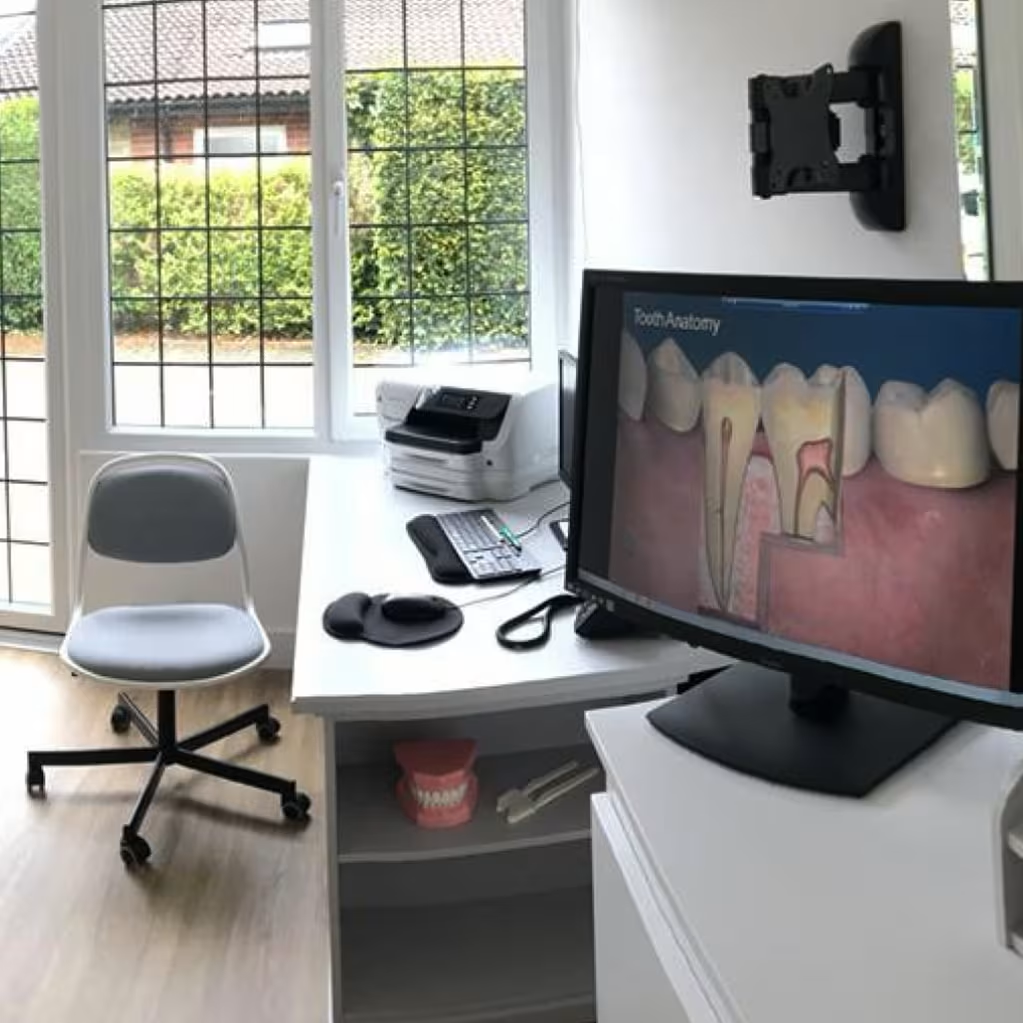
At The Briars, we don’t simply scan your teeth and order aligners. We begin with comprehensive diagnostic records, including CBCT (Cone Beam Computed Tomography) scans. This 3D imaging technology allows us to see beyond what’s visible in your mouth. We can assess the thickness of your bone, the position of tooth roots, and any anatomical considerations that might affect your treatment.
Think of it this way: if you were planning to move a building, you’d want to know what lies beneath the foundation. The same principle applies to moving teeth. Without understanding the bone structure supporting your teeth, we’re essentially planning your treatment blindfolded.
Our Digital Smile Design (DSD) technology takes this planning even further. We create a digital blueprint of your treatment, allowing you to see your projected outcome before we’ve even started. More importantly, it allows us to plan every single tooth movement with precision, ensuring we’re not just creating a beautiful smile, but a healthy, functional one that works in harmony with your jaw, bite, and facial structure.
This detailed planning phase might seem time-consuming, but it’s absolutely essential. It allows us to identify potential challenges, avoid complications, and create a roadmap for your treatment that prioritises both aesthetics and long-term oral health.
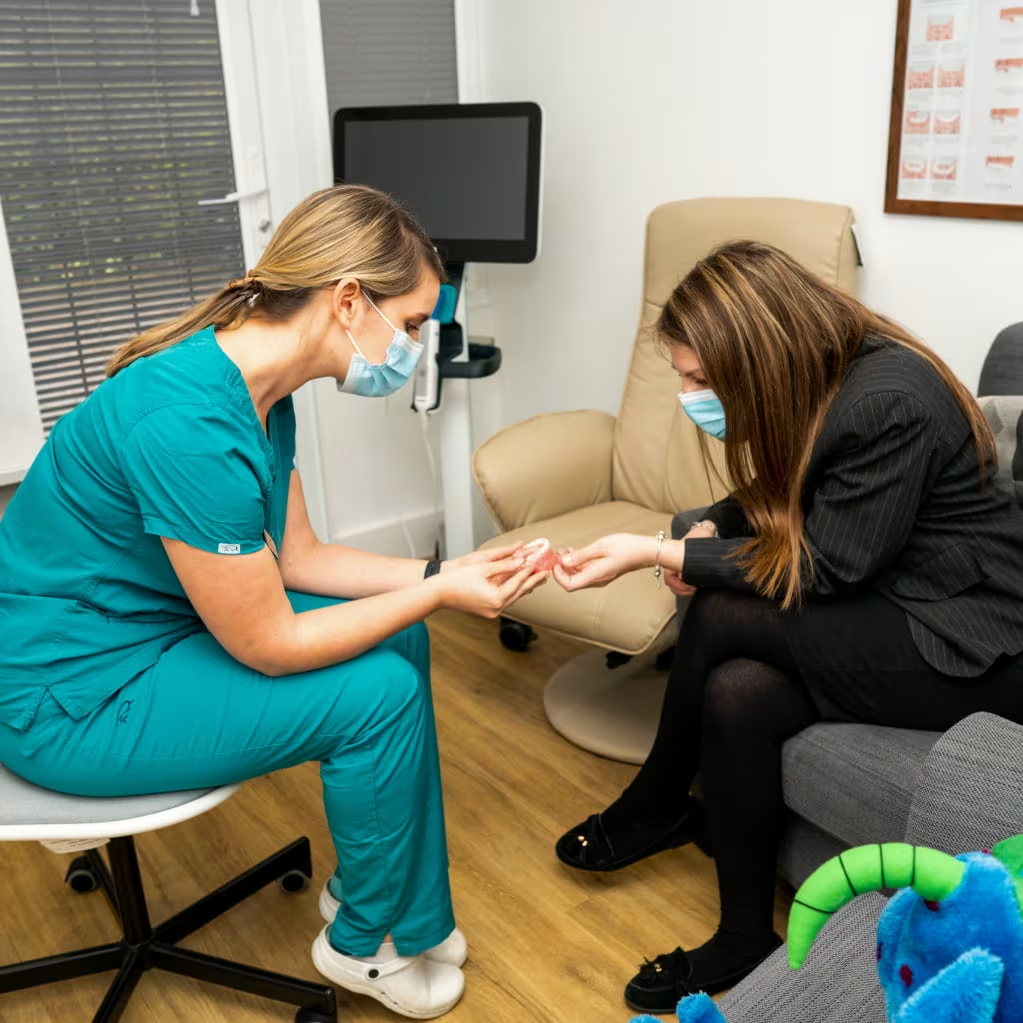
Once we’ve completed your comprehensive planning, your personalised series of aligners is created. Each aligner represents a small step in your overall treatment plan, typically moving your teeth around 0.25mm.
You’ll wear each aligner for approximately one to two weeks, depending on your specific treatment plan. During this time, the aligner applies consistent pressure to your teeth. You might feel tightness or mild discomfort when you start wearing a new aligner – this is completely normal and indicates that the aligner is working as intended.
The attachments you may see on some Invisalign patients serve as handles, giving the aligners something to grip onto for more complex movements. These small, tooth-coloured bumps bonded to your teeth allow us to rotate teeth, control root movement, and achieve results that wouldn’t be possible with aligners alone.
You may also hear us mention IPR (interproximal reduction) during your treatment planning. This involves carefully removing tiny amounts of enamel between certain teeth – we’re talking fractions of a millimetre – to create the space needed for teeth to align properly. It’s a precise, painless procedure that’s often essential for achieving optimal results, particularly when treating crowding. Think of it as fine-tuning: sometimes creating just a little bit of space in the right places makes all the difference to how your teeth can move and settle into their ideal positions.
Throughout your treatment, regular progress appointments allow us to monitor how your teeth are responding to movement. Remember, we’re working with living tissue that can respond differently from person to person. These check-ins ensure your treatment stays on track and allows us to make any necessary adjustments.
Your compliance matters tremendously. Invisalign aligners need to be worn for 20-22 hours per day to work effectively. The aligners can only move your teeth whilst they’re actually in your mouth, applying that crucial pressure to trigger bone remodelling.
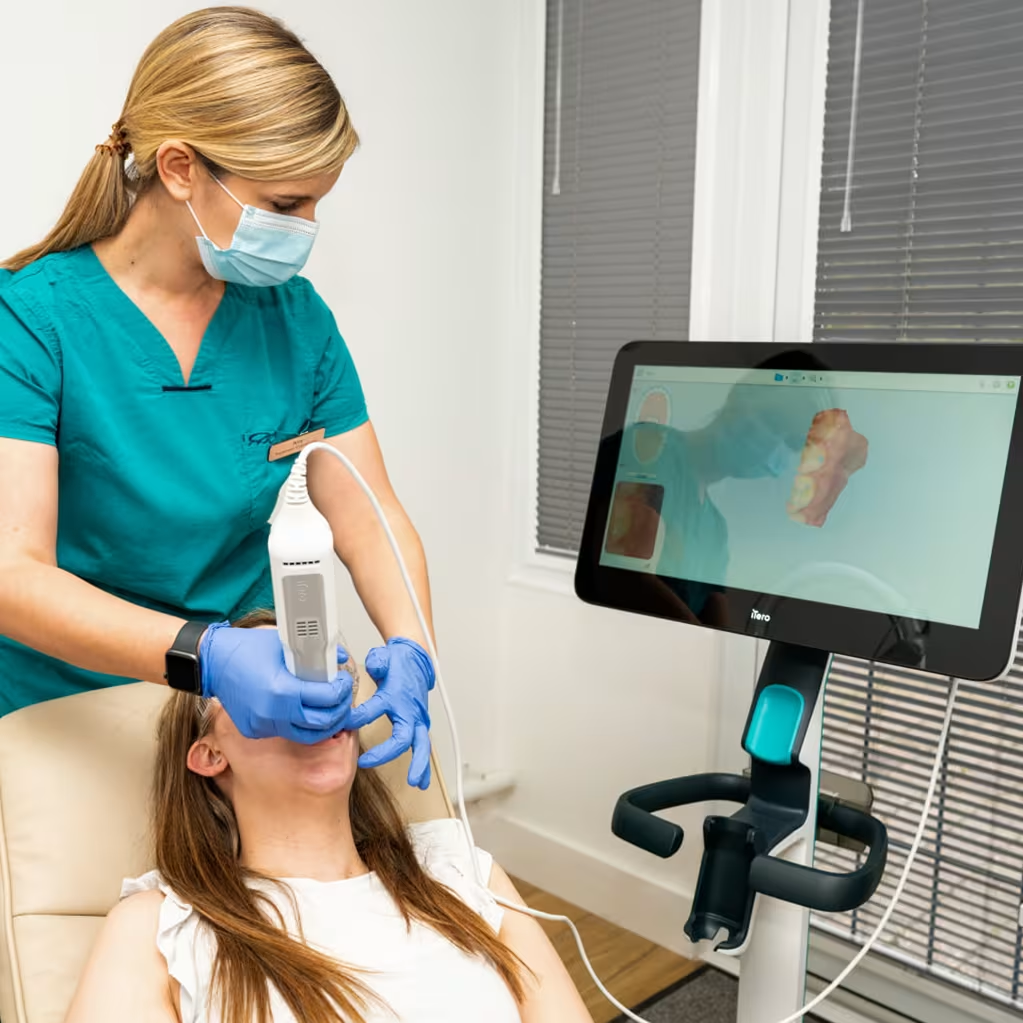
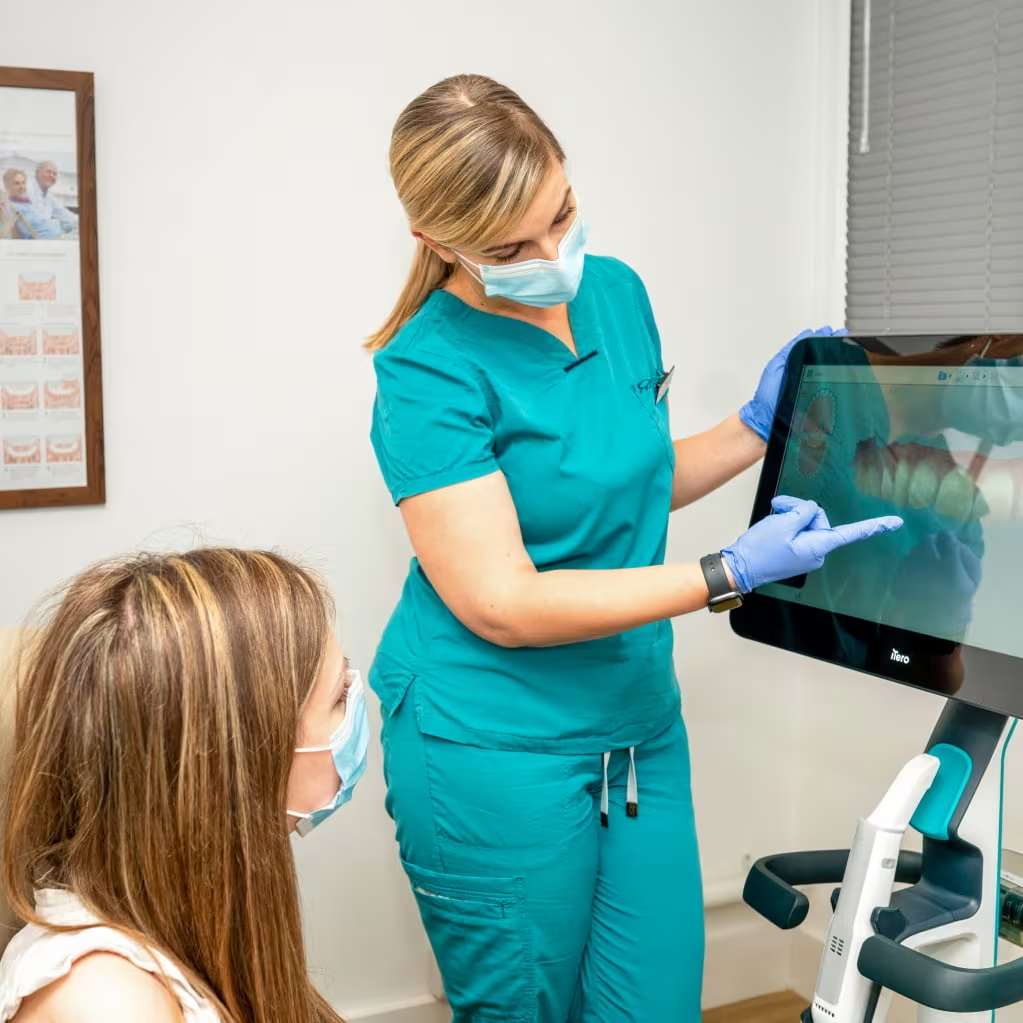
At The Briars Dental Centre, we’ve invested in advanced digital technology because we know it directly impacts your treatment outcomes. Our iTero scanner creates highly accurate digital impressions of your teeth, eliminating the need for uncomfortable traditional moulds whilst providing our laboratory with the precise measurements they need.
Combined with CBCT imaging and Digital Smile Design, this technology allows us to approach your Invisalign treatment with a level of precision that simply wasn’t possible years ago. We can visualise your treatment from every angle, anticipate challenges, and plan movements that respect the biological limits of your bone and soft tissues.
This isn’t about using technology for technology’s sake. It’s about giving you the safest, most predictable treatment possible. When you’re moving teeth through bone, there’s no room for guesswork.
Understanding how Invisalign works helps you appreciate why certain steps in the process are necessary. That initial planning phase, those regular check-in appointments, the need for consistent wear – they all serve a crucial purpose in ensuring your treatment is both successful and safe.
Your smile means everything to us at The Briars. Our friendly and professional team will help you achieve your dental goals through transparent communication, advanced technology, and treatment planning that prioritises your long-term oral health alongside your aesthetic desires.
If you’re considering Invisalign treatment, we encourage you to book a consultation where we can discuss your specific needs, show you our technology in action, and explain exactly how we’ll plan your unique smile transformation. Because when it comes to moving teeth in your jawbone, expertise and precision make all the difference.
For more information about orthodontic treatment options, and how Invisalign works, visit the British Orthodontic Society or learn more about digital dentistry advances from the British Dental Association.
Back to blog