How Long Do Dental Implants Last?
Dental implants are widely regarded as the gold standard for replacing missing teeth, and one of the first questions patients ask is how long they can expect them to last. It’s a completely reasonable question — implants represent a significant investment, and people want to know what they’re committing to.
The straightforward answer is that dental implants can last many years, and for a great many patients they last decades. But how long do dental implants last in any individual case? That depends on a combination of clinical factors, biological factors, and — perhaps most importantly — how well they’re looked after once they’re in place.
At The Briars, we believe in being honest about this from the outset. Implants are not a guaranteed lifelong solution for every patient in every circumstance, and understanding what influences longevity puts you in the best possible position to protect your investment.
The foundation of a successful dental implant is osseointegration: the process by which the titanium implant fixture bonds with the surrounding jawbone. When this happens successfully, the implant becomes a stable, load-bearing structure that functions much like a natural tooth root.
Osseointegration is largely a biological process, and while surgical precision plays an important role, it isn’t entirely within anyone’s control. The vast majority of implants integrate successfully, but occasionally the body doesn’t respond as hoped, and the implant doesn’t achieve the stability needed. This is not a reflection of poor surgical technique — it’s a biological reality that any honest implant provider will acknowledge.
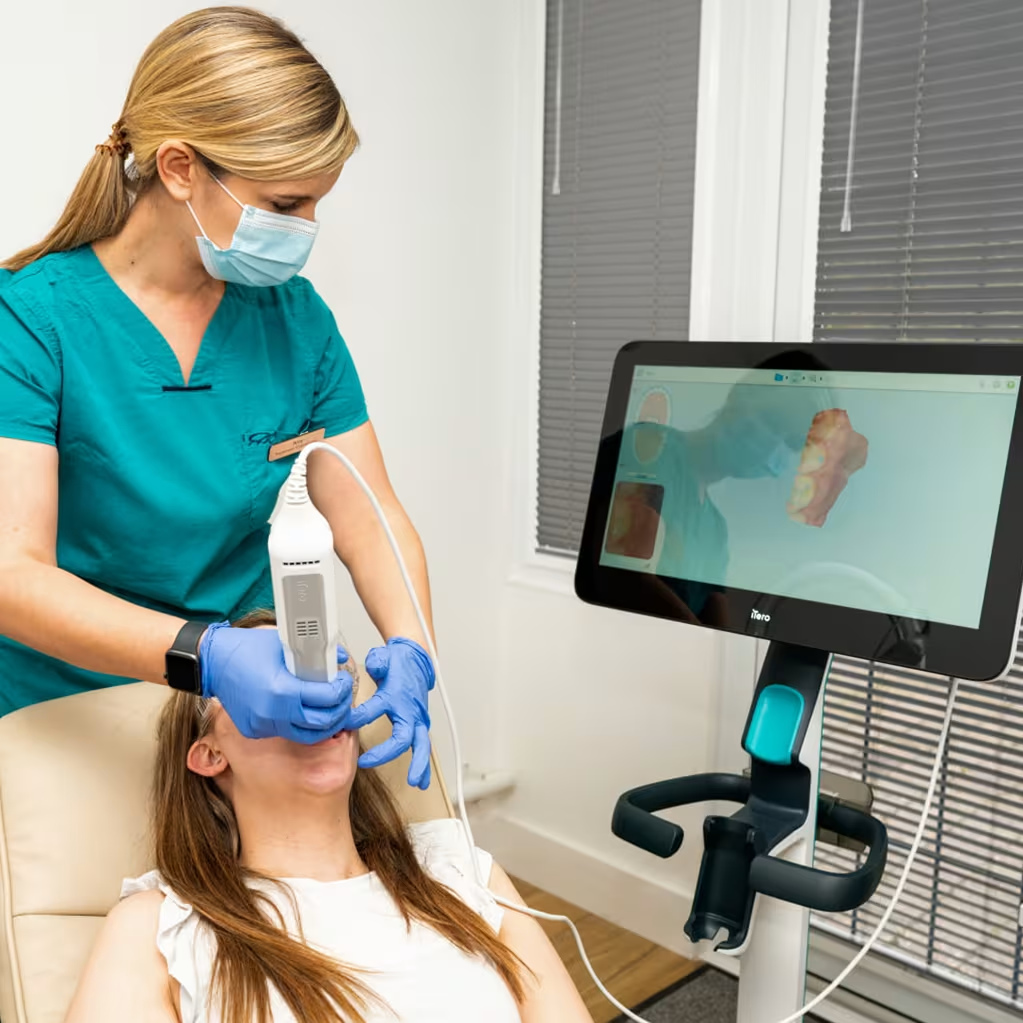
At The Briars, all implant cases are planned using CBCT imaging, which gives our team a detailed three-dimensional picture of the available bone before a single incision is made. Surgical guides are used as standard during placement, ensuring the implant is positioned with the precision the planning intended. Nick French and Dave Veige, who lead implant surgery at the practice, bring considerable experience to complex cases — and Richard Lilleker also places implants for his own patients. This level of clinical rigour doesn’t eliminate biological variability, but it gives every implant the best possible start.
This is probably the single most important factor in determining how long dental implants last once they’re successfully integrated. Implants cannot develop decay in the way natural teeth can, but the gum tissue and bone surrounding them are still susceptible to a condition called peri-implantitis — essentially an inflammatory process similar to gum disease that, if left untreated, can lead to bone loss around the implant and ultimately implant failure.
Peri-implantitis is largely preventable with good oral hygiene. Brushing twice daily, cleaning between teeth, and paying particular attention to the gum line around implants all make a significant difference. Your clinical team will advise you on the most effective home care routine for your specific situation.
Home care alone isn’t enough. Professional cleaning at regular intervals is essential for the long-term health of dental implants, and this is something we’re very direct with our implant patients about at The Briars.
Our hygienists — Meryl Colley, Amiee Mosher, and Monica Robotin — provide Guided Biofilm Therapy as standard at hygiene appointments. GBT uses a combination of disclosing, airflow, and ultrasonic technology to remove biofilm and deposits from around implants and natural teeth thoroughly and comfortably. For implant patients in particular, this level of professional maintenance is not optional — it’s a core part of protecting the long-term outcome of your treatment.
How frequently you need to attend will depend on your individual circumstances, but implant patients are typically seen more regularly than patients without implants. Attending these appointments consistently is one of the most direct things you can do to influence how long your dental implants last.
Smoking is one of the most significant risk factors for implant failure, both in the short term during the healing and osseointegration phase, and in the long term. It affects blood supply to the gum tissue, impairs healing, increases the risk of infection, and makes peri-implantitis more likely and harder to manage.
This doesn’t mean implants are impossible for patients who smoke, but it does mean the risks are higher and the conversation about those risks needs to happen honestly before treatment begins. At The Briars, we’ll always discuss your smoking status as part of your implant assessment and give you a realistic picture of how it may affect your outcome.
If you’re thinking about stopping smoking, your GP can provide support and referral to cessation services. The NHS also has resources available at nhs.uk/live-well/quit-smoking that are worth exploring.
Certain medical conditions and medications can affect how long dental implants last by influencing bone density, healing capacity, or immune response. Conditions such as uncontrolled diabetes, osteoporosis, and autoimmune disorders, as well as medications including bisphosphonates and some immunosuppressants, are all relevant to implant planning and need to be disclosed during your initial assessment.
This isn’t a reason to assume implants aren’t possible — for many patients with these conditions, implants can still be placed safely with appropriate planning and in discussion with their wider medical team. It’s simply a reason why a thorough medical history is an essential part of the process, not an administrative formality.
With successful osseointegration, good oral hygiene, regular professional maintenance, and no significant risk factors, many patients enjoy implants that function well for decades. For others, particularly those who smoke heavily, have certain health conditions, or who don’t maintain consistent aftercare, the picture may be different.
The honest answer to how long dental implants last is: it varies, and much of it is in your hands once the implant is placed. What The Briars can do is plan your treatment with the highest clinical standards, place your implant with surgical precision, and support you with the aftercare and hygiene maintenance that gives it the best possible chance of lasting.
If you’d like to understand whether dental implants are right for you and what the process involves, you can find further information from the Association of Dental Implantology, or get in touch with our team to arrange a consultation.
Back to blog