If you’re at the beginning of your Invisalign journey – or if you’ve just had your treatment plan presented and noticed small tooth coloured shapes mapped onto your digital plan – you may have questions about Invisalign attachments. What are they, why are they needed, will they be noticeable, and will they damage your teeth?
These are exactly the questions we answer at The Briars during the treatment planning process, and this article covers them in full. Invisalign attachments are one of the aspects of clear aligner treatment that patients are least aware of before they start, which means they can feel like a surprise if they’re not explained well. Our aim here is to make sure that by the time you arrive for your first fitting, attachments feel entirely familiar rather than unexpected.
Table of Contents
Invisalign attachments are small, tooth-coloured shapes – typically resembling a tiny raised dot or rectangle – that are bonded to the surface of specific teeth during your aligner treatment. They are made from the same dental composite material used for tooth-coloured fillings and bonding, and they are matched as closely as possible to the natural shade of your teeth.
Their job is to give your aligners something to grip. Without attachments, aligners work by applying gentle pressure across the broad surface of the tooth – which is effective for straightforward movements. But teeth don’t always need to move in straightforward ways. Some teeth need to rotate, tip, or move vertically, and for these more complex movements, a smooth aligner surface alone doesn’t provide enough purchase. Attachments change that by creating a small raised surface that the aligner can engage with, allowing force to be directed far more precisely.
Think of them as tiny handles that give your aligner the mechanical advantage it needs to move a tooth in exactly the right direction.
The short answer is that invisalign attachments make your treatment more effective. The longer answer is that the movements required to achieve your final result are mapped out in detail during treatment planning, and where those movements are complex – or where a tooth’s position or shape means a standard aligner surface can’t generate the right type of force – attachments are incorporated into the plan to make those movements achievable.
Not every tooth will have an attachment, and not every patient will have them at all. Simpler cases with limited movement requirements may be completed without any attachments. But for the majority of patients undergoing comprehensive clear aligner treatment, attachments are a standard and expected part of the process – a sign that your treatment has been planned with the precision needed to achieve a genuinely good result, rather than a complication or a cause for concern.
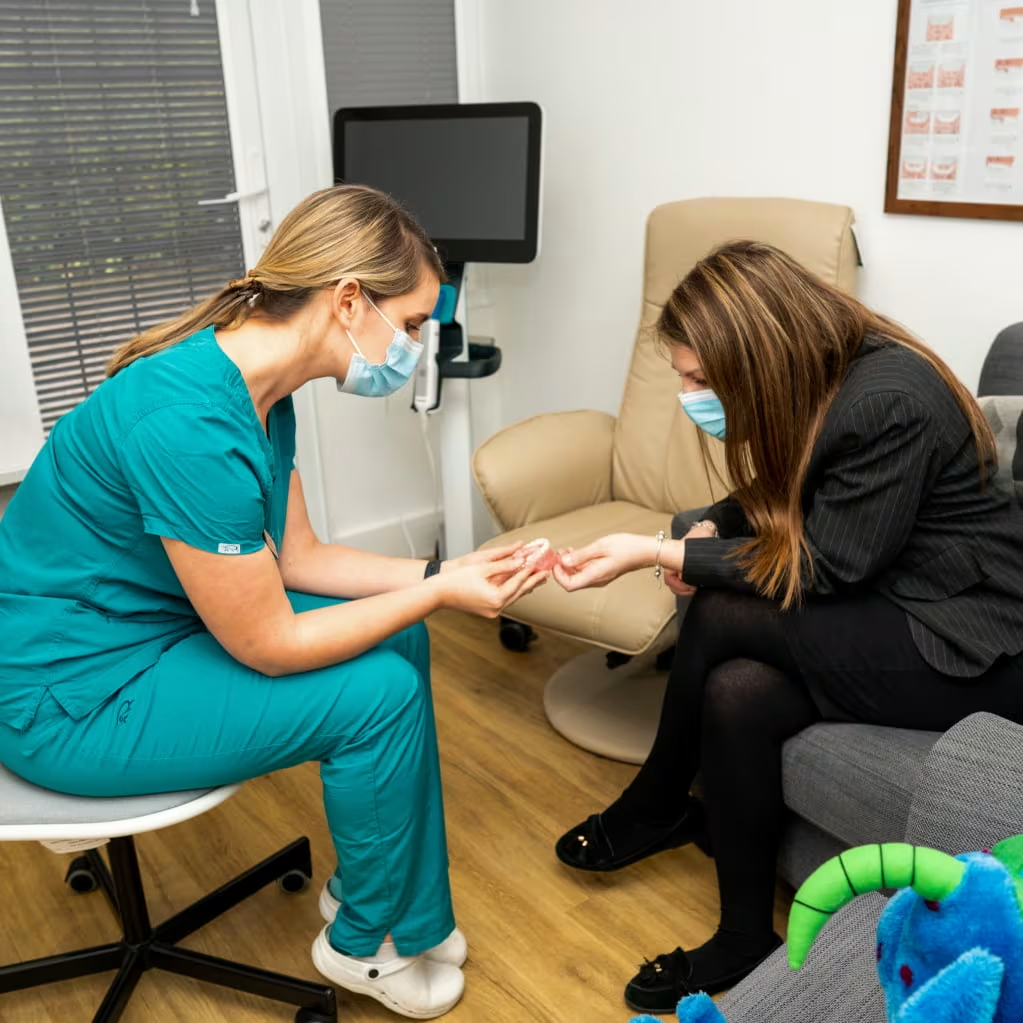
This is the question most patients ask first, and the honest answer is: less than you think. Because attachments are made from tooth-coloured composite and bonded directly to the tooth surface, they blend in with the natural appearance of your teeth far more effectively than most patients expect. When we show patients a demonstration model in the surgery, the most common reaction is surprise at how difficult the attachments are to spot even when you’re looking for them.
That said, it’s worth being realistic. Attachments are small raised shapes on the surface of your teeth, and if someone is looking closely – or if your teeth are very white and the composite shade doesn’t match perfectly – they may be visible on close inspection. They are not invisible. But in normal conversation, in photographs, and at any reasonable social distance, the vast majority of patients find their attachments go entirely unnoticed by the people around them.
With your aligners in place, attachments are even less visible – the aligner fits snugly over them, and the overall appearance is simply of clear aligner trays on the teeth.
This is where it’s important to manage expectations carefully, because there is no standard answer. The number and position of invisalign attachments is determined entirely by the movements required in your individual treatment plan, and this varies significantly from patient to patient.
Some patients have just a handful of attachments, concentrated on the back teeth where they are least visible. Others have attachments across multiple teeth, including some on the front teeth, because the movements required in their case demand it. It’s common for patients to know someone who has had Invisalign and had very few attachments – or none at all – and to assume their own experience will be the same. It may be, but it may not, and it’s important not to compare your treatment plan to someone else’s.
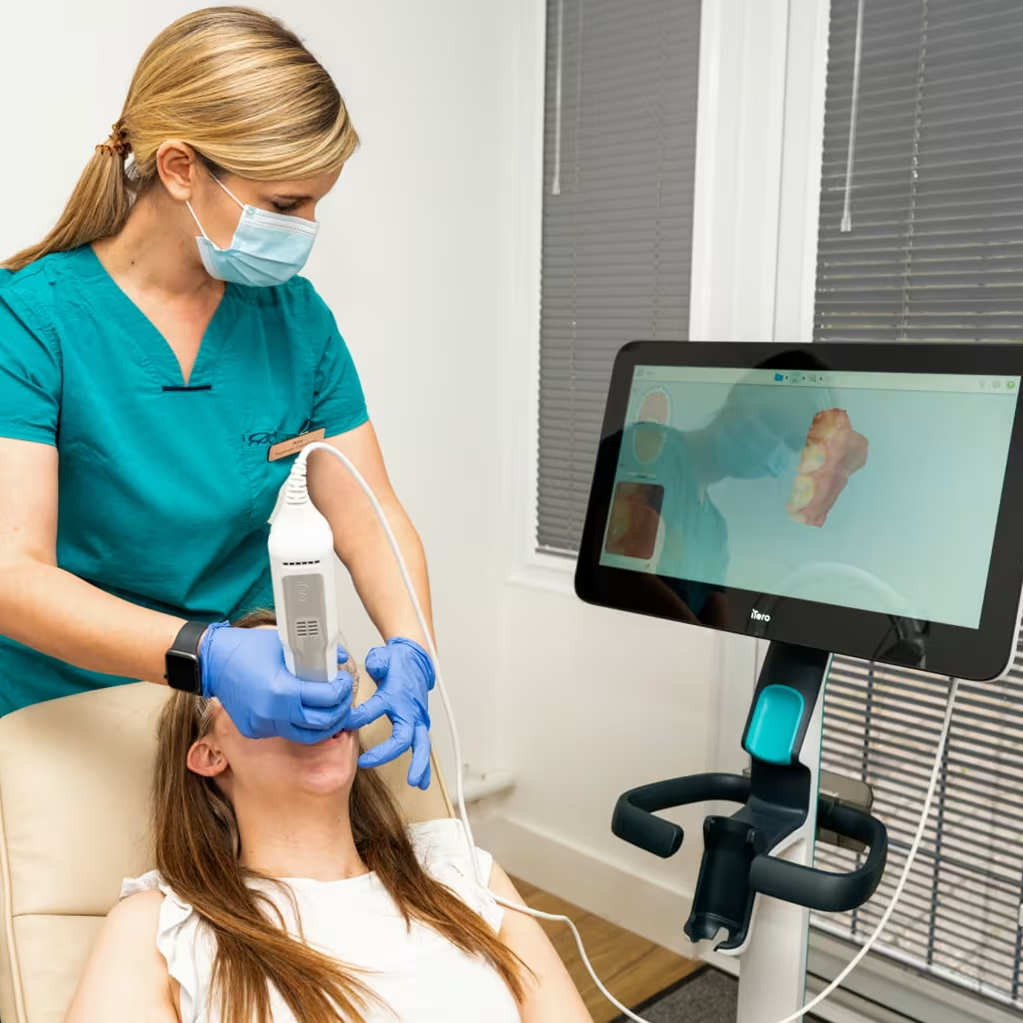
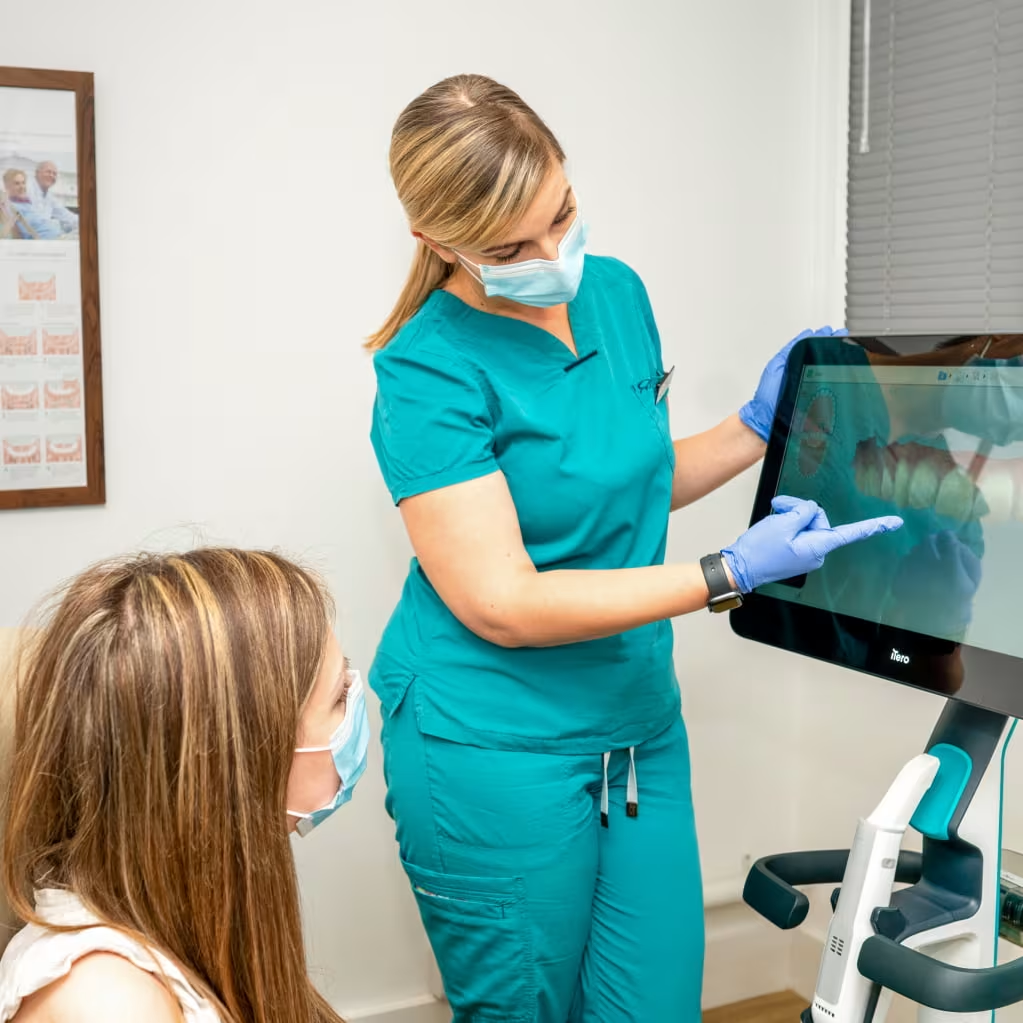
At The Briars, your attachment plan is explained in detail before any aligners are made. You’ll be able to see exactly where attachments are planned on your digital treatment simulation, and your clinician will walk you through why they have been placed where they have. If you have questions or concerns about specific attachments, that appointment is the right moment to raise them.
No – and this is one of the most important points to address clearly, because it’s a concern that patients sometimes carry quietly without voicing it. Attachments are bonded to the outer surface of the enamel using the same adhesive process used for composite bonding and orthodontic brackets. They sit on top of the tooth; they do not alter its structure, penetrate the enamel, or cause any lasting change to the tooth underneath.
When attachments are removed at the end of treatment – which is a quick and entirely comfortable process – the tooth surface beneath is the same as it was before treatment began. Any residual composite is polished away, leaving the enamel intact. Provided your oral hygiene is well maintained throughout treatment, which your clinical team will support you with, attachments present no risk to the underlying tooth.
Placement is straightforward and takes place at your first aligner fitting appointment. Your clinician uses a template – essentially a clear tray with recesses in the exact positions where your attachments will sit – to place each attachment with precision. Composite is applied to the tooth surface through the template, shaped, and cured with a dental light. The process is quick, entirely comfortable, and requires no anaesthetic.
Removal at the end of treatment is equally simple. Your clinician uses a gentle polishing instrument to remove each attachment, and the tooth surface is then polished smooth. Most patients are pleasantly surprised by how straightforward the process is in both directions.
Throughout your treatment, attachments may occasionally need to be replaced if one becomes dislodged – this can happen if you eat particularly hard or sticky foods, or if the aligner is removed with significant force. If an attachment comes off between appointments, contact the practice so we can advise whether it needs replacing promptly or whether it can wait until your next scheduled visit.
For most patients, Invisalign attachments become entirely unremarkable within a few days of placement. The initial awareness of small raised shapes on your teeth settles quickly as your mouth adapts, and the practical impact on daily life is minimal.
A few things are worth knowing going in. Attachments can occasionally make the aligners feel slightly more resistant to removal at first, particularly on the teeth where they are placed – this usually eases as the trays are worn in. They can also attract staining from heavily pigmented foods and drinks over time, which is another good reason to follow your clinician’s advice about what to eat and drink with aligners in and out.
Cleaning around Invisalign attachments requires a little extra attention, as biofilm can accumulate around their edges. Your hygiene team at The Briars will advise you on the most effective techniques for keeping attachments clean throughout treatment, and a GBT hygiene appointment during your aligner treatment is an excellent way to maintain gum health and keep your teeth in the best possible condition while your smile is being transformed.
If you have questions about Invisalign attachments before your treatment begins, or if you’d like to discuss whether Invisalign or ClearCorrect is right for you, our team is here to help. You can also find further patient information on the Invisalign UK website, and the Oral Health Foundation offers independent guidance on tooth straightening options.
Back to blog