Invisalign Retainers: 5 Important Facts After Treatment Ends
Finishing Invisalign treatment is a genuinely exciting moment. You’ve worn your aligners consistently, attended your progress appointments, and now your teeth are where they should be. But there’s one part of the journey that doesn’t end when the aligners do – and it’s arguably the most important part of protecting everything you’ve just invested in.
Invisalign retainers are not optional. They’re the reason your results last.
This article explains why retention matters, what your options are at The Briars, and what happens if you skip it.
Once your active aligner treatment is complete, your teeth are in their new positions – but the bone and periodontal fibres around them haven’t fully stabilised. Teeth have a natural tendency to drift back towards where they came from, particularly in the first weeks and months after treatment ends. This is entirely normal and has nothing to do with the quality of the treatment you received; it’s simply how teeth behave.
Invisalign retainers work by holding the teeth in position while that stabilisation takes place. Over time, as the supporting structures settle, the tendency to drift reduces – but it never completely disappears. This is why long-term retainer wear remains important even years after treatment is finished.
Skipping retainers, or being inconsistent with them, is one of the most common reasons patients find their teeth have shifted after orthodontic treatment. It’s also entirely preventable.
At The Briars, our first recommendation for patients completing Invisalign treatment is Vivera retainers. Vivera is Invisalign’s own retainer system, made by the same company using the same precision scanning and manufacturing process as your aligners. They’re produced from a proprietary material that is thicker and more durable than standard clear retainers, meaning they hold their shape better and last longer with consistent wear.
Vivera Invisalign retainers are provided in sets of three, priced at £613, giving you a supply that typically covers a number of years of ongoing use. Having spares available from the outset means a lost or damaged retainer doesn’t immediately disrupt your retention routine – something that can happen more easily than you’d expect.
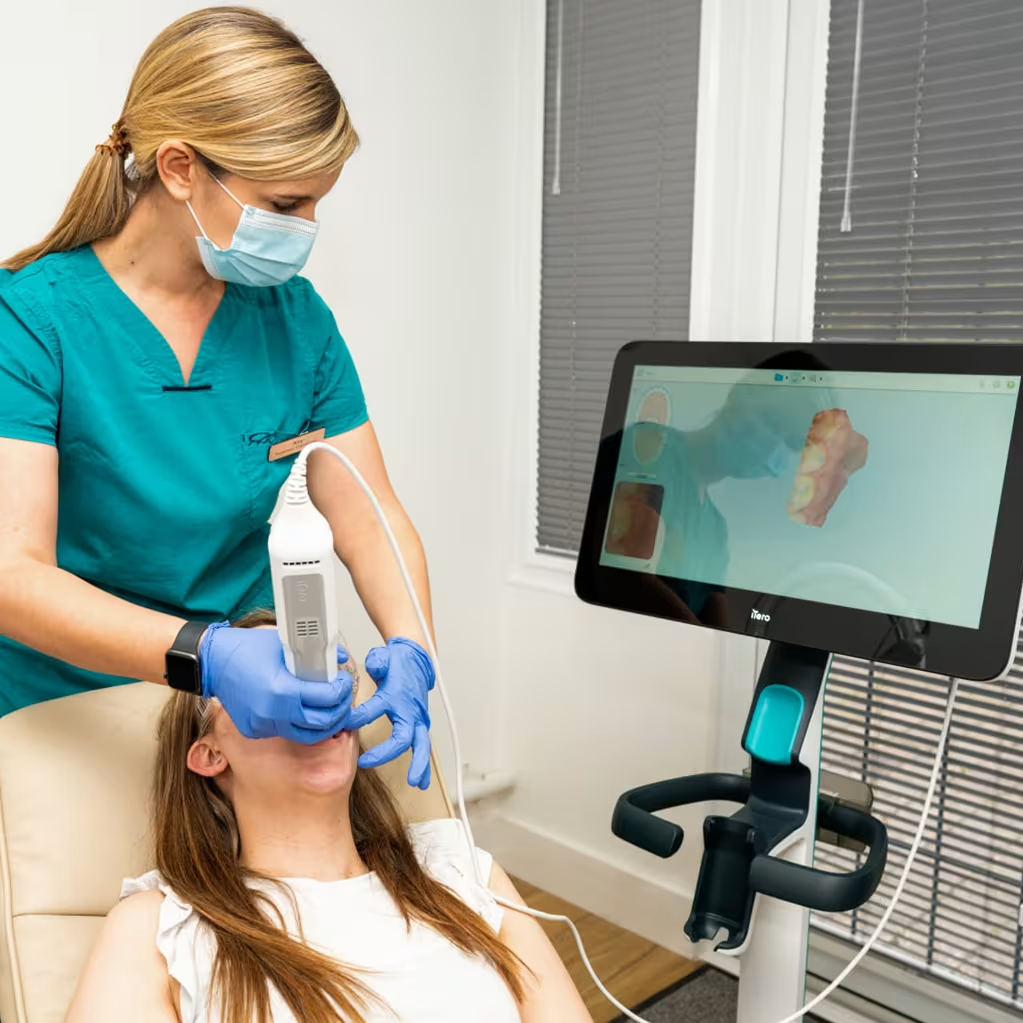
Because Vivera Invisalign retainers are made directly from your iTero scan data, no new impressions are needed. The fit is precise and comfortable, and most patients find them very similar to wearing their final aligner.
Vivera is our preferred recommendation for Invisalign patients, but it isn’t the only option. Depending on your clinical situation and preferences, there are alternatives we can discuss:
Essix retainers are a clear vacuum-formed style retainer that we make in-house at The Briars, priced at £196. They’re a cost-effective option and work well for many patients, though they’re typically less durable than Vivera over time.
Duratain retainers are sent to an external laboratory and offer another alternative to Vivera, priced at £325. These can be a useful option in certain clinical circumstances.
In a small number of cases – based on clinical assessment rather than patient preference – a fixed or bonded retainer may be recommended. This is a thin wire attached to the back of the teeth that provides continuous passive retention. This option is now offered only where there’s a specific clinical reason, and your clinician will advise if it’s relevant to your case. It is important to note that if you have bonded or fixed retainers, you will also need to wear removable retainers.
This is one of the most common questions patients ask at the end of their treatment, and the honest answer is: for as long as you want your teeth to stay straight.
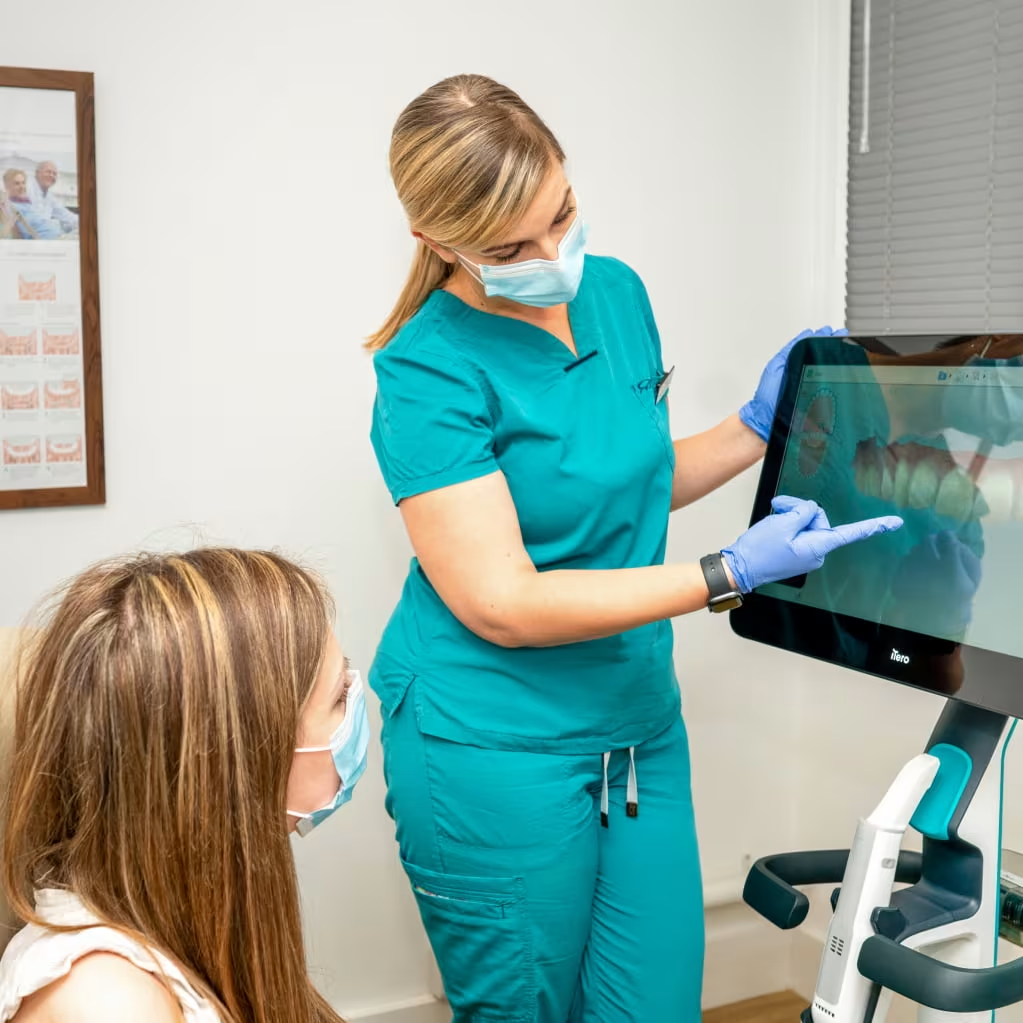
In the early months after treatment, retainer wear is typically full time – similar to your aligner wear schedule. As the teeth and supporting structures stabilise, this usually reduces to nights only. The exact protocol will be guided by Victoria, based on your case and how your teeth are responding.
What we’d encourage patients to avoid is the temptation to stop wearing Invisalign retainers altogether once the teeth feel stable. The natural drift that retainers are designed to prevent doesn’t stop; it simply slows. Patients who maintain consistent nighttime retainer wear over the long term are far less likely to experience unwanted movement than those who stop after a year or two.
Life happens – retainers get lost, accidentally thrown away, or damaged. When this happens, the priority is to replace them as quickly as possible. The longer the gap without retention, the more opportunity there is for unwanted movement to occur.
The British Orthodontic Society has useful patient guidance on retention and what to expect after orthodontic treatment, which is worth reading alongside the advice your clinical team provides.
Invisalign retainers are a straightforward but genuinely essential part of your treatment journey. The investment you’ve made in your smile deserves the same commitment in the retention phase as it did during active treatment – and with the right retainer and a consistent routine, your results can last for many years to come.
If you have questions about Invisalign retainers, or if you’d like to discuss your options following completed aligner treatment, our team is happy to help. Get in touch to speak to us or book an appointment.
Back to blog