If you’ve been told you need to see a specialist periodontist — or if you’ve noticed the signs of gum disease and are wondering what treatment might involve — one of the first questions you’ll have is about cost. It’s a completely reasonable question, and one that deserves a straightforward answer.
The honest truth about periodontal treatment cost is that it varies. Not because practices are being evasive, but because gum disease presents differently in every patient — in its severity, its extent, and the structures it has affected. A patient with one area of early recession has entirely different clinical needs to a patient with advanced periodontitis affecting multiple teeth. Treating them identically, or quoting them the same fee, would be neither accurate nor fair.
What we can do in this article is explain what drives periodontal treatment cost, what you can expect to pay for your initial consultation at The Briars, and why a thorough assessment is the only honest starting point for any cost conversation.
Table of Contents
Periodontal treatment is not a single procedure with a fixed price. It is a clinical pathway that is built around the individual patient’s diagnosis, and the cost reflects the nature and extent of the treatment required to bring disease under control and restore gum health.
Several factors influence periodontal treatment cost directly. The number of teeth or sites affected is significant — a patient with localised recession in one area requires a very different treatment plan to a patient with generalised periodontitis affecting most of their dentition. The depth of periodontal pockets, the degree of bone loss, and whether surgical intervention is needed alongside non-surgical treatment all contribute to the overall clinical picture.
The treatments available also vary in their complexity and their cost. Non-surgical periodontal therapy — thorough root surface debridement to remove the bacterial deposits that drive the disease — forms the foundation of most treatment plans. In some cases, this is sufficient to achieve disease control. In others, surgical procedures are needed to access areas that cannot be adequately treated non-surgically, or to address recession, bone defects, or soft tissue problems that require a more involved approach.
At The Briars, our specialist periodontist Sharmila Khopade also uses Waterlase — an advanced laser system — where it offers a clinical advantage. Laser-assisted periodontal treatment can improve outcomes in certain cases, particularly in the management of peri-implantitis and more complex soft tissue work, but it is recommended on clinical grounds rather than applied routinely. Whether it forms part of your treatment plan will depend on your individual case.
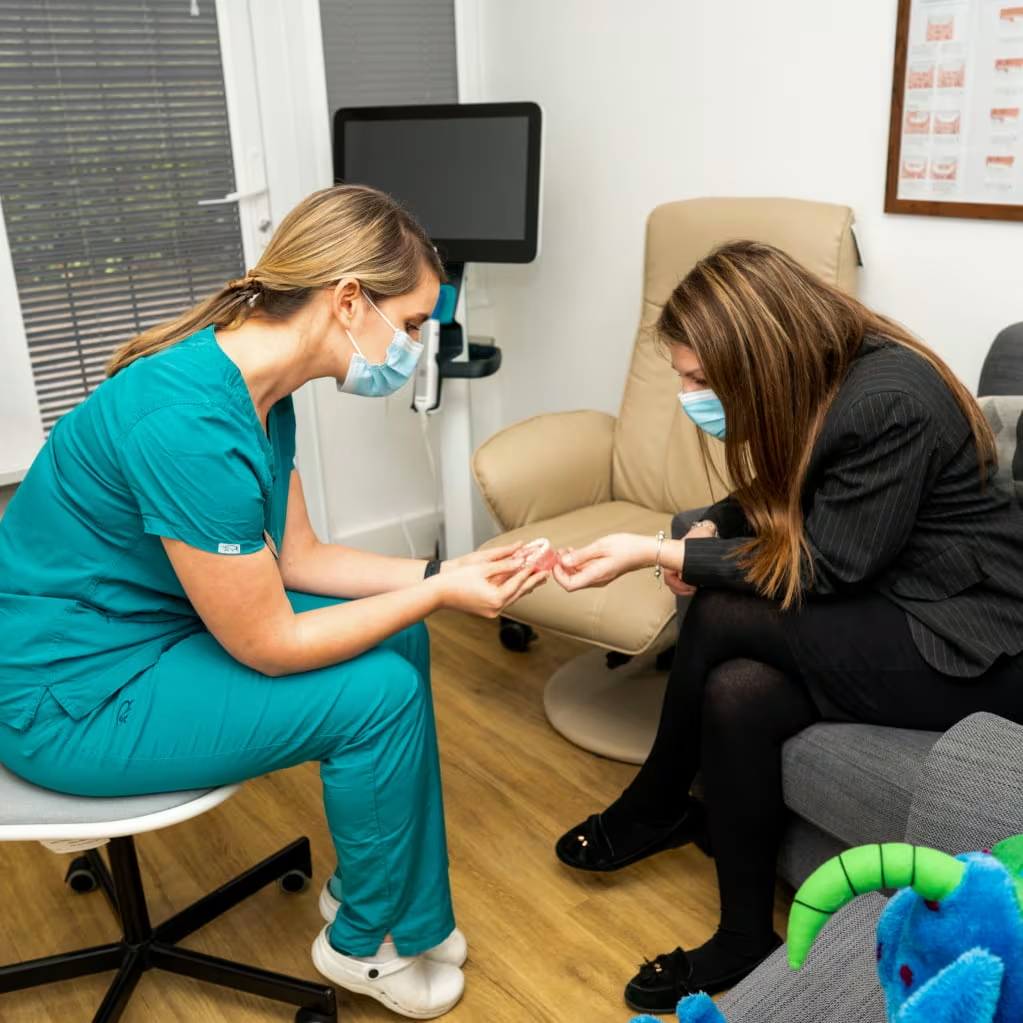
The starting point for understanding your periodontal treatment cost is a comprehensive consultation with Sharmila, priced at £222. This is not simply a brief introductory appointment — it is a full clinical assessment that gives both you and your clinician a complete picture of your gum health and what treatment, if any, is required.
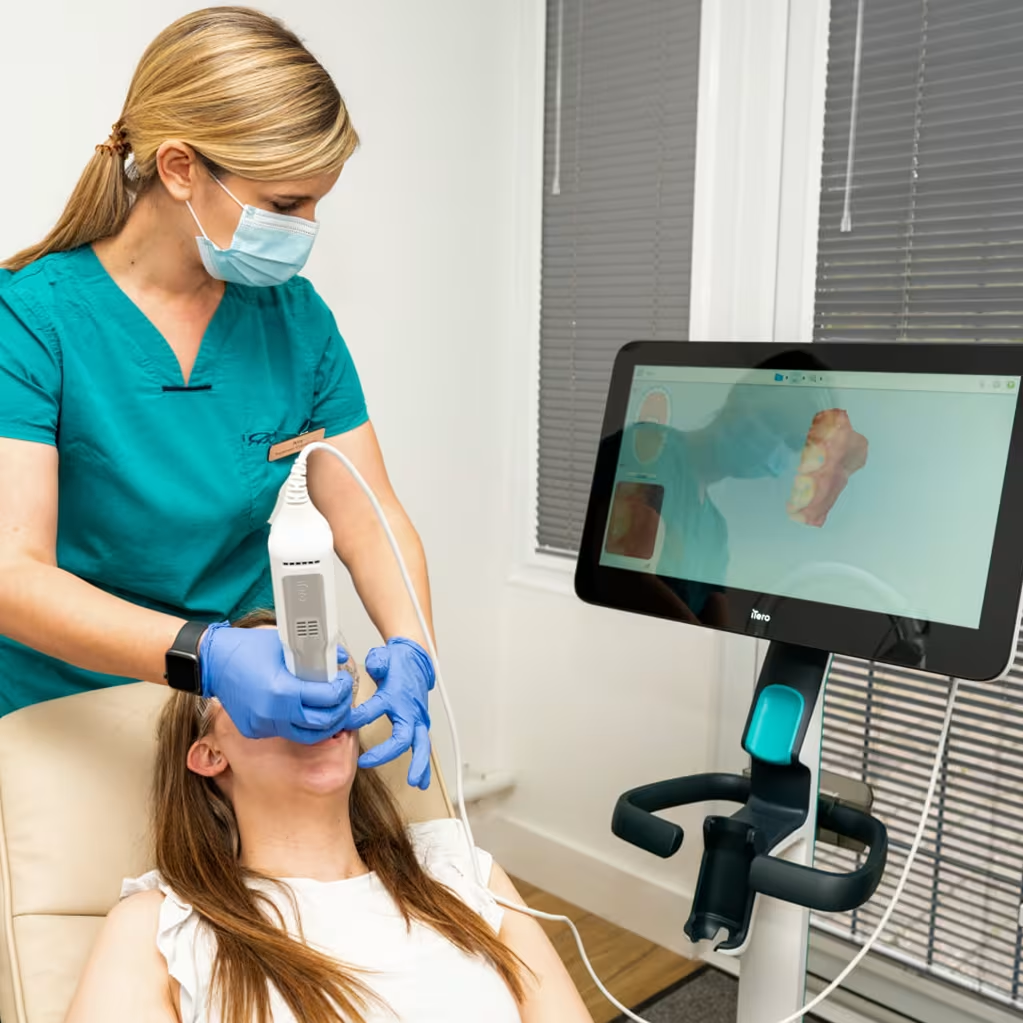
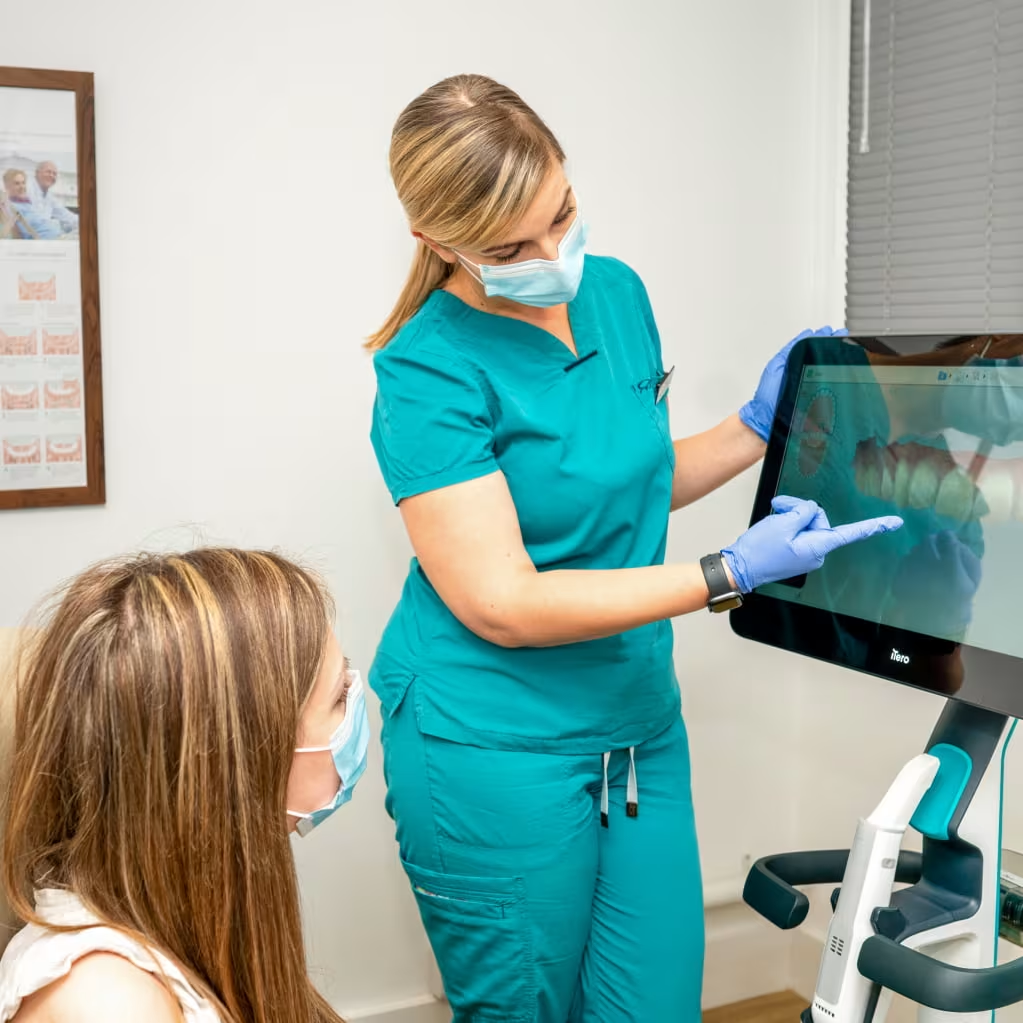
Your consultation includes a thorough periodontal examination with detailed pocket charting, intra-oral radiographs where these are clinically indicated, and a written treatment plan setting out Sharmila’s findings and her recommendations for your care. By the end of your consultation, you will have a clear understanding of your diagnosis, the treatment options available to you, and the costs involved — with no obligation to proceed.
For patients who have been referred by their own dentist, the consultation report is shared with your referring clinician so that your care is properly coordinated. For patients who have self-referred or who are coming to us as new patients, the consultation also gives us the opportunity to understand your broader dental health picture before treatment begins.
Understanding what Sharmila treats helps to illustrate why periodontal treatment cost is so individual. The conditions she most commonly manages at The Briars span a wide clinical range, each with its own treatment requirements.
Active periodontal disease — periodontitis — is the most frequent reason for referral. This ranges from moderate cases that respond well to non-surgical treatment, to advanced cases where bone loss is significant and a more extensive treatment plan is needed. The extent of the disease across the dentition, and the depth of pocketing at affected sites, directly influences the scope and therefore the cost of treatment.
Peri-implantitis — infection and progressive bone loss around a dental implant — is a growing concern as implant treatment becomes more prevalent. It requires prompt, specialist attention and can involve both non-surgical and surgical management depending on the severity of bone loss at the time of diagnosis. Early intervention is significantly more straightforward, and less costly, than managing advanced peri-implantitis where bone loss is substantial.
Gum recession presents differently again. Some patients have a single area of recession that can be addressed with a relatively contained surgical procedure. Others have generalised recession across multiple sites, or recession associated with underlying periodontal disease that needs to be treated before any surgical correction is considered. The clinical picture determines the treatment plan, and the treatment plan determines the cost.
Aesthetic gum procedures — including gum recontouring for smile cases — are similarly individual in their scope. A minor adjustment to a single tooth’s gumline is a very different undertaking to comprehensive gum reshaping as part of a full smile makeover planned through Digital Smile Design.
One of the most important things to understand about periodontal treatment cost is the relationship between timing and complexity. Gum disease is progressive — it does not resolve on its own, and it tends to worsen if left unaddressed. The earlier it is diagnosed and treated, the simpler the treatment required to achieve a good outcome.
A patient seen at the first signs of gum disease may need a structured course of non-surgical treatment and a well-managed maintenance programme to achieve and sustain disease control. A patient who has lived with advancing periodontitis for several years may face surgical intervention, significant bone loss that cannot be fully reversed, and in some cases, the loss of teeth that could have been saved with earlier treatment.
This is not intended to alarm — it is simply a clinically honest observation that the cost of treating advanced gum disease is almost always higher than the cost of treating it early. If you have been told you have gum disease, or if you have noticed bleeding gums, increased sensitivity, or changes in the way your teeth feel, seeking an assessment sooner rather than later is in your interest both clinically and financially.
Our article on what the numbers mean at a gum health assessment explains how periodontal pocketing is measured and what the findings indicate, which may help you understand any previous results you have been given.
We understand that the open-ended nature of periodontal treatment cost can feel unsettling, particularly if you are coming to us without a clear diagnosis or a sense of what treatment might involve. Our aim is to make that uncertainty as short-lived as possible.
Your consultation with Sharmila is designed to give you clarity. By the end of that appointment you will know exactly what your diagnosis is, what treatment she recommends, and what that treatment will cost. There are no hidden stages or unexplained additions — everything is set out in your written treatment plan before any treatment begins.
The Briars also offers dental finance options for patients who would prefer to spread the cost of treatment over time, and our team is always happy to talk through payment options at any stage of your journey with us.
If you have questions before booking, you are welcome to contact us directly — our team can give you a sense of what to expect from the consultation process and help you take the first step with confidence. Alternatively, the British Society of Periodontology and the Oral Health Foundation both provide clear, independent information about gum disease, what specialist periodontal care involves, and why early treatment matters.
Back to blog