All-on-Four cost is one of the most searched questions we encounter – and one of the least transparently answered in dentistry.
Patients researching full-arch rehabilitation and all-on-four cost deserve more than a vague ‘it depends’ or a single headline figure with no context. What you’re really asking when you search for All-on-Four cost isn’t just a number. You’re asking: what am I actually paying for, why does it cost what it does, and how do I know I’m getting it right?
These are the right questions. Here are seven honest answers.
All-on-Four is a full-arch rehabilitation – the replacement of an entire upper or lower set of teeth using four strategically positioned implants to support a fixed bridge. It isn’t simply four implants placed at equal intervals. The positioning is deliberate: the two posterior implants are angled to maximise contact with available bone, often reducing or eliminating the need for bone grafting in suitable cases.
It is a comprehensive pathway that spans digital planning, surgery, provisional restoration, healing, and the design and fitting of a definitive bridge. Understanding this scope is essential to understanding All-on-Four cost – because what you’re investing in extends well beyond a single appointment.
Every All-on-Four case at The Briars is planned with CBCT (cone beam CT) imaging. Without exception.
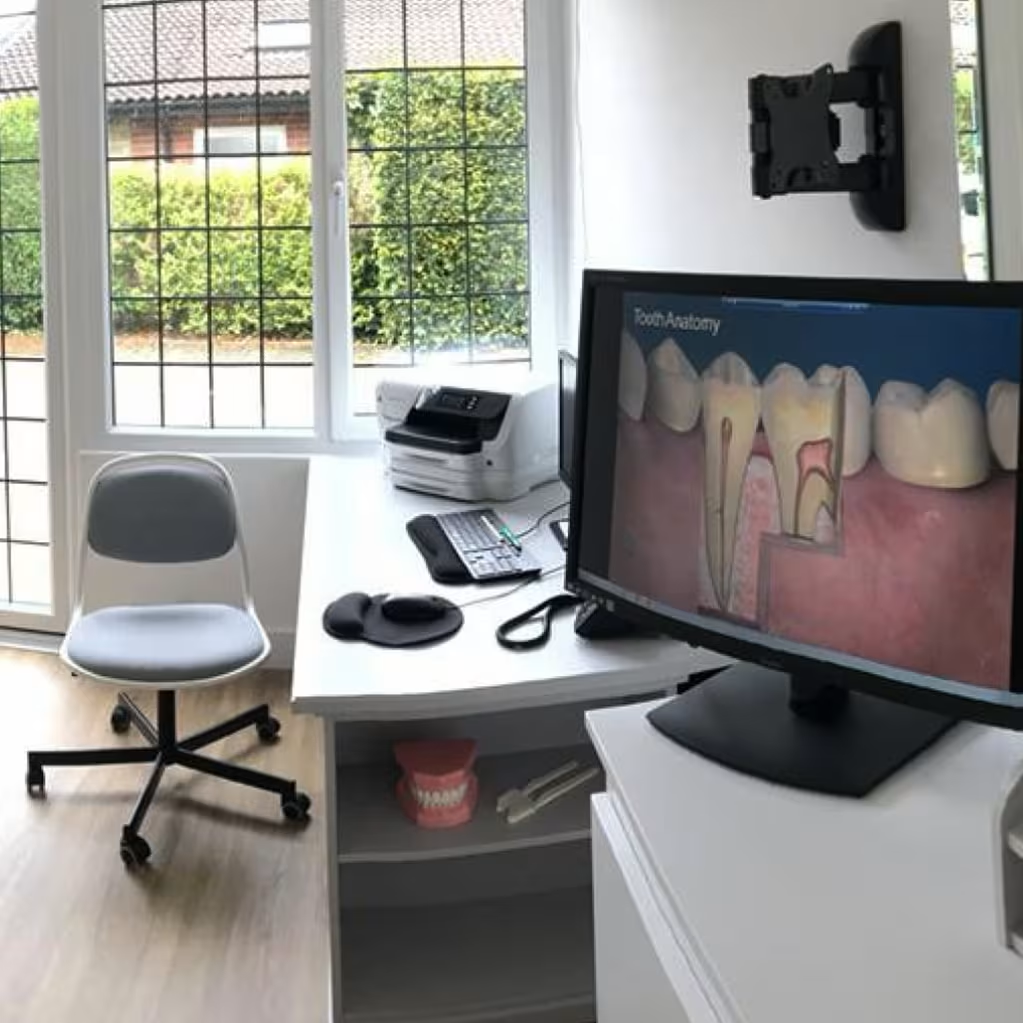
CBCT provides three-dimensional data on bone density, anatomical structures, and the relationship between proposed implant positions and surrounding tissue. It allows us to plan with precision – identifying safe pathways, anticipating challenges, and designing a surgical approach that protects long-term outcomes.
This is not an optional upgrade. It is a clinical standard. Practices that proceed without this level of diagnostic detail are making assumptions that carry real risk. The cost of CBCT imaging is incorporated into our planning process because thorough assessment is fundamental to responsible implant dentistry.
To understand more about why we invest in diagnostic technology, visit our page on digital dentistry and CBCT imaging.
In suitable cases – and suitability is determined through thorough clinical assessment – patients leave the day of surgery with a fixed provisional bridge in place. Not a removable denture. Not a gap. Fixed teeth.
This is a defining feature of our All-on-Four pathway and something patients often don’t realise is possible until they speak with us. The provisional bridge allows you to eat, speak and smile while the implants integrate and the tissues heal. It also gives us the opportunity to refine aesthetics and function before the definitive bridge is designed.
Same-day fixed provisionals are not appropriate for every patient — which is why case selection matters so much. Our article on All-on-Four suitability explains the factors we assess before proceeding.
All-on-Four cost varies because no two cases are identical. The factors that influence pricing at The Briars are clinical, not commercial — and we present them transparently before you make any decision.
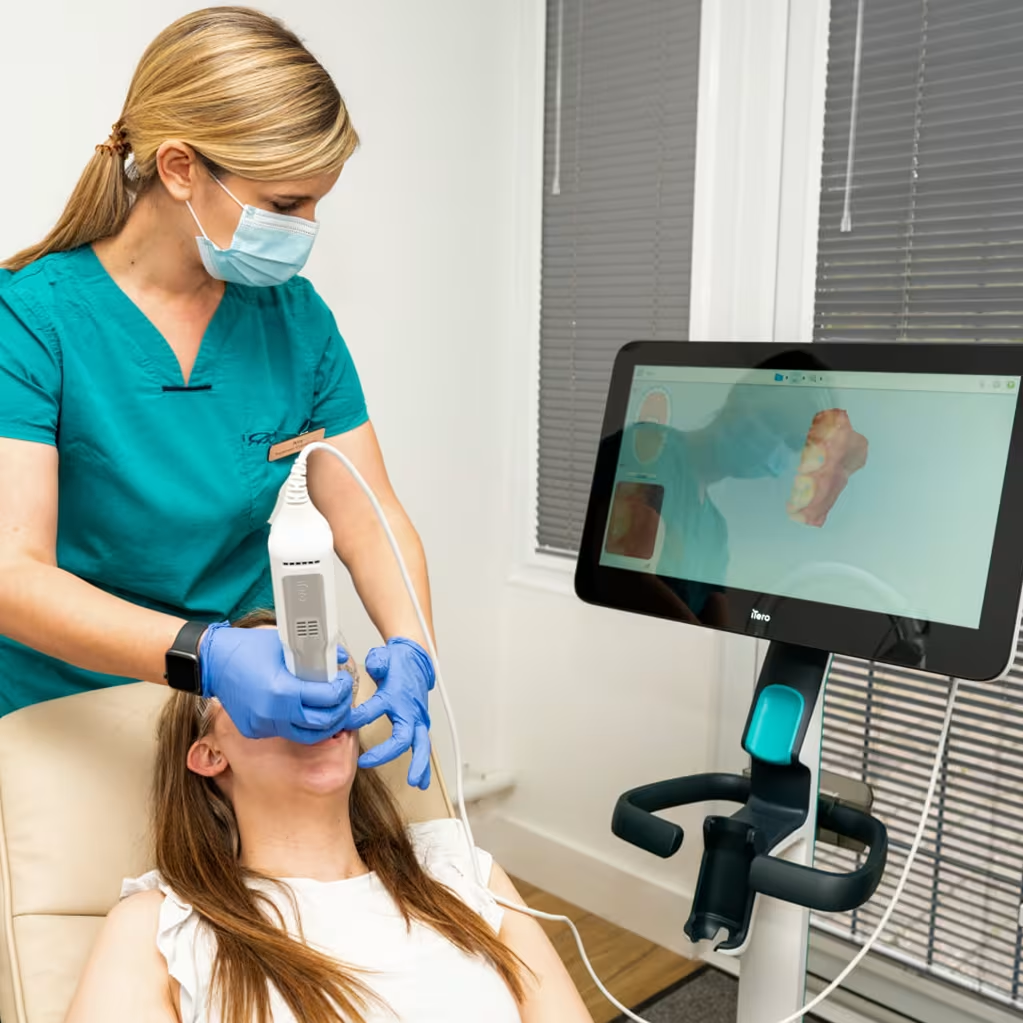
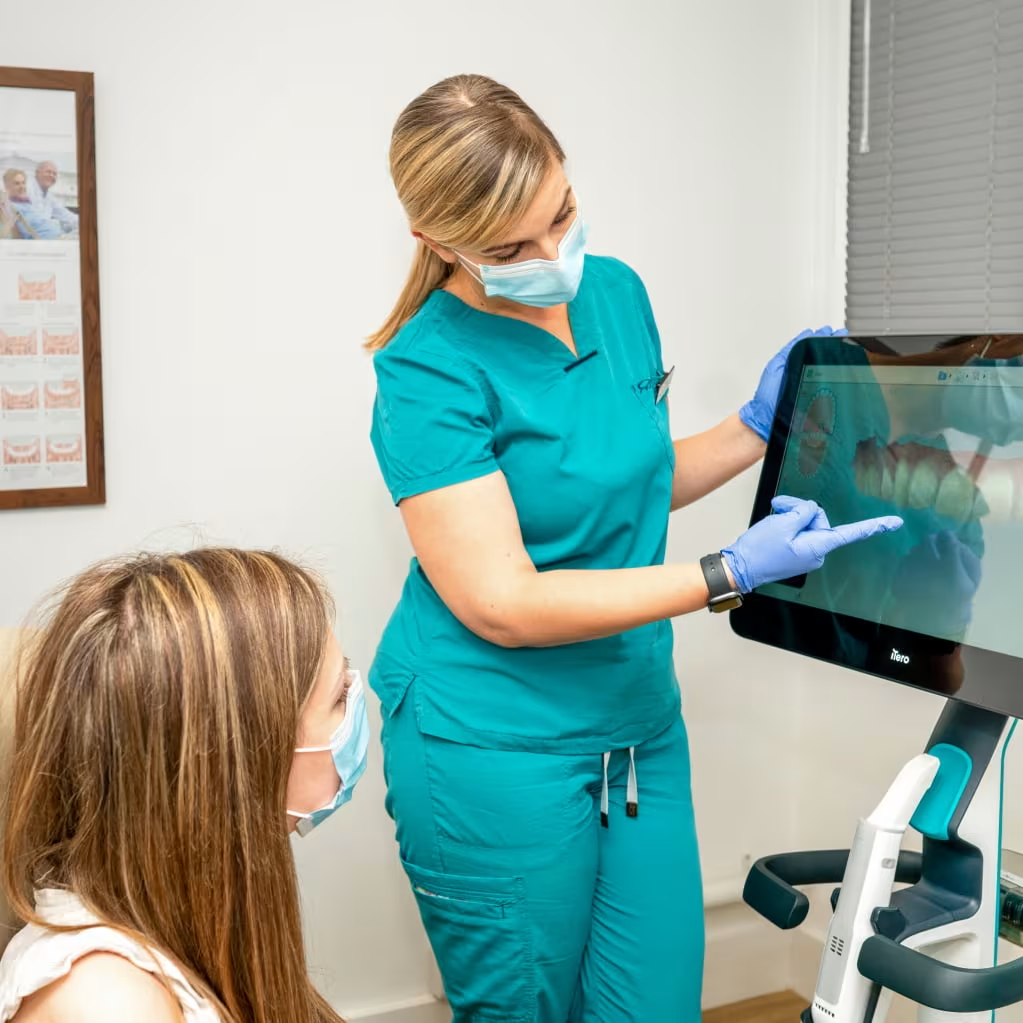
Diagnostics and digital planning covers CBCT imaging, intra-oral scanning using our iTero technology, full bite analysis, and treatment design. This phase determines every decision that follows and is not an area where shortcuts serve anyone well.
Surgical complexity reflects the individual anatomy of your jaw — bone volume, density, angulation requirements, and whether any preparatory procedures are indicated before implant placement. Where gum disease has been present, periodontal stabilisation may be required first. This is addressed honestly at consultation stage.
Provisional restoration is the same-day fixed bridge described above. The quality of materials and the precision of fit at this stage directly influences your comfort and function during healing, and the accuracy of your final result.
The definitive bridge — your permanent restoration — is designed once healing is established and occlusion refined. Material selection, precision fabrication, and aesthetic detailing are all reflected in this stage.
Structured follow-up and review appointments are built into our pathway. Occlusal checks, tissue monitoring, and bite refinement appointments are part of responsible implant care — not optional add-ons.
Maintenance planning is discussed from the outset. Implant-specific home care, hygiene protocols and review intervals are established early, because long-term success depends as much on maintenance as on surgery.
Before you proceed, you’ll receive a clear, phased estimate with full transparency on what’s included at each stage.
There is no universal All-on-Four timeline. The stages involved — assessment, surgery, provisional wear, healing, and final restoration — take as long as your biology and your clinical situation require.
We sequence treatment accordingly, and create treatment plans suited to your clinical needs. It is how you protect a significant investment and achieve a result that lasts.
If you have previously experienced gum disease, our article on implants after gum disease explains what the assessment and stabilisation process involves.
Most patients are genuinely surprised by how manageable recovery feels when it’s been well planned. Clear post-operative instructions, direct contact with our team, and a structured dietary progression make a significant difference to the experience.
You’ll leave with written guidance covering medication, hygiene, and what to eat and when. Diet is introduced in stages — softer foods initially, with a return to a wider range as healing progresses and occlusion is confirmed at review. We won’t rush this process, and we’ll be available throughout.
Any concerns during recovery are taken seriously. Direct access to our team is part of the care pathway, not a premium.
Well-placed implants with excellent maintenance can last many years. Well-placed implants with poor maintenance are a different story.
Peri-implant disease — inflammation affecting the tissue and bone around an implant — is a real risk if hygiene and monitoring are neglected. This is why maintenance is built into your plan from the very beginning, not discussed as an afterthought once treatment is complete.
Your hygiene protocol will be implant-specific. Review intervals will be agreed and scheduled. And if anything changes between appointments, you’ll know exactly how to raise it with us.
The Oral Health Foundation provides useful background on implant care and longevity for patients who’d like to read further: Oral Health Foundation – Dental Implants.
We believe in transparency, so here it is.
At The Briars, the consultation and planning phase – which includes your CBCT scan, iTero digital impressions – is priced at approximately £500. This is the foundation of everything that follows, and it’s the stage at which we establish whether All-on-Four is genuinely the right pathway for you.
Full-arch treatment is priced at £15,000 per arch.
This includes surgery, your same-day fixed provisional bridge, structured follow-up appointments, and the design and fitting of your definitive restoration. We’ll provide a detailed, phased estimate before you commit to anything, so there are no surprises.
Finance options are available for patients who’d prefer to spread the cost. Speak to our team for details.
All-on-Four is not the right solution for every patient presenting with full-arch tooth loss.
In some cases, a staged implant approach provides greater long-term stability. In others, the anatomy, bite mechanics, or maintenance considerations mean that an alternative full-arch strategy — including implant-retained overdentures in certain circumstances — may serve the patient better.
Being premium means being honest. We will never recommend a treatment pathway because it is the most marketable option. We’ll recommend it because it’s the most appropriate one for you — and we’ll explain why, clearly, with time for questions.
If you haven’t yet read our article on All-on-Four suitability — and the seven reasons we sometimes say no — it’s a useful companion to this piece.
If you’re researching All-on-Four cost, the most valuable thing we can offer you isn’t a price list — it’s a properly structured consultation that gives you accurate information for your specific situation.
That means CBCT-led assessment, a clear phased plan, transparent pricing, and time to ask every question you have. No pressure. No shortcuts.
Your smile means everything to us — and the right plan always makes more difference than the fastest one.
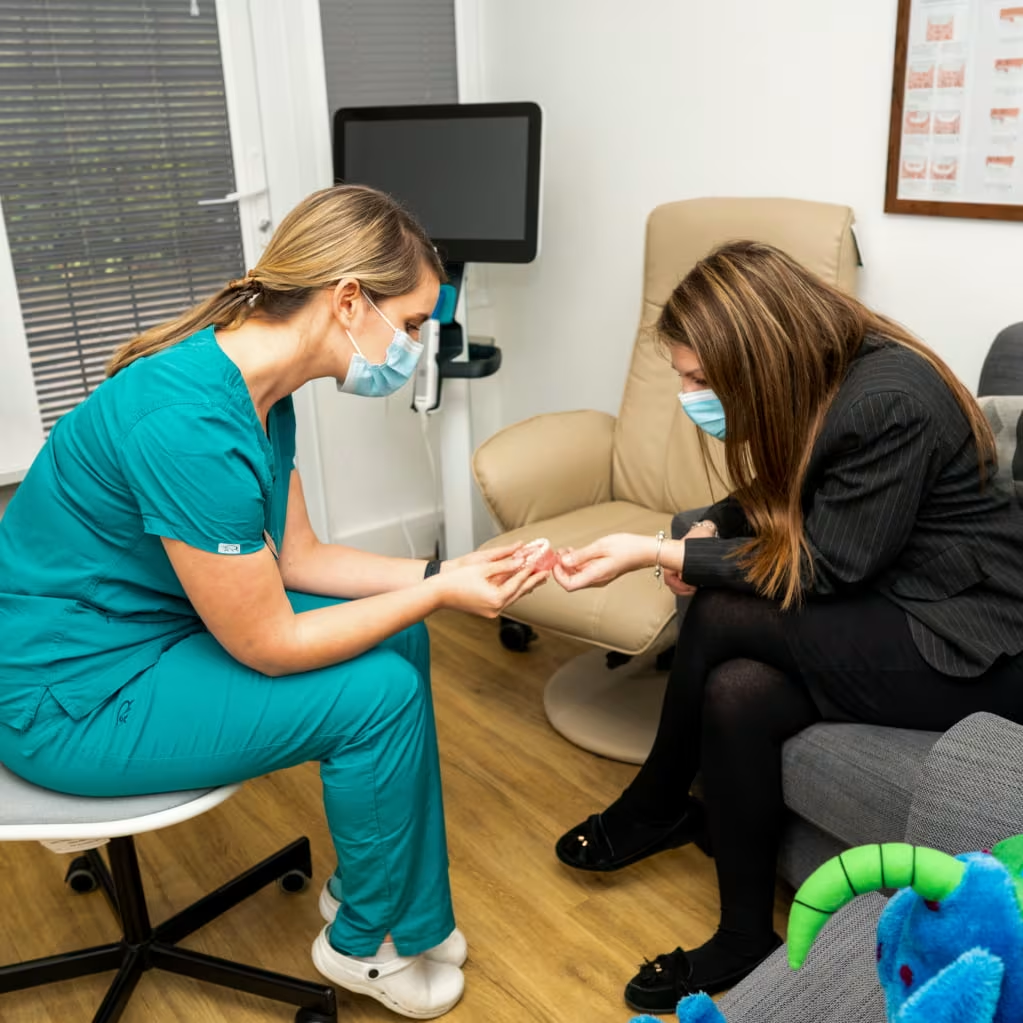
Book a consultation with our Treatment Coordinator at The Briars Dental Centre, Newbury, where we will discuss the all-on-four cost, process and outcome in detail.
Back to blog