All-on-Four recovery is, for most patients, far more manageable than they feared. That fear is understandable – having a full arch of teeth removed and implants placed in a single surgical appointment sounds significant. It is significant. But with the right preparation and clear guidance, the vast majority of patients at The Briars progress through recovery steadily and without serious complications.
This article gives you an honest account of what the recovery process actually looks like: what to expect in the days and weeks after surgery, how your diet needs to adapt, what’s normal and what isn’t, and how the journey from your provisional bridge to your final restoration unfolds.
If you’re still in the decision-making phase and haven’t yet read our article on All-on-Four costs or our overview of who is and isn’t suitable for the procedure, those are good places to start before coming back here.
One thing to set your expectations from the outset: All-on-Four recovery is not a single event. It is a process that unfolds over several months, with distinct phases. Understanding those phases – and what each one requires of you – makes the whole experience considerably easier to navigate.
All-on-Four surgery at The Briars is carried out under local anaesthetic with sedation available for patients who want it. The procedure involves placing at least four titanium implants into the jaw and, on the same day, attaching a fixed provisional bridge – a full arch of teeth that you leave the practice wearing.
This is an important distinction. You do not go home with a gap, a removable denture, or a temporary plate. You leave with fixed teeth. They are provisional – the definitive restoration comes later – but they are fixed in place and functional from day one.
For the remainder of the day, you will need to rest. The anaesthetic will wear off over several hours, and some discomfort will begin to build as it does. This is normal. You will have been given appropriate pain relief to take home, and our team will have discussed what to expect and when to take it.
Swelling, bruising, and tenderness around the surgical sites are all expected, with the palate being affected if the upper jaw is being treated. Some patients experience more bruising than others – this varies considerably and does not indicate a problem. Minor bleeding or oozing from the surgical sites in the first few hours is also normal. You should avoid rinsing vigorously, spitting, or touching the surgical sites during this period.
Eat nothing until the anaesthetic has fully worn off to avoid biting your cheek or lip without realising. When you do eat, start with cool, soft foods only.
Diet is one of the most critical factors in All-on-Four recovery, and it is also the one patients most commonly underestimate. The implants need time to integrate with the bone – a process called osseointegration – before they can withstand normal biting forces. Putting that process under excessive stress too early risks implant failure.
We divide the dietary recovery into three phases.
|
PHASE |
WHAT YOU CAN EAT |
WHAT TO AVOID |
|
Phase 1 Weeks 1–2 |
Smooth soups, yoghurt, scrambled eggs, mashed potato, soft fish, smoothies, porridge, soft cheese |
Anything requiring chewing. No hard, crunchy, chewy, or sticky foods whatsoever |
|
Phase 2 Weeks 3–6 |
Soft pasta, flaked fish, well-cooked vegetables, soft bread without crusts, minced meat, ripe banana |
Crusty bread, raw vegetables, tough meat, anything that requires significant bite force |
|
Phase 3 Weeks 7–12 |
Gradually reintroduce a normal diet — starting with softer options and building up as comfort allows |
Very hard foods (nuts, hard crusts, crusty baguettes) should still be avoided until your definitive bridge is fitted |
These timelines are a guide, not a guarantee. Our clinical team will advise you specifically based on how your healing is progressing. Some patients move through the phases more quickly; others need more time. Follow the guidance you’re given at your appointments rather than what a neighbour told you about their experience.
|
PERIOD |
FOCUS |
WHAT TO EXPECT |
|
Days 1–3 |
Rest and manage discomfort |
Peak swelling and bruising. Take prescribed pain relief as directed. Rest as much as possible. Sleep with your head slightly elevated to reduce swelling. |
|
Days 4–7 |
Swelling begins to reduce |
Bruising may look worse before it improves – this is normal as it tracks downward. Discomfort should be decreasing. Begin gentle warm salt water rinses as instructed (usually after 24 hours). |
|
Weeks 2–3 |
Improving comfort |
Most patients feel significantly more comfortable and are managing well on over-the-counter pain relief if needed at all. Soft diet continues. Oral hygiene with the tools and technique your team showed you is now important. The lump on your palate if you had the upper jaw treated, should start to reduce. |
|
Weeks 4–8 |
Integration underway |
The implants are integrating with the bone. You may feel more settled and be tempted to eat normally – resist this. The provisional bridge is not as robust as your final restoration. This phase is critical. |
|
Months 3–6 |
Review and planning for the final restoration. |
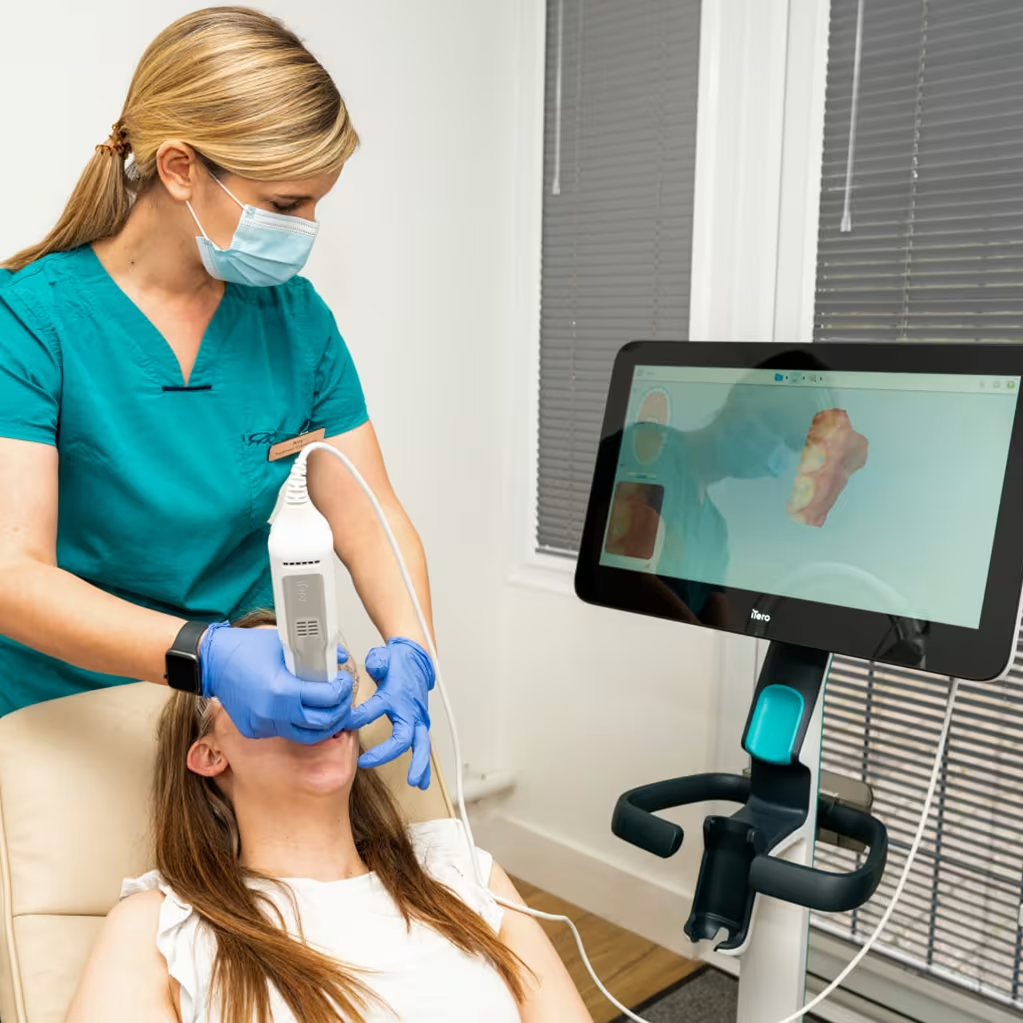
Your clinical team assesses osseointegration and begins planning your definitive restoration. Impressions or digital scans are taken to design your final bridge. Your definitive bridge is then fitted. This is the permanent restoration — typically made from zirconia or a similar high-strength material — that replaces the provisional bridge you have been wearing. |
Keeping the surgical sites clean is essential throughout recovery, and the tools and technique required are different from what you may be used to. Your clinical team will show you exactly what to use and how – this typically includes a specialist interdental brush, a water flosser, and an antibacterial mouthwash in the early stages.
The provisional bridge, like all dental restorations, accumulates plaque and bacteria. Poor hygiene around the implant sites is one of the primary causes of peri-implantitis — an inflammatory condition around the implant that, if left untreated, can compromise the implant itself. The hygiene habits you establish during recovery are the habits you will need for life.
Knowing the difference between expected recovery symptoms and signs that warrant a call to the practice helps patients feel considerably more confident during the process.
Normal and expected
Significant swelling, bruising, and tenderness in the first week. Some minor bleeding or oozing in the first 24 hours. Feeling tired and low-energy in the first few days. Sensitivity around the surgical sites. Occasional clicking or slight movement of the provisional bridge in the early weeks as the soft tissue settles. A lump on the palate if the upper jaw has been treated.
Contact us if you experience
Significant or increasing pain that is not controlled by prescribed medication after the first 48 hours. Swelling that is worsening after day four rather than improving. A fever. A foul taste or smell from the surgical sites. Numbness or tingling that persists beyond the first few days. Any visible loosening of the provisional bridge. Bleeding that does not settle with gentle pressure.
Our team is available to answer questions throughout your recovery. If something doesn’t feel right, contact us. We would always rather hear from you about something that turns out to be normal than have a patient sit on a concern that needed attention.
Recovery is temporary. The result is permanent. Patients who come through the process well – who protect the integration phase with the right diet, maintain excellent oral hygiene, and attend their follow-up appointments – achieve outcomes that genuinely transform daily life. Eating without restriction, speaking without embarrassment, smiling without hesitation.
All-on-Four is not a quick fix. It is a significant surgical and restorative procedure that requires commitment from both the clinical team and the patient. When that commitment is in place on both sides, the outcomes are exceptional.
If you are considering All-on-Four and would like to understand whether you are a suitable candidate, or to discuss the costs involved in detail, our Treatment Coordinator is the right first conversation. There is no obligation to proceed, and no pressure on the day.
The Oral Health Foundation provides independent guidance on dental implants, all-on-four and what long-term care involves at dentalhealth.org.
Back to Blog