Can Invisalign fix my bite? It’s one of the most common questions we hear — and one that deserves a genuinely honest answer rather than a reassuring yes with no further explanation.
The short answer is: sometimes, yes. But the more important answer is that it depends entirely on what’s causing your bite issue, how it’s been assessed, and whether your treatment has been planned with function as well as aesthetics in mind.
At The Briars Dental Centre, aligner treatment is led by Dr Victoria Holden, our Platinum Invisalign provider and the only clinician in the practice offering aligner therapy. That status reflects not just volume but depth of experience — and with that experience comes a clear-eyed view of what aligner treatment can genuinely achieve, and where its limits lie. So let’s deep dive into that question further – ‘can Invisalign fix my bite?’
Here are five things every patient should understand before starting.
Your bite — the way your upper and lower teeth meet — is not just about aesthetics. It affects how you chew, how your jaw functions, how your teeth wear over time, and whether your muscles and joints are under unnecessary strain.
When patients ask whether ‘Invisalign can fix my bite’, they’re usually referring to one of several distinct conditions: an overbite (where upper front teeth overlap too far over the lower), an underbite (where the lower teeth sit in front of the upper), an open bite (where front teeth don’t meet at all), or a crossbite (where upper and lower teeth sit on the wrong side of each other).
Each of these is a different clinical challenge — and each requires a different level of planning, precision and, in some cases, a different treatment approach altogether.
Invisalign has developed significantly as a system and, in experienced hands, can address a meaningful range of bite issues. Mild to moderate overbites are often very manageable with aligner treatment. Certain crossbites respond well, particularly where the issue is dental rather than skeletal in origin. Open bites — historically one of the more challenging presentations for aligners — can now be treated effectively in well-selected cases using precision bite ramps and careful staging.
Underbites are more complex. Where the underbite has a skeletal component — meaning it originates in the position of the jaw rather than the position of the teeth — aligner treatment alone is unlikely to be sufficient, and a combined approach or alternative pathway may be more appropriate.
This is why honest assessment matters more than optimistic reassurance, and why the direct question ‘can Invisalign fix my bite’ is critical. We offer a range of clear aligner systems at The Briars, including Invisalign and ClearCorrect, and the right system for you is determined by your clinical needs — not by brand preference.
The most common reason aligner treatment fails to address bite issues isn’t the technology — it’s the assessment stage that preceded it.
Bite relationships are three-dimensional. They involve the way teeth meet under load, the position of the jaw at rest and in function, and the balance between muscle activity and joint mechanics. Assessing this properly requires more than photographs and a scan. It requires time, clinical experience, and a genuine understanding of how tooth movement affects the whole system.
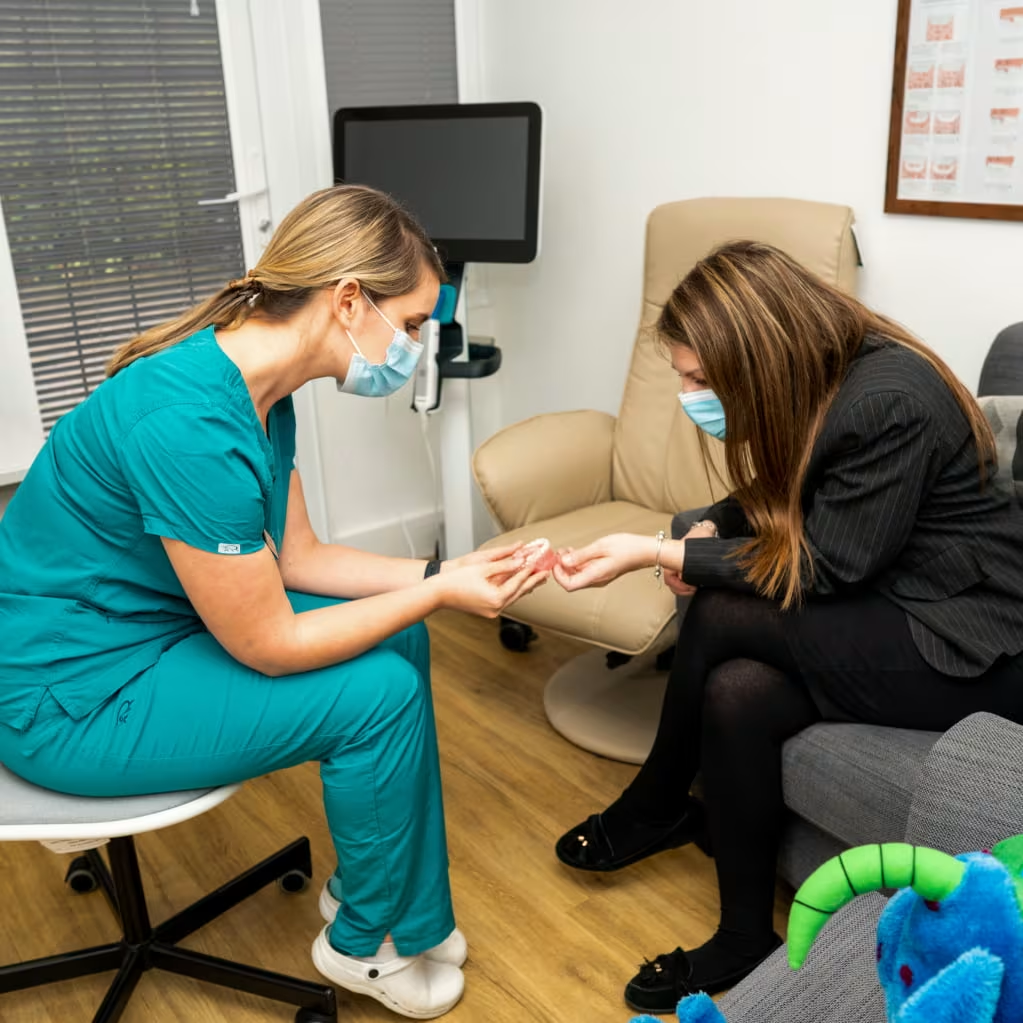
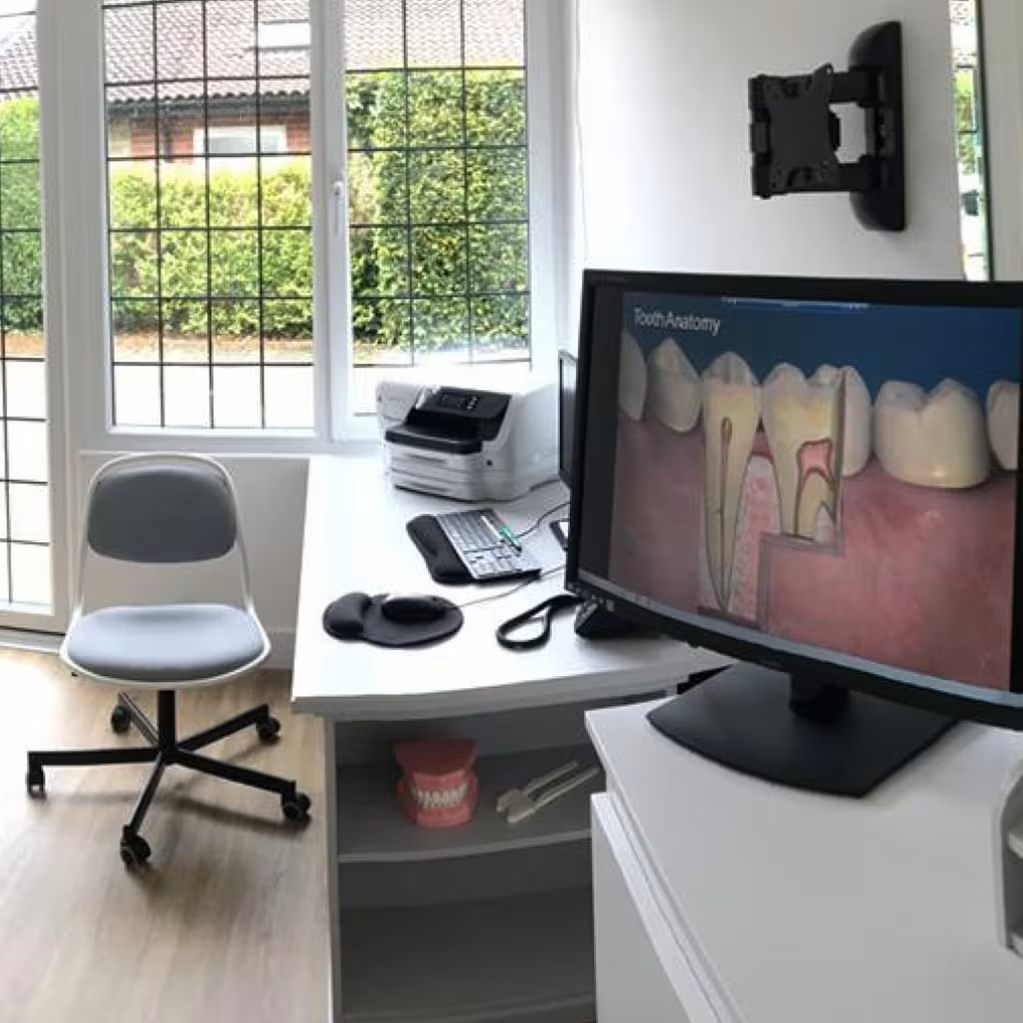
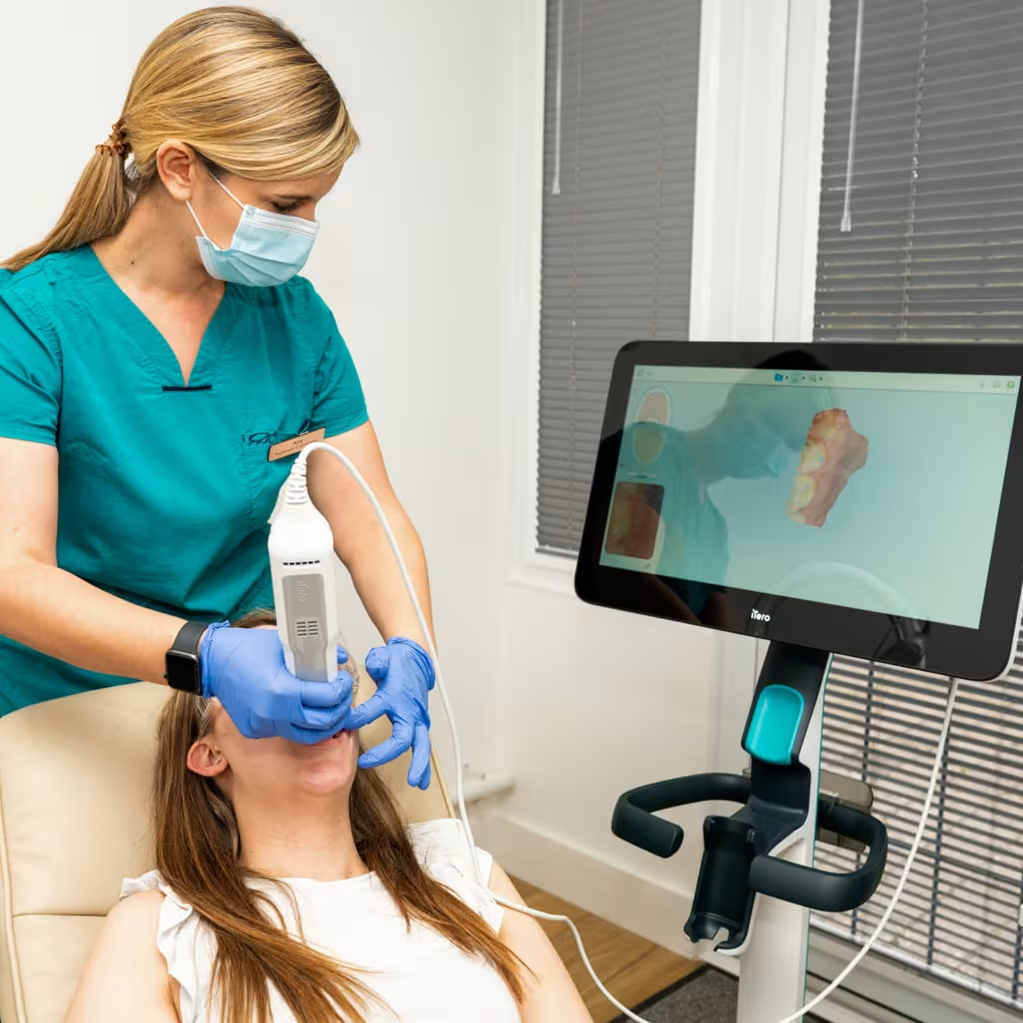
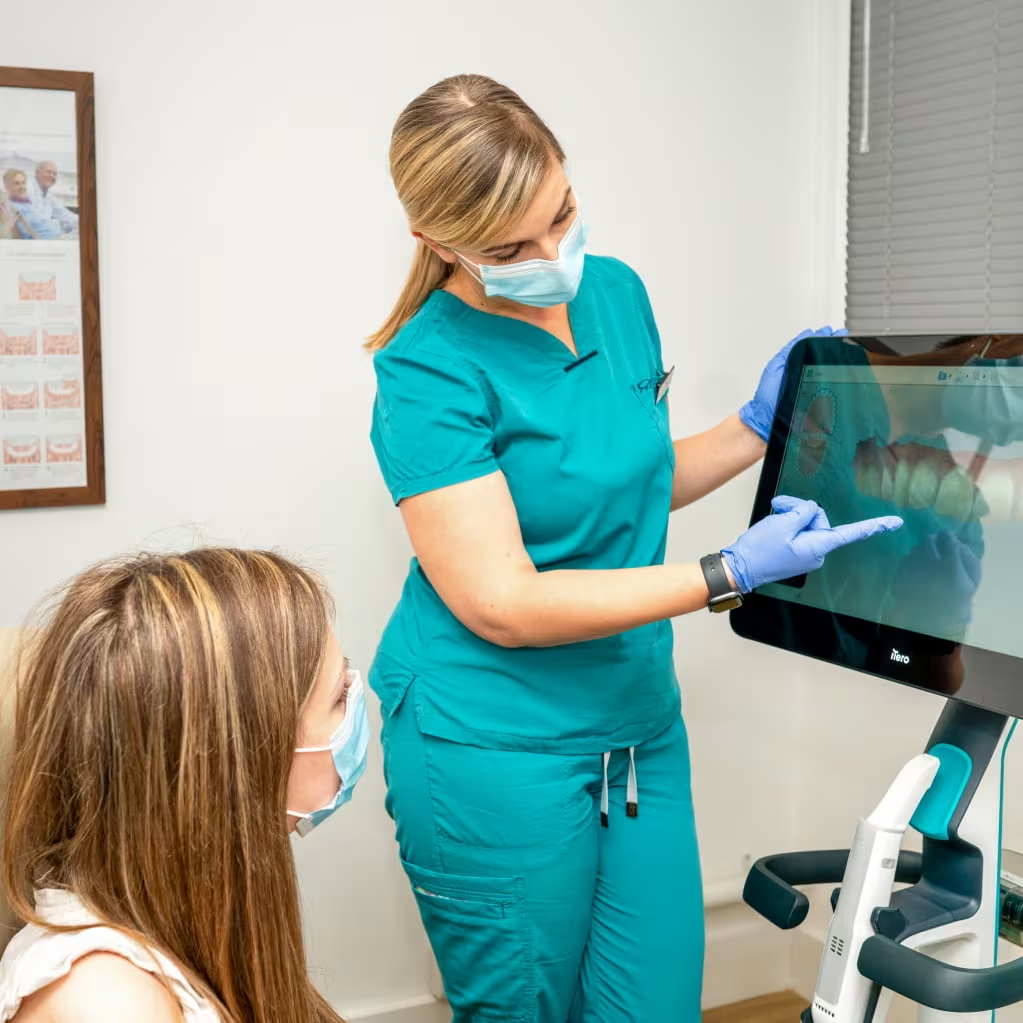
At The Briars, every aligner consultation begins with a comprehensive assessment that includes digital scanning with our iTero technology, bite analysis, and an honest conversation about what your teeth are doing and why. This isn’t a box-ticking exercise — it’s the foundation on which your entire treatment plan is built.
If a bite issue is identified that aligner treatment can address, we’ll plan for it explicitly and deliberately. If it can’t be fully resolved with aligners alone, we’ll tell you that clearly, and we’ll discuss what a complete solution actually looks like.
Straight teeth and a corrected bite are not always the same thing — and patients who aren’t warned of this distinction can finish treatment feeling disappointed.
When bite relationships aren’t properly assessed before treatment begins, several things can happen. Teeth may straighten aesthetically but continue to meet unevenly, placing certain teeth under excessive load. Jaw discomfort or muscle tension that existed before treatment may persist or worsen. In some cases, tooth movement can inadvertently shift a manageable bite situation into a more problematic one.
These aren’t rare outcomes — they’re a predictable consequence of planning that prioritises appearance over function. It’s a pattern we see in patients who come to us having already completed aligner treatment elsewhere, looking for answers about why things don’t feel right.
We’ve written about the most common Invisalign problems we encounter and how we solve them — bite-related issues feature prominently.
Aligner treatment at The Briars is planned with the end in mind — not just the aesthetics of straight teeth, but the functional stability that makes those results last.
Dr Victoria Holden’s Platinum provider status with Invisalign reflects a level of case volume and clinical experience that allows us to take on complex cases with confidence — including patients with bite discrepancies, those who have had previous orthodontic treatment, and patients whose cases have stalled or gone wrong elsewhere.
We also work within a multidisciplinary team. If your case involves periodontal considerations, restorative needs, or complexity that benefits from specialist input, that resource is available within our practice — under one roof, with coordinated planning. For patients who want to understand more about how the British Orthodontic Society defines appropriate orthodontic assessment, their patient information resources provide useful background reading. It may not answer ‘can Invisalign fix my bite?’ but will give you further information about assessments and planning.
What we won’t do is promise outcomes we can’t deliver, or minimise complexity because it’s easier than explaining it. That’s not the standard we hold ourselves to.
Often, yes — when the case is properly assessed, correctly planned, and managed by a clinician with the experience to recognise both the possibilities and the limits.
The right question isn’t just “can Invisalign fix my bite?” It’s “has anyone actually looked at my bite carefully enough to answer that question properly?”
If you’d like that conversation, we’re ready for it – so bring your questions – ‘can Invisalign fix my bite?’, ‘can this fix my overcrowded lower teeth?’, ‘Can I get rid of the gaps in my teeth?’ – we’re here for you.
Book a consultation with our Treatment Coordinator at The Briars Dental Centre, Newbury.
Your smile means everything to us — and that includes making sure it works as well as it looks.
Back to Blog