The market for teeth straightening has expanded enormously over the past decade. Alongside established clinical aligner systems, a growing number of cheap aligner alternatives have emerged – typically marketed direct to consumers, often at a fraction of the price of clinically supervised treatment, and frequently positioned as a convenient, hassle-free route to a straighter smile.
It’s understandable that these options appeal. Tooth straightening is a significant investment, and anything that appears to offer the same result for less money deserves serious consideration. The problem is that cheap aligner alternatives often aren’t offering the same result – and the risks of unsupervised or poorly supervised tooth movement are ones that patients deserve to understand fully before making a decision.
This article doesn’t name specific products or providers. What it does is explain the clinical risks that apply to any aligner treatment that lacks proper supervision, thorough assessment, and qualified clinical oversight – so you can ask the right questions and make a genuinely informed choice.
Before looking at the risks of cheap aligner alternatives, it’s worth understanding what a properly supervised aligner treatment actually involves – because this is the benchmark against which any alternative should be measured.
A sound aligner treatment begins with a thorough clinical assessment, including X-rays, gum health screening, and where appropriate, three-dimensional imaging to understand the bone and root positions in detail. It involves treatment planning by a qualified and experienced clinician who can identify whether the proposed tooth movements are safe and achievable. It includes regular monitoring throughout treatment so that problems can be identified and addressed early. And it ends with a proper retention plan to protect the result.
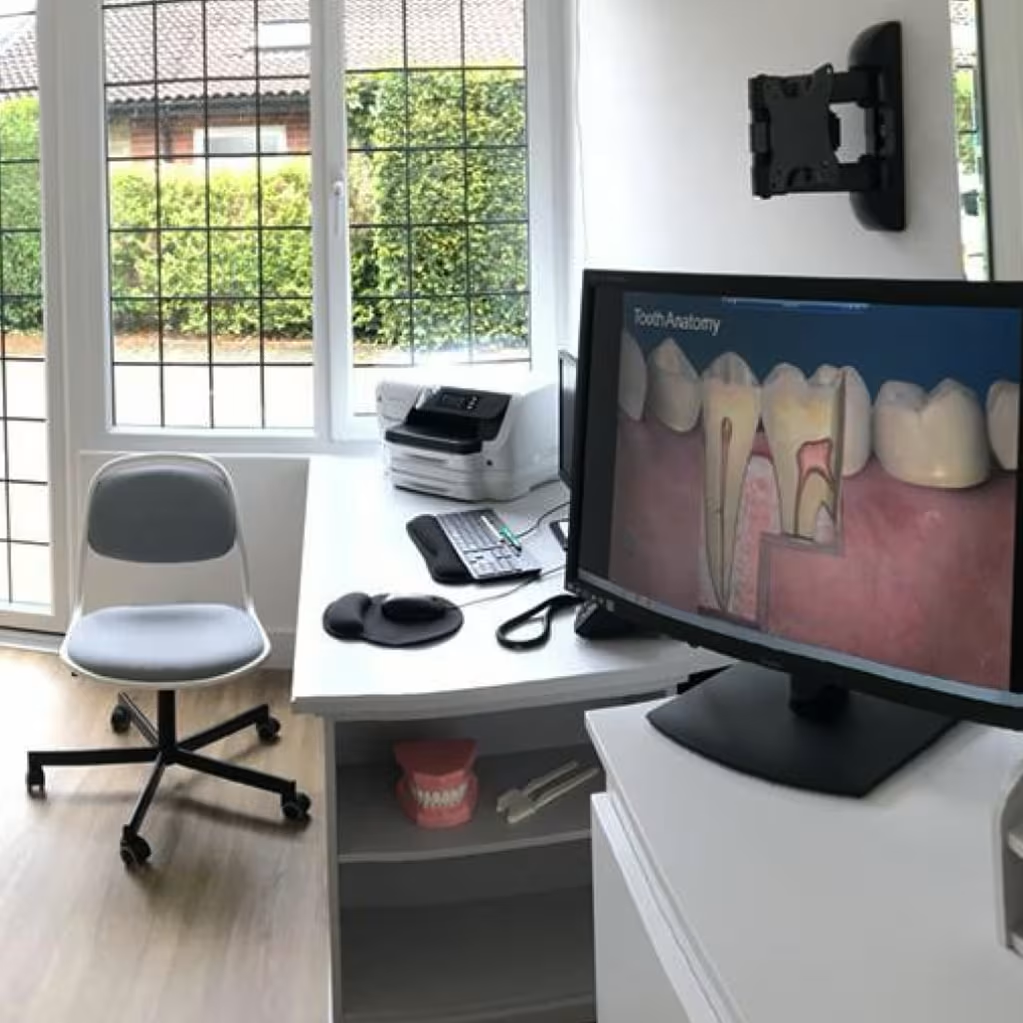
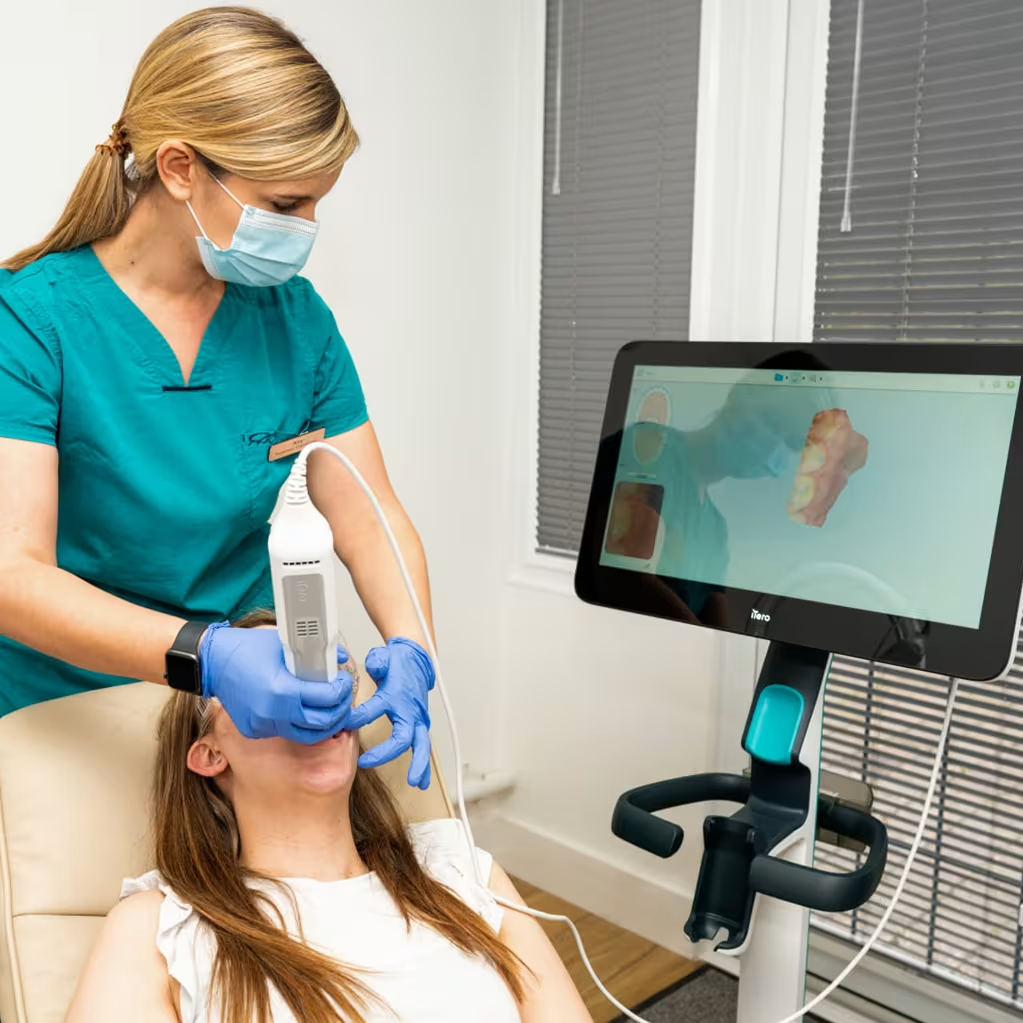
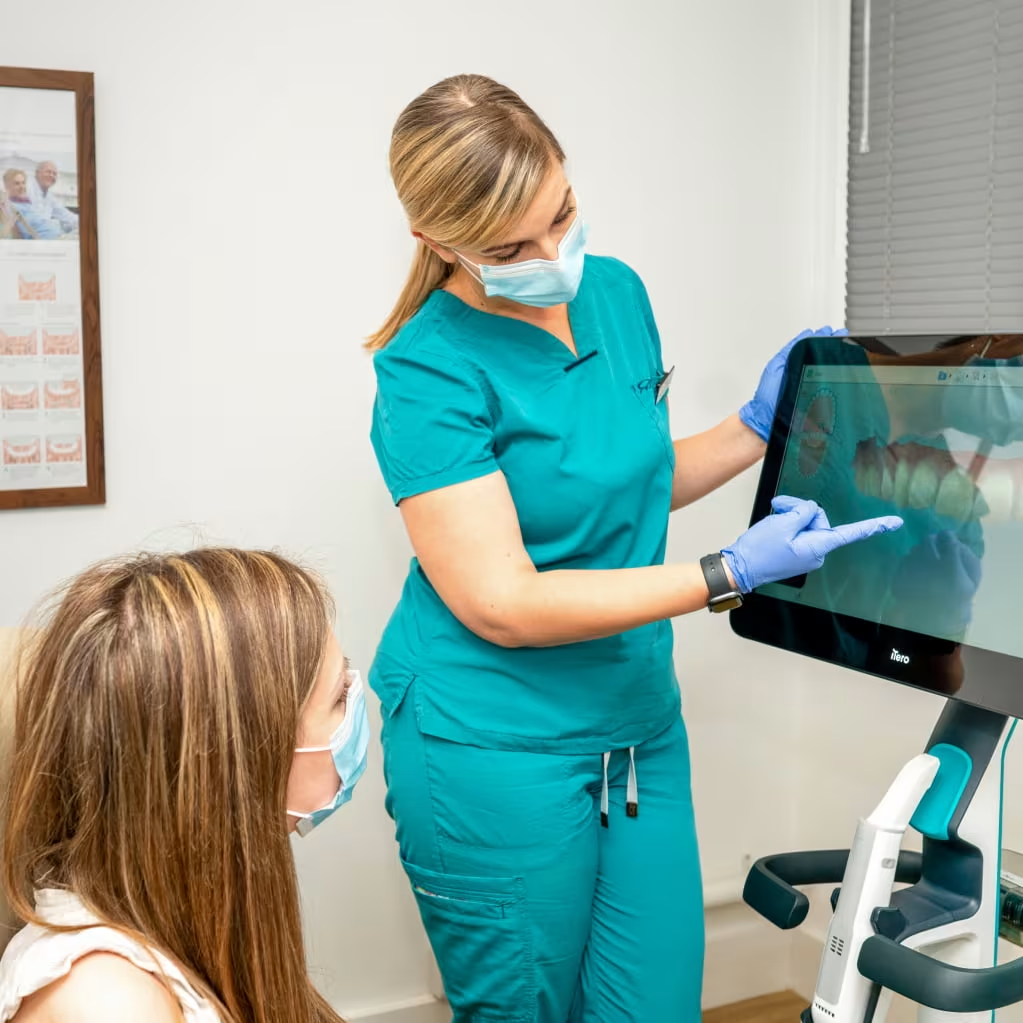
At The Briars, every aligner patient follows this pathway. Victoria Holden, our Platinum Invisalign provider, plans and oversees every case, supported by five iTero scanners, CBCT imaging where clinically indicated, and Dental Monitoring for ongoing remote oversight between appointments. The gap between this level of care and many cheap aligner alternatives is significant – and the risks below explain why.
One of the most significant risks of cheap aligner alternatives is that they frequently lack any meaningful assessment of the patient’s underlying dental health before treatment begins. Moving teeth through bone is not a cosmetic procedure – it’s a clinical one, and it carries real risks if active dental disease is present.
Gum disease, bone loss, untreated decay, and root resorption can all be worsened by orthodontic tooth movement. A patient who begins aligner treatment with undiagnosed periodontitis, for example, may find that the bone loss accelerates as the teeth move – causing damage that is far more complex and costly to treat than the original alignment issue.
Cheap aligner alternatives that rely on a simple photograph or impression kit sent through the post – without a clinical examination, X-rays, or gum health screening – cannot adequately assess these risks. The General Dental Council provides guidance on what registered dental professionals are required to do before undertaking any orthodontic treatment, and it’s worth understanding what standards you should expect.
Teeth don’t exist in isolation. The visible crown is supported by a root that sits within the jawbone, and the position, length, and angulation of that root matters enormously when planning tooth movement. Without X-rays, it’s simply not possible to know what’s happening beneath the gum line – and this is information that’s essential to safe treatment planning.
Cheap aligner alternatives that bypass radiographic assessment are planning tooth movement blind. This creates a risk of root resorption – where the roots shorten as a result of orthodontic forces applied without adequate planning – and a risk of moving teeth into positions that compromise the roots or the surrounding bone in ways that aren’t visible until significant damage has already occurred.
Even a well-planned aligner case can develop complications during treatment. Teeth don’t always move exactly as planned. Gum tissue can respond unexpectedly. Aligners that don’t fit correctly can apply forces in unintended directions. These are situations that require a qualified clinician to identify and address – and they require the clinician to actually see the patient, examine the teeth and gums, and make a clinical judgment.
Cheap aligner alternatives that rely entirely on remote oversight – photographs submitted via an app, without in-person appointments – cannot provide this level of monitoring. By the time a problem is visible in a photograph, it may already have progressed beyond what would have been a simple correction at an earlier stage.
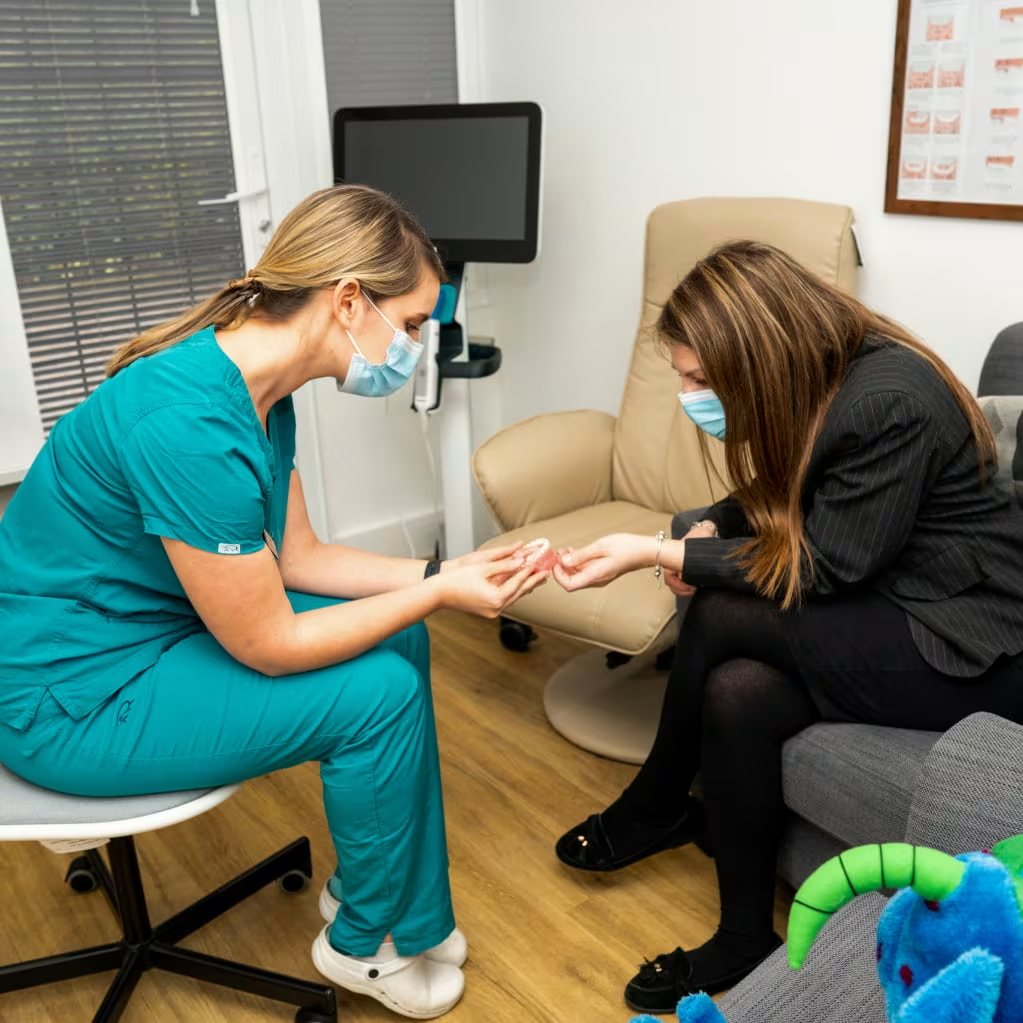
At The Briars, in-person progress appointments are a core part of aligner treatment, alongside Dental Monitoring between visits. This combination means Victoria can identify anything that needs attention quickly – and act on it before it becomes a larger problem.
When things go wrong with cheap aligner alternatives, patients often find themselves without a clear pathway for getting them fixed. Direct-to-consumer aligner companies are not dental practices. They don’t have clinicians available to examine you, diagnose a complication, or carry out any treatment. If your gums become inflamed, if a tooth moves in an unexpected direction, or if you develop pain during treatment, you may find that your only option is to seek help from a dental practice that had no involvement in your treatment – and that managing complications from someone else’s aligner case is complex, time-consuming, and not without cost.
This is one of the most practical risks of cheap aligner alternatives – not just the risk of something going wrong, but the risk of having nowhere to turn when it does.
A straight smile is only as good as the retention plan that protects it. Without proper retainers, worn consistently after treatment ends, teeth will move – this is a clinical certainty, not a possibility. Cheap aligner alternatives frequently give insufficient attention to retention, either providing low-quality retainers, offering inadequate guidance on wear, or leaving patients to source their own retention without professional support.
At The Briars, retention is built into every aligner treatment from the beginning. Vivera retainers – made by Invisalign to the same precision standard as the aligners themselves – are provided as part of the package, and Victoria discusses the retention protocol with every patient before treatment ends. Protecting the result is as important as achieving it.
If you’re considering tooth straightening and want to make a confident, well-informed choice, here are the questions worth asking of any provider – whether you’re considering Invisalign, ClearCorrect, or any other system:
Is there a full clinical examination, including X-rays, before treatment begins? Is gum health assessed and confirmed as stable before aligners are fitted? Will a qualified and experienced clinician plan and oversee your treatment? Are in-person appointments included throughout? Is retention provided and explained as part of the package?
If the answer to any of these is no – or unclear – that’s worth taking seriously. The British Orthodontic Society has patient guidance on choosing a provider and understanding what safe tooth straightening involves.
Cheap aligner alternatives may appear to offer a shortcut to a straighter smile. In reality, the risks of inadequate assessment, poor supervision, and insufficient retention mean that the apparent saving can come at a significant clinical cost – one that’s often borne by the patient long after the original treatment has ended.
At The Briars, we’re always happy to discuss your options honestly, whatever your budget or starting point. If you’d like to find out more about aligner treatment with us, get in touch to arrange a free consultation with our Treatment Coordinator – we’ll give you a clear picture of what’s involved and what to expect, without pressure in either direction.
Back to blog