Most patients who ask about dental implants focus on the visible end result – a tooth that looks, feels, and functions like the real thing. What they are less familiar with is how an implant actually works, and what the individual components are that make that result possible.
Understanding the parts of a dental implant is not just an interesting detail. It helps you have a more informed conversation with your clinician, understand why each stage of the process matters, and appreciate why not every implant system or every placement technique is equivalent.
This guide covers every component of a dental implant in plain English – what it is, what it does, and what it is made from.
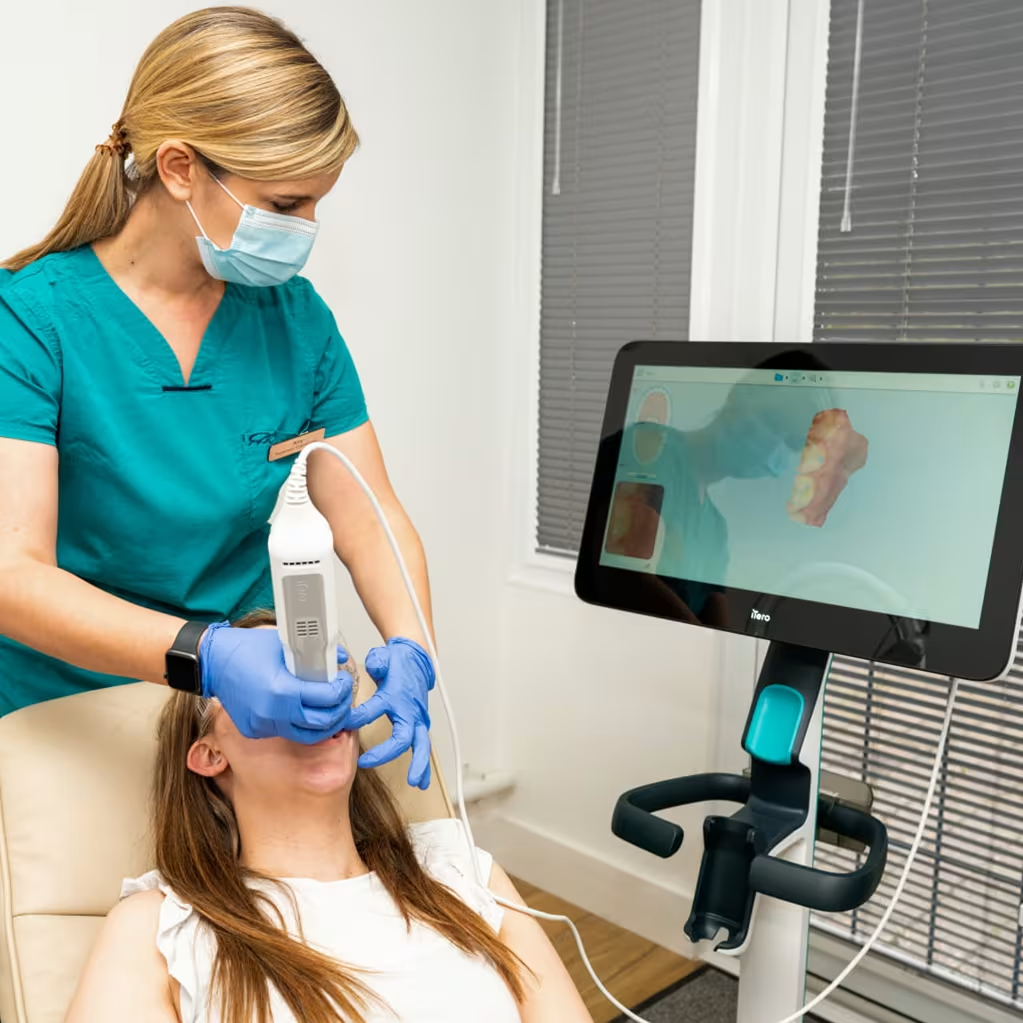
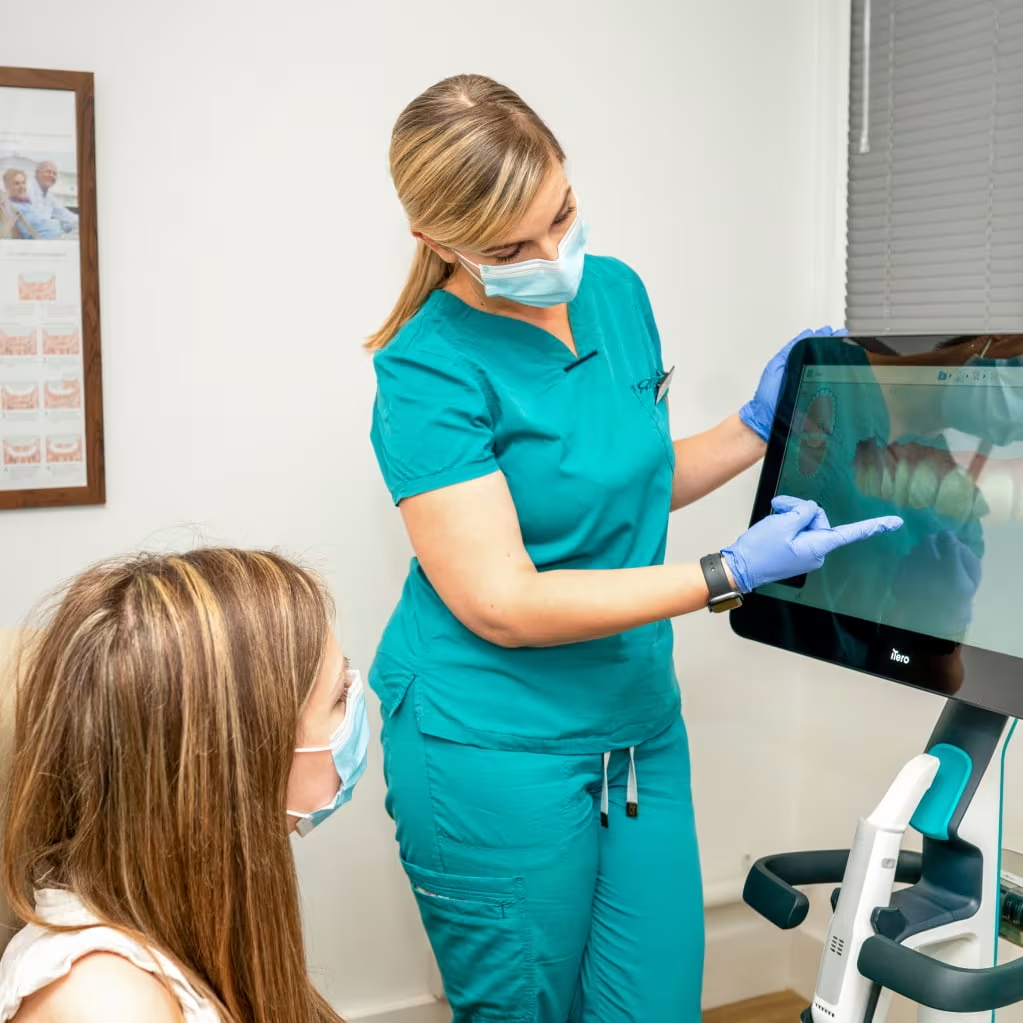
At The Briars, our dental implant treatment is planned using CBCT imaging, digital scanning and is carried out by either Dr Nicholas French, Dr Richard Lilleker, or Dr David Veige. Every case is assessed individually – the components selected, the placement approach used, and the restoration design are all specific to your anatomy and clinical situation, not a standard package applied to every patient.
A dental implant is not a single object. It is a system made up of three distinct parts, each with a specific role. Understanding how they work together makes the process much easier to follow.
1. The Implant Fixture
The fixture is the part most people picture when they think of a dental implant – a small screw-shaped post, typically between eight and sixteen millimetres long, that is placed directly into the jawbone during surgery. This is the root replacement.
The fixture is almost universally made from titanium, which has a unique biological property: it integrates with living bone over time rather than being rejected by it. This process is called osseointegration, and it is what gives implants their exceptional long-term stability. Over a period of weeks to months, the bone grows directly onto and around the titanium surface, locking the fixture in place as securely as a natural tooth root.
The surface texture of the fixture is engineered at a microscopic level to maximise the contact area available for osseointegration. This is one of the reasons why implant systems are not all equivalent – the quality of the surface preparation, the precision of the thread design, and the grade of titanium used all influence how reliably the fixture integrates and how long it lasts.
At The Briars, we use dental implant systems from established, clinically validated manufacturers with documented long-term outcome data. The choice of system is made based on clinical suitability for each patient, not cost.
2. The Abutment
Once the fixture has integrated with the bone, the abutment is connected to its top. The abutment is the connector – the component that links the implant fixture below the gum line to the crown above it.
Abutments come in a range of shapes, angles, and materials, and the choice is clinically significant. In areas where aesthetics are important – particularly the front teeth – the abutment material and emergence profile (the shape of the transition from the implant to the gum surface) has a direct impact on how natural the final result appears. A well-designed abutment supports the gum tissue in the right shape and position, creating the illusion that the crown is emerging naturally from the gum, just as a real tooth would.
Abutments may be made from titanium, zirconia (a tooth-coloured ceramic), or a combination of both. For posterior teeth where metal visibility is not a concern, titanium is typically used for its strength. For anterior restorations where the tissue is thin or the aesthetic demand is high, a zirconia abutment avoids any risk of the grey colour of metal showing through the gum.
Some abutments are custom-fabricated to precise specifications based on digital scans of your mouth — another area where the quality of planning and the technology available makes a measurable difference to the final result.
3. The Crown
The crown is the visible part – the tooth-coloured restoration that sits on top of the abutment and replicates the appearance and function of a natural tooth. It is what everyone sees when you smile, and what you use every time you eat.
Implant crowns are typically made from either porcelain fused to metal (PFM), full zirconia, or lithium disilicate ceramic. Zirconia and lithium disilicate are now the preferred materials for most cases due to their strength, durability, and highly natural appearance. Zirconia in particular has transformed implant aesthetics — it replicates the translucency of natural enamel in a way that earlier materials could not.
The crown is fabricated in a dental laboratory from precise digital records of your mouth, bite, and adjacent teeth. At The Briars, the crown design is part of the treatment planning process from the beginning — not an afterthought added at the end.
|
Component |
Role |
Typical material |
|
Fixture |
Root replacement. Placed into the jawbone and integrates with bone over time. |
Titanium (Grade 4 or Grade 5) |
|
Abutment |
Connector between fixture and crown. Shapes the gum emergence profile. |
Titanium or zirconia |
|
Visible tooth replacement. Replicates appearance and function of a natural tooth. |
Zirconia or lithium disilicate |
Depending on your treatment, you may come across a few additional components that are part of the implant system but not always explained to patients.
Healing abutment (cover screw)
After the fixture is placed, a small healing abutment or cover screw is fitted to the top of the implant while osseointegration takes place. Its job is to keep the implant clean and protected during the healing period, and in some cases to begin shaping the gum tissue in preparation for the final abutment. It is removed or replaced at a later appointment once integration is confirmed.
Dental Implant-retained bridge
When multiple adjacent teeth are being replaced, a bridge supported by two or more implants may be used rather than individual crowns on each implant. This reduces the number of fixtures required while still providing a fixed, non-removable restoration. It is commonly used in the posterior (back) regions of the mouth.
Dental Implant-retained overdenture
For patients who are replacing a full arch of teeth but where a fixed restoration is not appropriate or preferred, an implant-retained overdenture sits on top of several dental implants and clips securely into place. Unlike a conventional denture, it does not rely on suction or adhesive — the dental implant holds it firmly so it does not move when eating or speaking. It is removable for cleaning, which some patients prefer.
The All-on-Four bridge
All-on-Four is a specific full-arch dental implant solution in which a fixed bridge replacing an entire arch of teeth is supported on just four implants. Two are placed vertically at the front of the arch, and two are angled at the back to maximise contact with available bone. The bridge is fixed to the implants and is not removed by the patient. We have written about All-on-Four in detail separately, including costs, the recovery timeline, and who it is suitable for.
One of the most common questions we hear is whether cheaper implant components are a reasonable choice. Our answer is direct: the fixture, abutment, and crown are not areas where cutting costs is advisable. An implant placed well with quality components, properly planned using CBCT imaging, should last decades. One placed with budget components or without adequate planning may fail significantly sooner – and the cost of removing and replacing a failed implant exceeds the saving many times over.
Why CBCT Planning Matters for Component Selection
Choosing the right implant components for each patient is not possible without understanding the precise dimensions, bone density, and anatomy of the site. This is why CBCT imaging — which produces a three-dimensional scan of the jaw — is standard practice at The Briars before any implant is placed.
The CBCT scan tells us exactly how much bone is available, where nerves and blood vessels run, whether bone grafting will be needed before placement, and what fixture length and diameter is most appropriate for the site. It also allows us to plan the precise placement position in advance, which directly influences which abutment and crown design will produce the best aesthetic and functional outcome.
Placing an implant without this information is placing it without the full clinical picture. We have written about why CBCT scanning is a non-negotiable part of implant planning at The Briars in a separate article.
Ready to Find Out Whether Dental Implants Are Right for You?
The best way to understand whether a dental implant is suitable for your situation — and which components and approach would be used — is a consultation with our team. Your Treatment Coordinator will guide you through the assessment process, and our implant team will carry out a full clinical evaluation including imaging.
For independent information on dental implants, the Oral Health Foundation provides patient guidance here. The British Association of Oral Surgeons also publishes clinical information here.
Back to Blog