Considering whether you can have implants after gum disease? We understand you have been told you cannot have implants because you have had gum disease, it can feel disheartening.
Many of the patients we meet at The Briars Dental Centre have a history of periodontal (gum) disease. Some have experienced loose teeth. Others have already lost several teeth over time. Quite often, they have been advised that bone loss means implants are not possible.
In many cases, that conclusion is made too quickly.
Implants after gum disease are often possible – but suitability depends on careful assessment, current stability, and the type of implant treatment being considered. If you are searching for clarity, here are some important and reassuring facts.
The most important point is this: a previous diagnosis of gum disease does not automatically prevent implant treatment.
What matters most is not what happened years ago, but what your oral health looks like now.
If inflammation has been treated and periodontal health is stable, implants after gum disease can often be placed successfully with the right planning and maintenance.
Implant treatment is not one single procedure. The biological requirements differ depending on what we are trying to achieve.
For example, when placing a single implant to replace one missing tooth, the surrounding gum tissue must be stable and healthy. Active periodontal disease must be controlled before treatment proceeds, as ongoing inflammation increases long-term risk.
However, in more advanced cases — particularly where multiple teeth are failing due to gum disease — treatment planning may look very different.
Full-arch rehabilitation, including implant-supported bridges, often involves removing compromised teeth, addressing infected tissue, and reshaping bone to create a new, stable foundation. In these situations, treatment is less about preserving a failing environment and more about rebuilding it properly.
This is why implants after gum disease are always assessed on a case-by-case basis. The approach depends on the clinical situation, not simply on the history.
Gum disease can lead to bone loss around teeth, and this understandably causes concern.
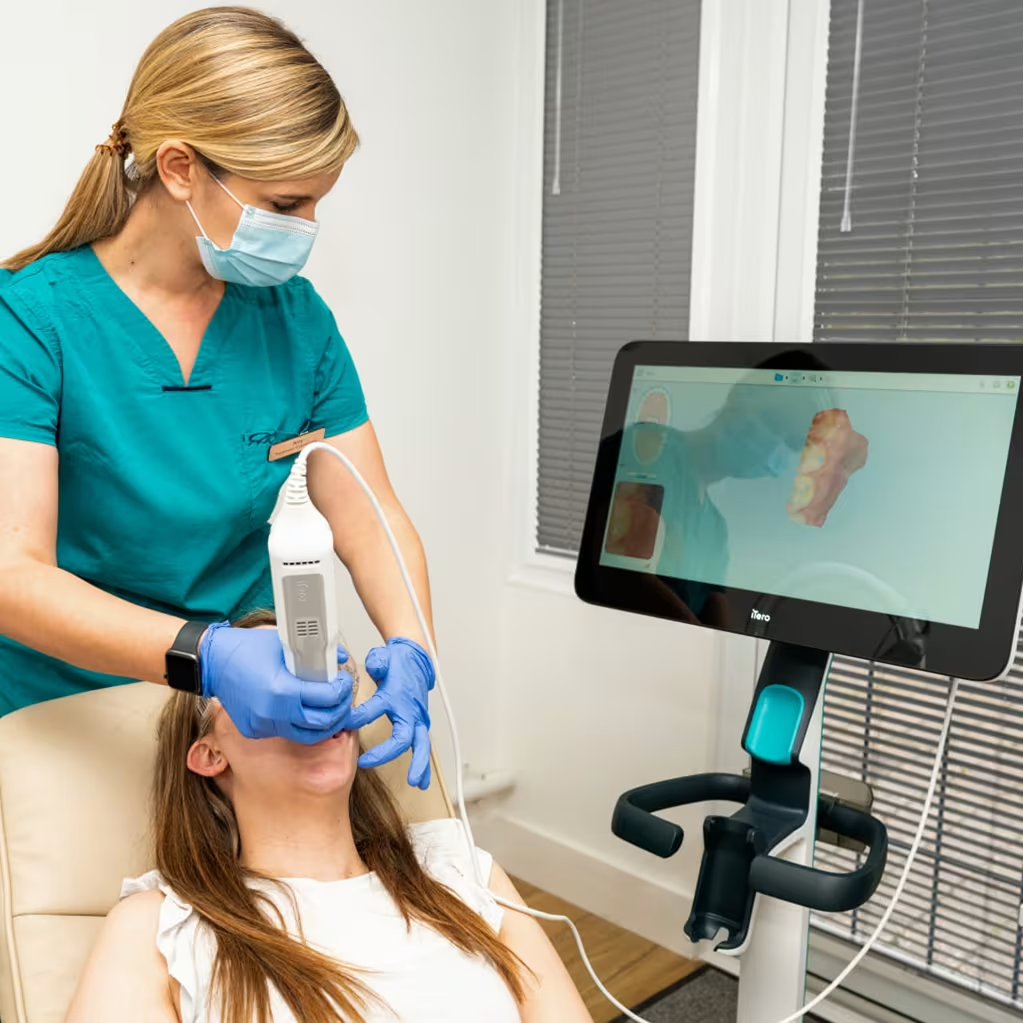
However, modern implant planning uses detailed three-dimensional imaging to assess:
Remaining bone volume
Bone density
Anatomical structures
Potential implant positioning
Being told there is “not enough bone” without advanced imaging is not a complete evaluation.
In some cases, implants can be placed in available bone without additional procedures. In others, bone modification or grafting techniques may improve suitability. Each situation is unique.
Patients with a history of gum disease may carry a slightly higher risk profile. That does not mean treatment is inappropriate — it means planning must be thorough.
This includes:
Comprehensive periodontal assessment
Digital imaging where indicated
Evaluation of bite forces and wear
A clear long-term maintenance strategy
Implants after gum disease are not rushed decisions. When planned properly, they can provide stable, long-lasting outcomes.
Long-term implant success depends on ongoing care.
For patients who have experienced gum disease in the past, this typically means:
Regular hygienist appointments
Excellent home cleaning
Consistent review and monitoring
The reassuring reality is that these factors are manageable. With the right support and guidance, many patients maintain implants successfully for many years.
Patients with advanced gum disease sometimes assume that dentures are their only remaining option.
In reality, implant-supported bridges or full-arch solutions may still be possible, even where significant tooth loss has occurred. Suitability depends on current health, bone structure, and overall treatment planning — not simply on a past periodontal diagnosis.
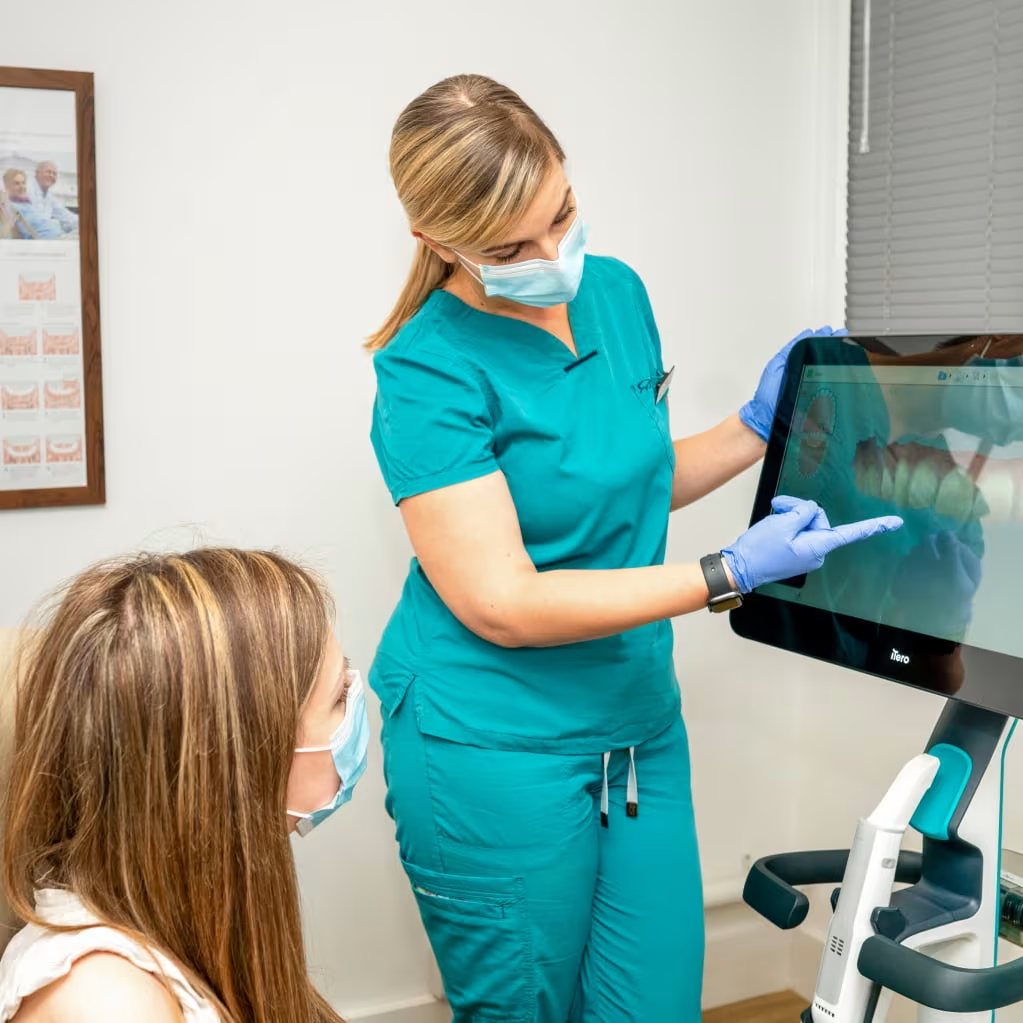
A detailed consultation often reveals more possibilities than patients expect.
Perhaps the most reassuring fact is this: implant suitability should never be decided on history alone.
At The Briars, we assess:
Current periodontal stability
Bone availability and anatomy
Functional bite
Overall health
Long-term prognosis
Only then can we give clear, honest guidance on implants after gum disease — including when treatment is appropriate, when it requires preparation, and when an alternative may be safer.
Being told you “can’t have implants” can feel final. But in many cases, that conclusion is reached without comprehensive assessment or stabilisation.
Implants after gum disease are often possible when health is controlled and planning is meticulous. The key is individual evaluation and realistic discussion.
If you are unsure whether treatment is achievable for you, a detailed consultation can provide clarity and reassurance.
Your smile means everything to us – and no one should feel beyond help without a careful, personalised assessment.
Back to Blog