Invisalign is often marketed as a simple, discreet way to straighten teeth. But what many patients don’t realise is that successful treatment depends far less on the aligners themselves and far more on how the treatment is planned.
At The Briars Dental Centre, we frequently see the consequences of poor planning — from slow progress and discomfort to compromised results and unexpected additional treatment. Understanding the most common Invisalign planning mistakes can help you make informed decisions and avoid unnecessary frustration, cost, and disappointment.
Invisalign is a tool, not a treatment in itself. The aligners simply follow the instructions they are given. If those instructions – the digital plan – are flawed, no brand of aligner can compensate.
Effective Invisalign treatment requires:
A thorough clinical assessment
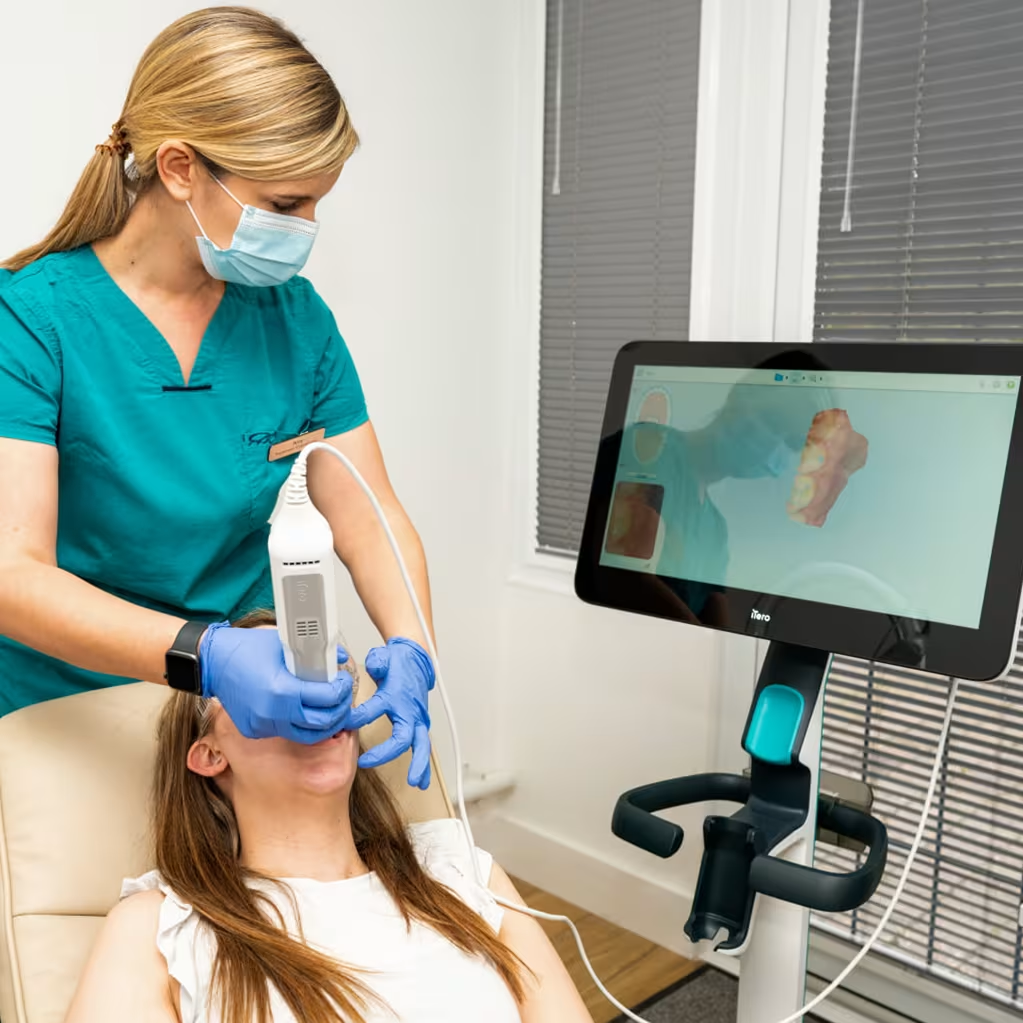
Accurate digital scanning
Consideration of bite, function, and facial aesthetics
Experience in managing both simple and complex cases
When Invisalign planning is rushed or oversimplified, problems are far more likely to occur.
One of the most common Invisalign planning mistakes is failing to carry out a comprehensive assessment before treatment begins.
Straightening teeth isn’t just about appearance. Jaw position, bite forces, existing wear, gum health, and long-term stability all play a vital role. Without a full examination — often supported by digital imaging — important issues can be missed.
This can lead to:
Teeth moving into unstable positions
Increased risk of relapse
Bite problems or jaw discomfort after treatment
Careful assessment lays the foundation for predictable, long-lasting results.
Every smile is unique. Another frequent Invisalign planning mistake is applying a generic approach to cases that require individualised thinking.
While Invisalign can be highly effective, not every patient is suited to the same techniques or timelines. Some cases require:
More complex staging of tooth movement
Additional attachments
Planned refinements from the outset
When Invisalign is treated as a standardised process rather than a bespoke treatment, outcomes often fall short of expectations.
A straight smile that doesn’t function properly is not a successful result.
One of the most significant Invisalign planning mistakes is focusing purely on alignment without considering how the teeth meet and function together. Ignoring bite relationships can result in:
Uneven tooth wear
Chipping or cracking
Jaw pain or headaches
Long-term instability
At The Briars, Invisalign planning always balances aesthetics with function, ensuring your smile looks good and works comfortably for years to come.
One of the most overlooked Invisalign planning mistakes is treating tooth straightening as a standalone solution, rather than part of a wider smile transformation.
Many patients seek Invisalign because they want a better smile overall — not simply straighter teeth. In reality, Invisalign is often the starting point of a more comprehensive treatment journey.
At The Briars, we regularly see complex cases where Invisalign forms the foundation for further care, such as:
Composite bonding or veneers for teeth that are worn, unevenly shaped, or affected by recession
Dental implants to replace missing teeth once space has been correctly created
Lab-made restorations for patients with significant tooth wear
Functional rehabilitation to improve long-term stability and comfort
Without comprehensive planning, these needs may only become apparent later, leading to unexpected costs, extended treatment times, and avoidable frustration.
Our approach is different. From the outset, we use advanced digital planning to look beyond tooth movement alone. This allows us to:
Identify whether teeth will require restoration after alignment
Plan for implants or replacement teeth where needed
Assess wear patterns, bite forces, and long-term stability
Present patients with a clear, phased plan — not surprises further down the line
Many of the cases we manage involve a combination of orthodontics, restorative dentistry, and implant care. Thoughtful Invisalign planning ensures these elements work together seamlessly, rather than in isolation.
Invisalign is a digital treatment — but not all digital planning is equal.
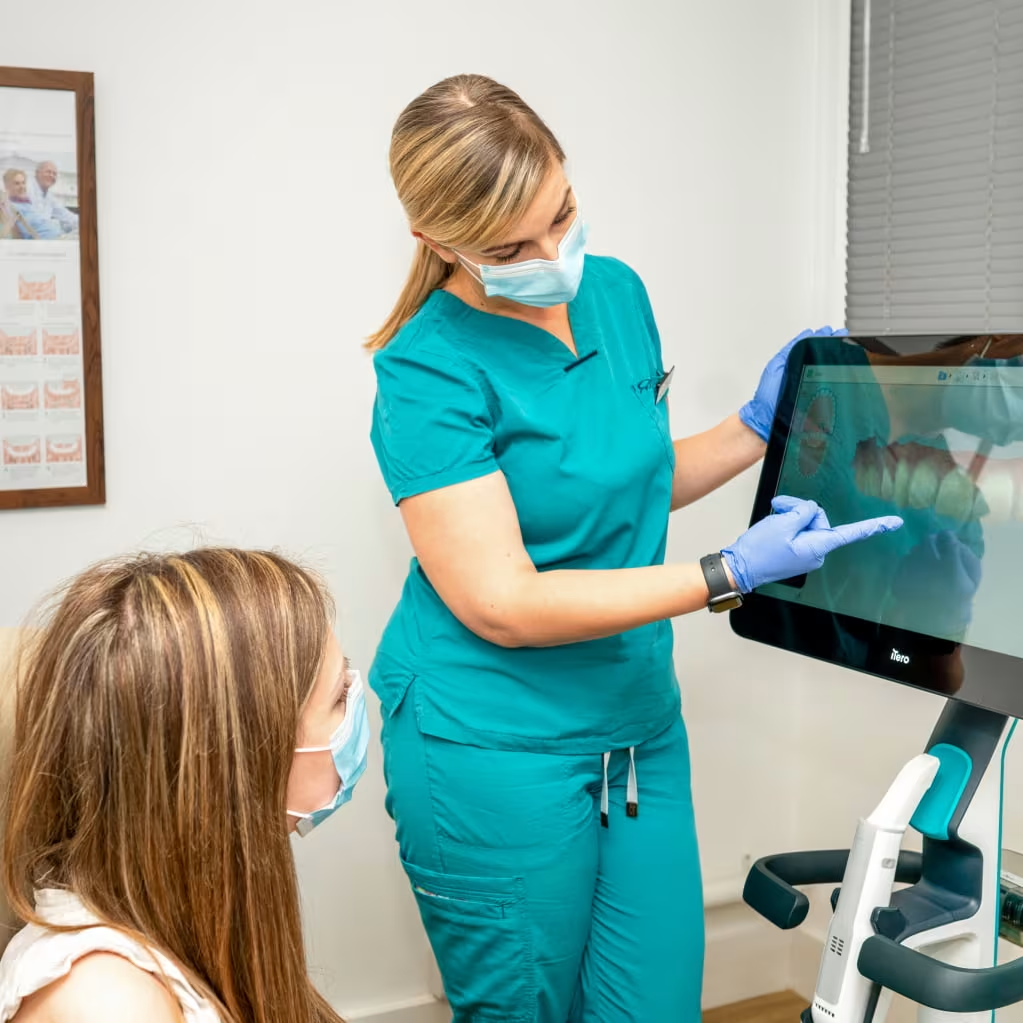
Relying on basic scans alone is another common Invisalign planning mistake. Advanced digital dentistry allows clinicians to:
Visualise tooth movement in greater detail
Assess bone support where appropriate
Predict outcomes with greater accuracy
Technology such as high-resolution intraoral scanning and CBCT imaging (when clinically indicated) helps reduce uncertainty, particularly in more complex cases.
Experience plays a crucial role in avoiding Invisalign planning mistakes.
Problems are more likely when treatment is designed by clinicians who:
Only manage straightforward cases
Have limited experience handling complications
Rely heavily on automated software suggestions
While Invisalign software is a powerful tool, it still requires expert clinical judgement. Knowing when to adjust a plan, slow tooth movement, or change approach comes from experience — not algorithms alone.
Almost all Invisalign treatments require some level of refinement. Difficulties arise when this isn’t anticipated.
A common Invisalign planning mistake is promising a fixed number of aligners without allowing flexibility. Teeth don’t always move exactly as predicted, and this is normal.
Building refinements into the plan from the beginning allows for:
More precise final detailing
Fewer delays
Greater predictability
Finally, one of the most avoidable Invisalign planning mistakes is poor communication.
Patients should have a clear understanding of:
What Invisalign can realistically achieve
How long treatment may take
Their role in wearing aligners consistently
When expectations aren’t aligned from the outset, even technically successful treatment can feel disappointing.
At The Briars Dental Centre, Invisalign planning is never rushed or delegated to software alone. Our approach is:
Thorough
Personalised
Digitally led
Clinically driven
We take time to understand your goals, assess your oral health and bite, and design a treatment plan that prioritises long-term success – not just short-term straightness.
Invisalign can deliver outstanding results when planned properly. By understanding and avoiding common Invisalign planning mistakes, you protect both your investment and your long-term oral health.
If you’re considering Invisalign, or you’ve been told it’s a “simple fix” despite having complex dental needs, a comprehensive consultation can make all the difference.
Your smile means everything to us – and careful planning is what turns good outcomes into exceptional ones.
Back to blog