Oral cancer is one of those conditions that many of us don’t think about until we’re faced with it, yet it affects thousands of people across the UK every year. New cases of oral cancer in the UK reached 10,825 last year, with numbers increasing by 38% over the past decade. The encouraging news is that early detection can dramatically improve outcomes, with survival rates jumping to over 85% when the disease is caught early.
At The Briars Dental Centre, we believe knowledge is power. Understanding the signs of oral cancer and knowing how to check your own mouth can be life-saving. This guide will help you recognise what to look for and understand when to seek professional advice.
Table of Contents
Oral cancer, also known as mouth cancer, refers to cancers that develop in any part of the mouth, including the lips, tongue, gums, inner cheeks, floor of the mouth, and the roof of the mouth (palate). It can also occur in the throat area at the back of the mouth.
The majority of oral cancers begin in the tongue and floor of the mouth. Squamous cell carcinoma accounts for approximately nine out of ten cases. What makes oral cancer particularly challenging is that it can be difficult to see in its earliest stages, which is precisely why awareness and regular checking are so important.
The truth is, oral cancer can affect anyone. Whilst certain lifestyle factors do increase risk, no one is entirely immune to this disease. Over three-quarters of oral cancer diagnoses occur in people aged 55 and over, though cases are increasingly being diagnosed in younger people as well.
Smoking remains one of the main causes of oral cancer. Tobacco users are six times more likely to develop head and neck cancer than non-users. Heavy alcohol consumption is another significant risk factor, particularly when combined with tobacco use. The risk increases substantially for those who both smoke heavily and drink heavily.
However, it’s crucial to understand that oral cancer isn’t exclusively linked to these factors. Human Papillomavirus (HPV), specifically HPV16, is now recognised as an emerging risk factor. In fact, HPV transmitted through oral contact could overtake tobacco and alcohol as the main risk factor within the next decade. These HPV-related oral cancers often occur in younger people who don’t smoke or drink.
Poor oral hygiene, including tooth decay, gum disease, and ill-fitting dentures, may also increase risk. A diet lacking in fresh fruits and vegetables can be a contributing factor as well. Additionally, prolonged sun exposure can increase the risk of lip cancer.
The key message here is that whilst making positive lifestyle changes can reduce your risk, regular self-checks and professional examinations are important for everyone, regardless of their lifestyle.
Being familiar with the warning signs of oral cancer means you’re more likely to spot something unusual early. Here are the five critical signs to watch for:
The most common symptom of oral cancer is an ulcer or sore in the mouth or on the lip that doesn’t heal. We’ve all had mouth ulcers from accidentally biting our cheek or from minor irritation. Normal mouth ulcers typically heal within two to three weeks. If you have an ulcer or sore that persists beyond three weeks, it’s time to have it checked by a dental professional.
These sores may be shallow or raised, appearing red, white, or speckled. They might be open and leaking fluid. Unlike regular ulcers, oral cancer sores don’t improve with time.
A painless lump on your lip, in your mouth, or in your throat that doesn’t go away should always be investigated. You might also notice swollen lymph nodes in your neck, which can feel like smooth, rounded lumps ranging from the size of a pea to a grape. These swellings can appear on one or both sides of the neck.
Run your fingers under your jaw and along the sides of your neck regularly. Any new lumps or persistent swellings deserve attention, even if they’re not painful.
Distinctive patches in your mouth can sometimes indicate precancerous conditions or early cancer. White or greyish patches (called leukoplakia) may appear on your gums, tongue, or the lining of your mouth. They often have a rough texture and can be hard to scrape off.
Red, velvety patches (called erythroplakia) or mixed red and white patches (erythroleukoplakia) are also warning signs to watch for. Whilst not all these patches are cancerous, they warrant examination by a professional, as some can develop into cancer over time.
Persistent difficulty swallowing or a feeling that food is getting stuck in your throat can be a sign of oral cancer, particularly cancers affecting the back of the mouth or throat. You might also experience pain when swallowing that doesn’t improve.
Any unexplained bleeding in your mouth, particularly from an ulcer or lump, should be checked. Similarly, numbness or a tingling sensation in your mouth, lips, or tongue that persists can be a warning sign. Changes in how your teeth fit together, loose teeth without an obvious cause, or pain in your teeth or jaw may also indicate a problem.
The 2-Minute Self-Check: A Simple Practice That Could Save Your Life
The Mouth Cancer Foundation recommends that everyone over the age of 16 performs a simple self-examination once a month. This quick check takes just two minutes and requires only a mirror, good lighting, and clean hands.
Here’s how to perform your monthly self-check:
Step 1: Examine Your Face and Neck
Stand in front of a mirror with good lighting. Look at your whole face. Are there any unusual swellings you haven’t noticed before? Turn your head from side to side, which stretches the skin over your neck muscles, making lumps easier to spot.
Run your fingers under your jaw and feel along both sides of your neck using the balls of your fingers. Check for any lumps or swellings. Does everything feel the same on both sides?
Step 2: Check Your Lips
Look at your lips, both inside and out. Pull your lower lip down to examine the inside, then do the same with your upper lip. Look for any changes in colour, texture, or any sores or lumps.
Step 3: Examine Your Cheeks
Open your mouth and pull your cheeks away from your teeth, one side at a time, using your finger. Look for any red or white patches, ulcers, or lumps. Use your finger to gently feel the inside of each cheek for any unusual areas, tenderness, or rough patches. Repeat on the other side.
Step 4: Inspect Your Tongue
Your tongue is one of the most common sites for oral cancer, so give it particular attention. Gently pull your tongue out and look at one side, then the other. Look for any swelling, ulcers, or changes in colour.
Now lift the tip of your tongue to the roof of your mouth to examine the underside. Look at the floor of your mouth as well, checking for any unusual colour changes. Gently press your finger along the floor of your mouth and the underside of your tongue to feel for any lumps, swellings, or ulcers.
Step 5: Check the Roof of Your Mouth
Tilt your head back and open your mouth wide. Look at the roof of your mouth for any changes in colour or texture, or any ulcers.
What to Look For
At each step, you’re looking and feeling for:
The key is to become familiar with what’s normal for your mouth. Once you know your baseline, you’ll be much better at spotting changes that need attention.
Whilst monthly self-checks are valuable, they’re not a replacement for professional examinations. During your routine dental check-up at The Briars, we perform thorough oral cancer screenings as part of your examination. This screening is quick, painless, and non-invasive.
We use both visual inspection and manual palpation (feeling) to check all the areas of your mouth, including some that are difficult to examine yourself. We’re trained to spot subtle changes that might not be obvious to you, and we have the advantage of seeing your mouth regularly, making it easier to identify any changes over time.
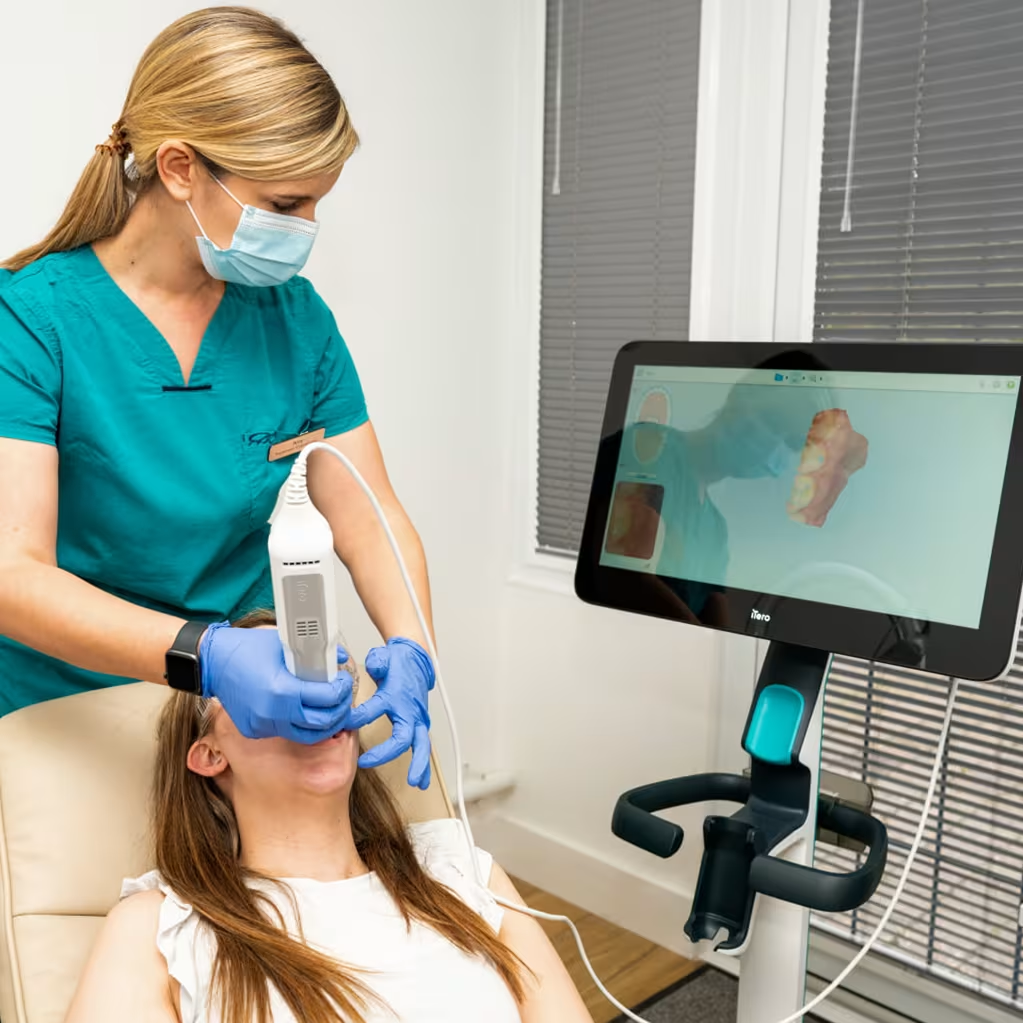
Our advanced technology, including detailed clinical photography and CBCT imaging when appropriate, allows us to document and monitor any areas of concern with precision. We also maintain clear referral pathways with specialist departments, ensuring that if we do identify something that needs further investigation, you’ll receive prompt, expert care.
The Mouth Cancer Foundation recommends that everyone over 16 has a professional oral cancer examination at least once a year at their dentist. For those with higher risk factors, more frequent checks may be appropriate.
If you notice any of the following during your self-check or at any other time, make an appointment with us:
It’s important to remember that these symptoms are very common and can be caused by many conditions other than cancer. Having one or more of these symptoms doesn’t mean you definitely have oral cancer. However, getting them checked early is always the right approach. If the symptoms are caused by cancer, finding it early means it’s much easier to treat successfully.
Don’t wait, and don’t worry about wasting our time. We’d much rather see you and reassure you that everything is fine than have you delay seeking help for something serious.
Knowledge about oral cancer shouldn’t create anxiety; it should empower you to take charge of your oral health. By performing simple monthly self-checks and attending regular dental examinations, you’re taking important steps to protect yourself.
At The Briars Dental Centre, your oral health and overall wellbeing are our priorities. We’re here to answer your questions, address your concerns, and provide the comprehensive care you deserve. If you have any worries about oral cancer or would like to discuss your risk factors, we welcome you to book an appointment with us.
Early detection saves lives. Those two minutes each month for a self-check, combined with your annual professional examination, could make all the difference.
If you’d like more information about oral cancer or wish to book a comprehensive oral health examination, please contact our friendly team. We’re here to help you maintain not just a healthy smile, but peace of mind too.
Useful Resources: