8-minute read time
Should I get a Water Flosser? This question lands in our inbox at The Briars Dental Centre in Newbury almost daily. With social media influencers promoting the latest oral health gadgets and countless models flooding the market, it’s no wonder patients are curious about these devices.
As dental professionals who’ve spent over 110 years caring for smiles in Berkshire, we believe in giving you honest, evidence-based advice. The short answer? Water flossers can be a valuable addition to your oral hygiene routine, but they’re not a magic solution that replaces traditional methods.
Let’s explore everything you need to know to make an informed decision about whether you should get a water flosser.
A water flosser (also known as an oral irrigator) is a device that uses a pressurised stream of water to remove food particles and bacteria from between your teeth and along the gumline. Think of it as a targeted power wash for your mouth.
These devices typically feature a water reservoir, motorised pump, various tip attachments, and adjustable pressure settings.
The concept isn’t new—water flossers have been around since the 1960s. However, modern versions are more compact, efficient, and user-friendly than their predecessors.
When patients ask, “Should I get a water flosser?” we understand the attraction. These sleek devices promise effortless oral hygiene with their pulsating water streams and modern design. Social media influencers showcase them as game-changers, and manufacturers market them as the future of home dental care.
The appeal is genuinely compelling. Water flossers offer a comfortable, high-tech approach to interdental cleaning that feels refreshing and thorough. For patients wearing braces, dealing with bridges, or struggling with arthritis, the simple point-and-clean action can feel revolutionary compared to wrestling with traditional floss.
Many users love the immediate feeling of freshness and the satisfying removal of food particles. The gentle water massage can feel soothing on sensitive gums, and there’s something undeniably satisfying about seeing debris wash away. For those who’ve avoided traditional flossing due to discomfort or difficulty, water flossers can represent a welcome solution.
The technology has genuinely improved over the decades, with modern devices offering better pressure control, more effective tip designs, and greater convenience than ever before.
However, should I get a Water Flosser based on these appealing features alone? As dental professionals, we need to be honest about what these devices can and cannot achieve.
Water flossers genuinely shine in specific areas. They’re excellent at removing loose food particles and bacteria, particularly effective at reducing gum inflammation and bleeding, and superb for cleaning around orthodontic appliances or dental work where traditional floss struggles to reach.
Research supports their benefits for gum health, with studies showing significant reductions in gingivitis when water flossers are used consistently. They’re particularly valuable for patients with periodontal pockets, where the pressurised water can reach deeper than traditional methods.
But here’s where the reality diverges from the marketing promises. Water flossers cannot effectively remove sticky bacterial biofilm (plaque) that adheres firmly to tooth surfaces. This biofilm is the primary culprit behind tooth decay and gum disease, and it requires physical disruption to be removed completely.
Think of it like trying to clean a dirty plate with water alone versus using a sponge. The water might rinse away loose crumbs, but you need physical scrubbing action to remove stuck-on food. Your teeth face the same challenge with bacterial plaque.
Additionally, water flossers cannot address existing stains or provide the tactile feedback that helps you understand your gum health. Many patients develop a false sense of security, believing that the refreshing feeling equals thorough cleaning.
The biggest concern we see is patients who assume water flossers replace traditional cleaning methods entirely. This misconception can actually harm oral health by creating gaps in plaque removal that lead to problems down the line.
So if you’re wondering “should I get a water flosser?” the smart answer is possibly, but only as part of a comprehensive approach that prioritises proven methods.
Traditional flossing methods remain the gold standard for interdental cleaning. Floss tape provides irreplaceable physical disruption of bacterial biofilm, offers tactile feedback about gum health, reaches tight contact points effectively, and requires no electricity or maintenance.
For larger spaces between teeth or around dental work, interdental brushes excel where other methods cannot. They can access areas that both traditional floss and water flossers might miss, providing thorough mechanical cleaning that’s essential for optimal oral health.
Rather than replacing these proven methods, water flossers work best as an enhancement to traditional cleaning. The most effective sequence starts with interdental cleaning using floss tape or interdental brushes to physically disrupt plaque, followed by water flossing to rinse away loosened debris, and finishing with brushing to remove remaining particles and apply fluoride.
This approach ensures each method builds upon the previous one for comprehensive cleaning that addresses all aspects of oral hygiene.
Your ideal routine depends on your gum health status, presence of dental work, manual dexterity, personal preferences, and time constraints. What works perfectly for one patient may not suit another, which is why professional guidance proves invaluable.
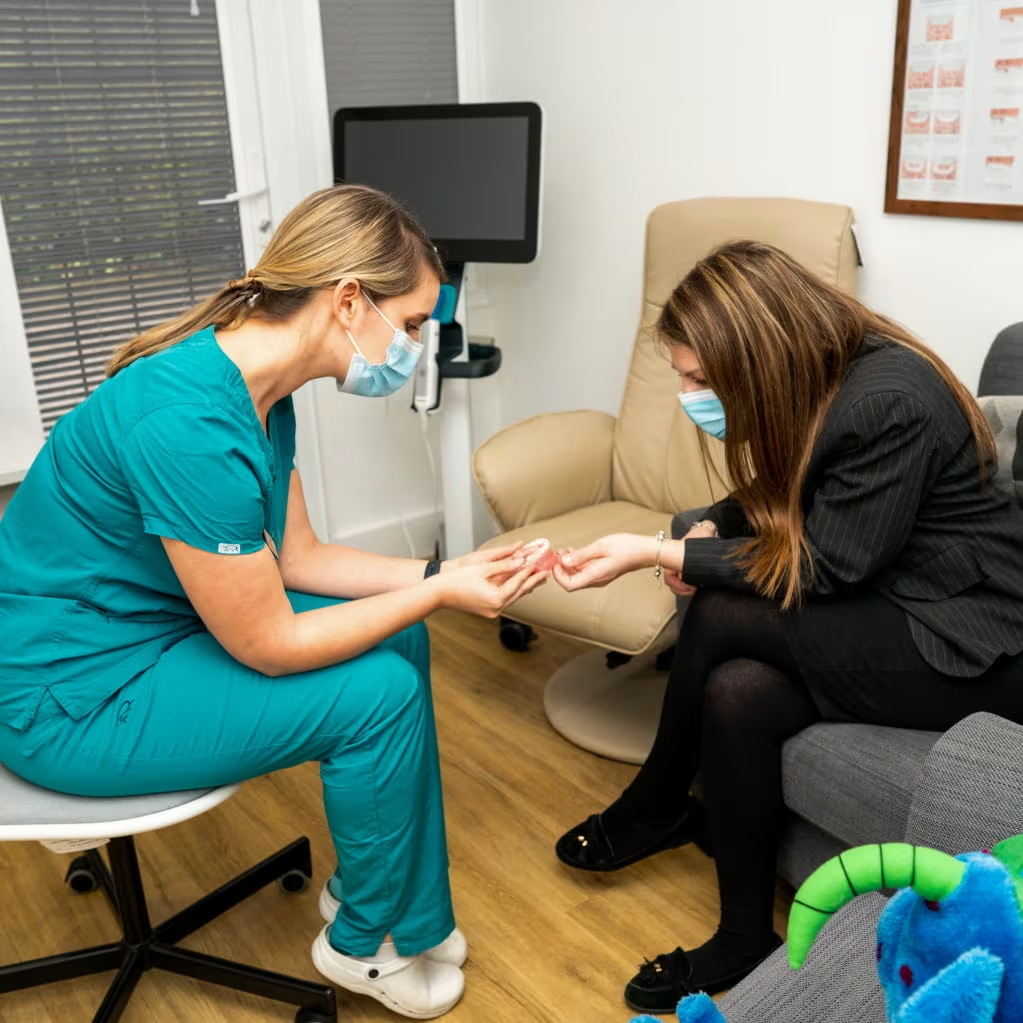
At The Briars Dental Centre, our hygienists work with each patient to develop personalised oral hygiene routines that maximise effectiveness whilst fitting into busy Berkshire lifestyles. We consider your specific needs, challenges, and goals to create a sustainable approach that actually works in practice.
Whilst home care forms the foundation of oral health, professional hygiene appointments remain irreplaceable. No matter how diligently you clean at home—whether you decide to get a water flosser or stick with traditional methods—professional care offers benefits that home devices simply cannot match.
Professional hygiene appointments accomplish what no home device can match: removal of calcified deposits (tartar), access to areas impossible to reach at home, early detection of potential problems, professional-grade stain removal, and comprehensive gum health assessment and treatment.
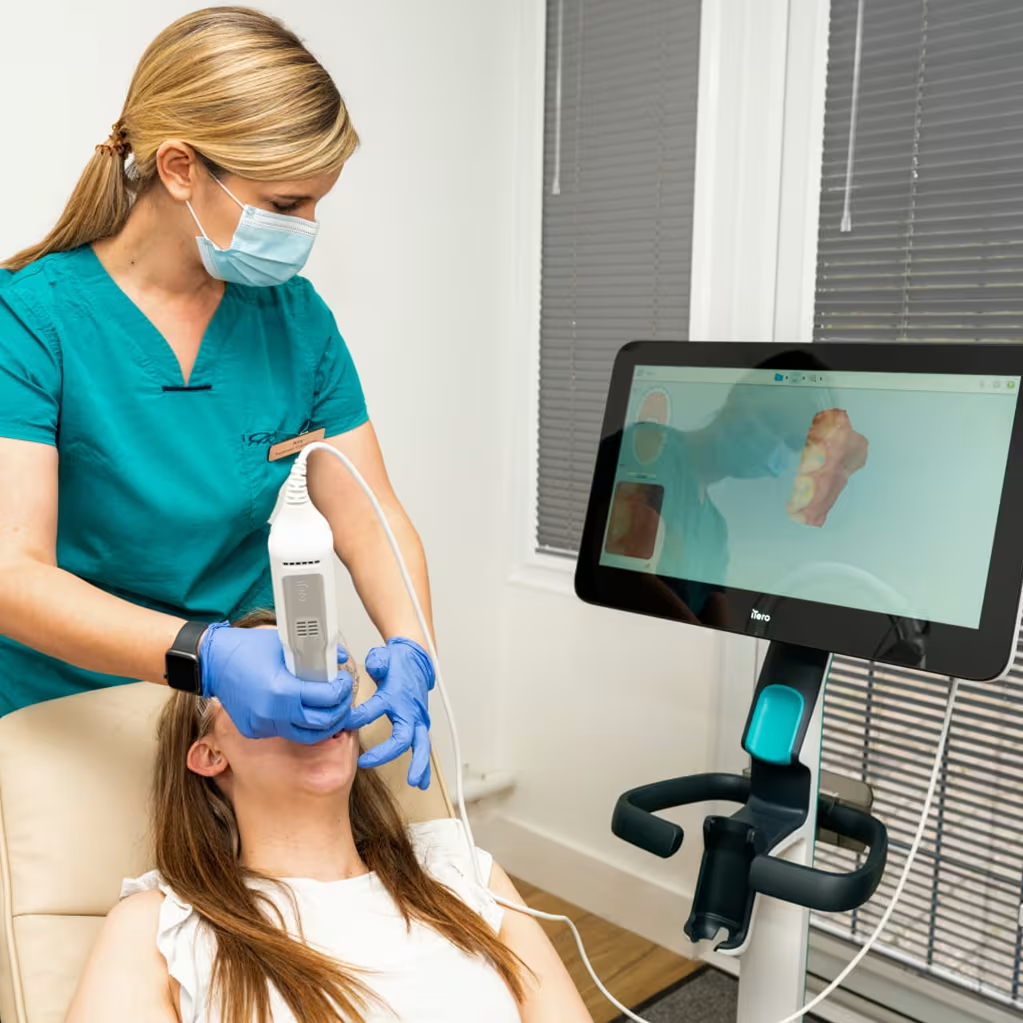
Modern dental hygiene has evolved far beyond simple scaling and polishing. At The Briars, we’ve invested in advanced technologies that provide superior results whilst enhancing patient comfort.
When patients ask, “Should I get a water flosser for stain removal?” we explain that whilst these devices can help prevent new stains, they cannot address existing discolouration effectively.
At The Briars Dental Centre, we offer Guided Biofilm Therapy (GBT) with all hygienist appointments—a revolutionary approach to oral hygiene that goes far beyond what any home device can achieve.
GBT uses advanced airflow technology combined with specially formulated powders to remove stubborn stains gently and effectively, eliminate biofilm more thoroughly than traditional methods, provide a more comfortable experience, and achieve superior results in less time.
Our patients consistently report noticeably cleaner-feeling teeth, significant stain reduction, improved gum health, and enhanced comfort during treatment. These results demonstrate why professional care remains irreplaceable, regardless of the quality of home devices available. Find out more about GBT here!
Coffee, tea, red wine, and other lifestyle factors create stains that home devices—including water flossers—simply cannot address. Professional GBT treatment ensures your smile looks and feels its absolute best.
So, should I get a Water Flosser? Here’s our professional recommendation:
A water flosser may benefit you if you have braces, bridges, or implants that make traditional flossing challenging. They’re also valuable if you struggle with traditional flossing due to dexterity issues, have deep periodontal pockets, want to enhance your existing routine, or find traditional flossing uncomfortable.
Traditional flossing methods provide superior plaque removal, offer irreplaceable mechanical cleaning, remain the evidence-based gold standard, and provide better value for thorough cleaning. These methods have stood the test of time for good reason.
Regardless of your home care choices, regular professional hygiene appointments remain crucial for comprehensive cleaning beyond home capabilities, early problem detection, personalised advice and technique refinement, and advanced treatments like GBT for optimal oral health.
The question “should I get a water flosser?” ultimately depends on your individual needs, preferences, and oral health status. What matters most is maintaining consistent, effective oral hygiene habits and regular professional care. Check out this article in The Dentistry Journal for more information about the differences between interdental cleaning aids!
At The Briars Dental Centre in Newbury, our experienced hygienists can assess your specific situation and provide personalised recommendations. Whether you’re curious about incorporating a water flosser into your routine or want to optimise your current oral hygiene approach, we’re here to help.
Ready to experience the difference that professional hygiene care can make? Book your appointment today to discover how our advanced GBT treatments can transform your smile and oral health.
Contact The Briars Dental Centre today to experience the gold standard in oral health care.
Back to Blog