When considering smile transformation options, veneers in Newbury have become increasingly popular amongst patients seeking to enhance their appearance and confidence. At The Briars Dental Centre, we understand that every smile is unique, and we’re committed to helping you achieve the beautiful, natural-looking results you deserve.
Dental veneers are thin, custom-made shells designed to cover the front surface of your teeth. Think of them as a protective and aesthetic covering that transforms the appearance of your smile whilst maintaining the natural structure of your teeth. These versatile restorations can address various cosmetic concerns, including discolouration, chips, gaps, and minor misalignment.
Unlike more invasive procedures, veneers preserve much of your natural tooth structure whilst delivering remarkable aesthetic improvements. They’re particularly effective for patients who want to enhance their smile’s overall appearance without undergoing extensive orthodontic treatment.
The beauty of modern veneer technology lies in its ability to create completely natural-looking results. When properly designed and fitted, veneers blend seamlessly with your existing teeth, creating a harmonious and attractive smile that looks entirely natural.
Understanding the difference between composite and ceramic veneers is essential when considering your treatment options. Both materials offer distinct advantages, and the choice often depends on your specific needs, budget, and long-term goals.
Composite veneers are made from a tooth-coloured resin material that can be applied directly to your teeth, usually in just one appointment. This makes them an excellent option for patients seeking immediate results or those with budget considerations.
The application process is relatively straightforward and typically reversible. Your dentist carefully builds up the composite material on your tooth surface, sculpting and shaping it to achieve the desired appearance. The material is then hardened using a special light and polished to create a smooth, natural finish.
Composite veneers are particularly suitable for minor corrections such as small chips, slight gaps, or minor shape adjustments. They can also be easily repaired if damaged, making them a practical choice for many patients.
Ceramic veneers, often made from porcelain, represent the premium option in veneer technology. These are custom-crafted in a dental laboratory to match your specific requirements and are renowned for their exceptional durability and natural appearance.
The ceramic material closely mimics the light-reflecting properties of natural tooth enamel, creating an incredibly lifelike appearance. They’re also highly resistant to staining, meaning your beautiful new smile will maintain its brightness for years to come.
Ceramic veneers typically require two appointments: one for preparation and impression-taking and another for fitting. Whilst this process takes longer than composite veneers, the results are often considered superior in terms of aesthetics and longevity.
So, considering veneers in Newbury? Or maybe a crown? Let’s talk about the difference between the two. Many patients considering cosmetic dental work wonder about the difference between veneers and crowns. Understanding these distinctions is crucial for making an informed decision about your treatment.
The primary difference lies in how much of your tooth each restoration covers. Veneers are designed to cover only the front surface of your tooth, whilst crowns encircle the entire tooth structure above the gum line.
This fundamental difference means that veneer preparation is much more conservative. Typically, only a small amount of enamel (usually less than a millimetre) needs to be removed from the front surface of your tooth. Crown preparation, however, requires reducing the tooth more significantly to accommodate the thicker restoration.
Veneers are ideal when your primary concern is cosmetic enhancement and your teeth are structurally sound. They’re perfect for addressing issues like discolouration, minor chips, small gaps, or slight irregularities in shape or size. As veneers require less tooth preparation, they’re often considered the more conservative option when both treatments could address your concerns.
Crowns become necessary when a tooth has been significantly damaged by decay, trauma, or previous dental work. They’re also recommended when a tooth requires substantial structural support, such as after root canal treatment or when dealing with large fillings.
One of the most crucial considerations when planning veneer treatment is the current alignment of your teeth. Many patients are surprised to learn that orthodontic treatment might be recommended before veneer placement, but this pre-treatment can significantly improve your final results.
When teeth are properly aligned, veneers can be placed with minimal tooth preparation whilst achieving optimal aesthetics. However, if your teeth are significantly crooked or crowded, attempting to mask these issues with veneers alone may require excessive tooth reduction or result in unnatural-looking proportions.
Proper alignment also ensures that your bite functions correctly with your new veneers. Poorly aligned teeth can create uneven pressure distribution, potentially leading to premature veneer failure or damage.
The good news is that achieving proper alignment doesn’t necessarily mean traditional metal braces. Modern orthodontic treatments, including clear aligners like Invisalign, can discreetly correct alignment issues before veneer placement.
At The Briars, we use Digital Smile Design technology to assess whether orthodontic treatment would benefit your veneer outcome. Our ‘ideal smile’ planning allows us to show you potential results and discuss the best treatment sequence for your individual needs. (check out more about our Digital Smile Design process here!)
When orthodontic treatment is recommended before veneers, the typical sequence involves completing tooth movement first, allowing your teeth to settle into their new positions, and then proceeding with veneer placement. This approach ensures that your veneers are placed on optimally positioned teeth, resulting in better aesthetics and function.
If you’re considering veneers in Newbury, understanding the importance of tooth whitening timing is essential for achieving the best possible results. This is particularly relevant if you’re only having veneers placed on some of your teeth.
Dental restorations, including veneers, don’t respond to whitening treatments in the same way natural teeth do. Once your veneers are placed, their colour is permanent. This means that any whitening of your natural teeth must be completed before your veneers are designed and fabricated.
If you whiten your teeth after veneer placement, you may find that your natural teeth become lighter than your veneers, creating an uneven appearance that can only be corrected by replacing the veneers.
By completing the whitening treatment first, we can design your veneers to match your newly brightened natural teeth. This ensures a seamless blend between your restored and natural teeth, creating a harmonious and attractive overall appearance.
At The Briars, we use professional whitening systems that can safely and effectively lighten your natural teeth. We’ll work with you to achieve your desired shade before proceeding with veneer fabrication.
Professional tooth whitening typically takes 2-3 weeks to complete, depending on your starting shade and desired results. We provide custom-fitted whitening trays and professional-grade whitening gel for use at home, allowing you to achieve gradual, comfortable whitening results.
Once your whitening is complete and your teeth have settled to their final shade, we can proceed with designing your veneers to perfectly match this new, brighter appearance.
Understanding what to expect during your veneer journey helps ensure you’re fully prepared for treatment. At The Briars Dental Centre, we’ve refined our process to maximise comfort, efficiency, and results.
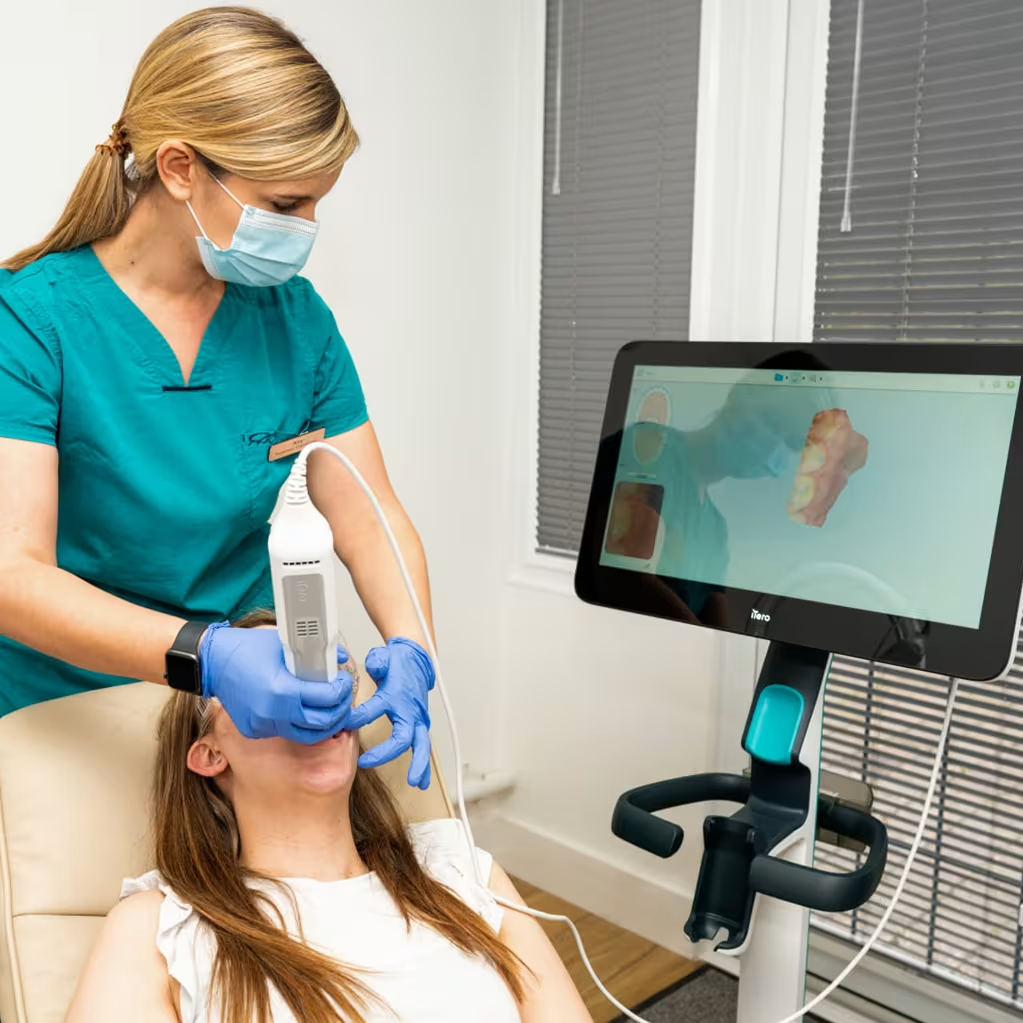
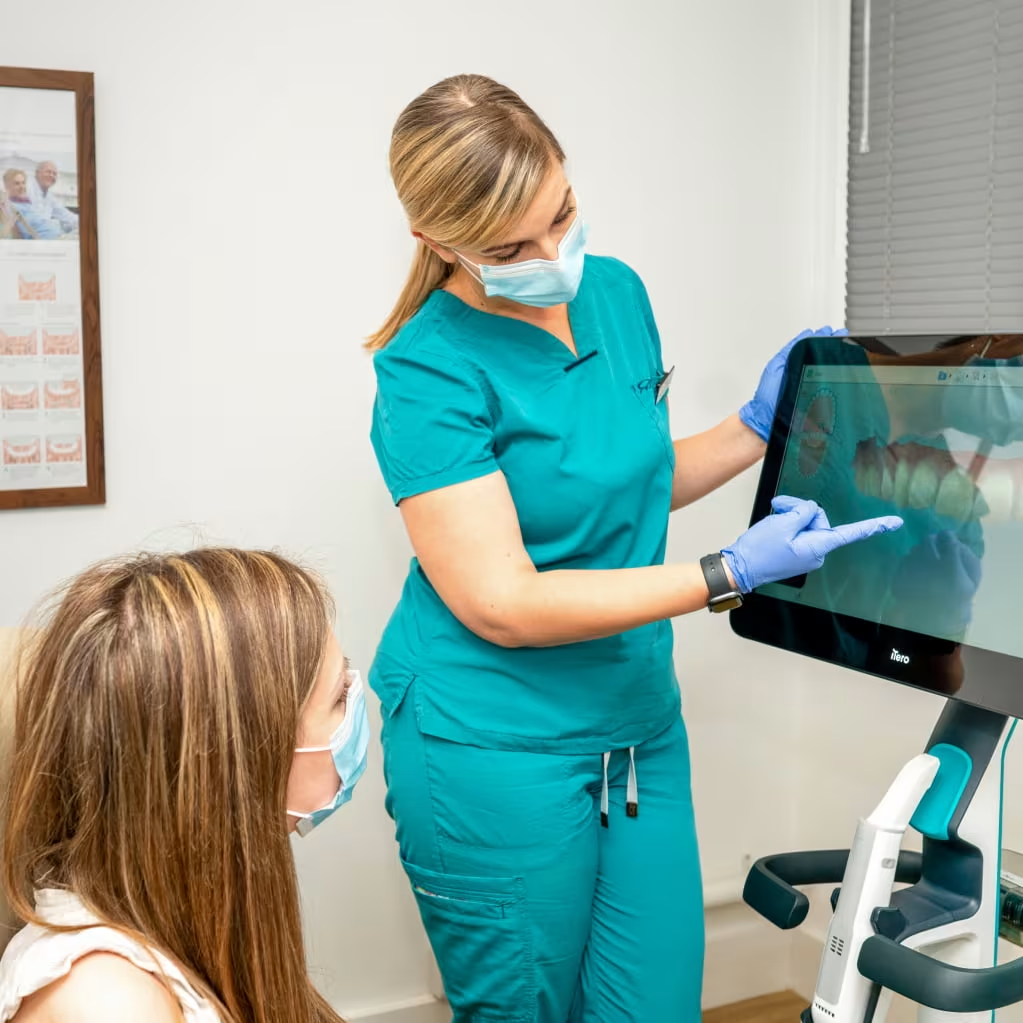
Your veneer journey begins with a comprehensive consultation where we discuss your goals, examine your teeth, and explore your treatment options. We use advanced digital imaging technology, including our iTero scanner, to capture detailed images of your teeth and create digital treatment simulations. We collaborate with Digital Smile Design to plan your ‘ideal smile’—this ‘technology allows us to show you potential results before treatment begins, ensuring you’re completely satisfied with the planned outcome. We’ll also discuss any preparatory treatments that might enhance your results, such as orthodontics or whitening.
For ceramic veneers, the preparation appointment involves carefully removing a small amount of enamel from the front surface of your teeth. We use local anaesthetic to ensure your complete comfort during this process.
Detailed digital scans are taken to capture the exact specifications for your custom veneers. These are sent to our skilled ceramist, who will craft your veneers to our precise specifications.
Whilst your permanent veneers are being crafted, we’ll place temporary veneers to protect your prepared teeth and maintain your appearance. These temporaries give you a preview of your new smile whilst ensuring your comfort between appointments.
When your custom veneers are ready, you’ll return for the final fitting appointment. We’ll carefully check the fit, shape, and colour of each veneer before permanently bonding them to your teeth using advanced adhesive techniques.
The bonding process involves treating both your tooth surface and the veneer to create an incredibly strong bond. Once bonded, your veneers become an integral part of your tooth structure.
Determining whether veneers are the best solution for your smile goals requires careful consideration of various factors. Not every cosmetic concern requires veneer treatment, and sometimes alternative approaches may be more appropriate.
Veneers work best for patients with structurally sound teeth who want to address cosmetic concerns such as discolouration that doesn’t respond to whitening, minor chips or fractures, small gaps between teeth, or slight irregularities in tooth shape or size.
You should also have good oral health and be committed to maintaining excellent oral hygiene. Patients with untreated gum disease or extensive decay will need to address these issues before veneer treatment.
Whilst veneers are incredibly versatile, they’re not suitable for every situation. Patients with severe misalignment, extensive tooth damage, or active bruxism (teeth grinding) may require alternative treatments or additional protective measures.
It’s also important to understand that veneer placement is typically irreversible due to the enamel removal required during preparation. This makes the decision an important one that should be made with a full understanding of the long-term implications.
Veneers require the same care as your natural teeth, including regular brushing, flossing, and professional cleanings. Avoiding habits like biting hard objects, opening packages with your teeth, or using your teeth as tools will help ensure your veneers last as long as possible.
Regular check-ups at The Briars allow us to monitor your veneers and address any concerns before they become problems. With proper care, your investment in a beautiful smile can provide years of confidence and satisfaction.
Keen to look into your options for veneers in Newbury? Get in touch with our team today!
Back to Blog