If you’ve ever sat in the dental chair wondering what those numbers mean, and if your dentist and nurse are speaking in code, you’re not alone. The strings of numbers, letters, and technical terms can sound like a completely different language. At The Briars Dental Centre in Newbury, we believe in transparency and helping you understand exactly what’s happening during your appointment.
So, what do those numbers mean? Let’s decode the mystery together.
Dental professionals use standardised numbering systems and terminology for a very practical reason: consistency. When your dentist records that tooth “16 has caries on the distal surface,” any dental professional worldwide can understand exactly which tooth and which part of that tooth needs attention. It’s a universal language that ensures your dental records are clear, accurate, and transferable.
But that doesn’t mean you should be left in the dark. Understanding what these numbers mean can help you feel more involved in your dental care and less anxious about what’s being discussed.
One of the first sets of numbers you’ll hear during a routine examination relates to your gum health. This is called the Basic Periodontal Examination, or BPE score – so what do those numbers mean?
What Is a BPE Score?
The BPE is a simple screening tool that helps your dentist assess the health of your gums. Your mouth is divided into six sections (called sextants), and each section receives a score from 0 to 4. You might also hear an asterisk (*) mentioned, which indicates additional factors that need attention.
Breaking Down the BPE Scores – let’s find out what those numbers mean:
Score 0: Healthy gums with no bleeding when probed. This is what we love to see.
Score 1: Your gums bleed when gently probed, but there’s no calculus (tartar) present and no deep pockets. This suggests mild inflammation that can usually be improved with better oral hygiene at home.
Score 2: You have bleeding on probing, and there’s calculus or other plaque-retentive factors present. You’ll likely need a professional clean with one of our hygienists to get things back on track.
Score 3: This indicates periodontal pockets measuring 4-5mm deep. At this stage, you’ll need more detailed assessment and likely a deeper clean (sometimes called root surface debridement) to address the inflammation beneath the gum line.
Score 4: Deep pockets of 6mm or more. This suggests established periodontal disease that requires specialist assessment and treatment. We may refer you to our periodontist, Sharmila Khopade, for comprehensive care.
The Asterisk (*): This symbol flags up additional concerns such as furcation involvement (where disease has affected the area where tooth roots divide), recession, or tooth mobility. It’s a prompt for your dentist to investigate further.
The British Society of Periodontology provides comprehensive guidelines on periodontal assessment and treatment, emphasising the importance of early intervention when BPE scores indicate gum disease.
What Do These Numbers Mean for You?
The lower your BPE score, the healthier your gums. Scores of 0-2 generally indicate that you’re doing well with maintenance through routine hygiene appointments. Scores of 3-4 mean you’ll need more intensive treatment to prevent tooth loss and protect your overall oral health.
Understanding your BPE score helps you appreciate why your hygienist might recommend more frequent visits or a change to your home care routine.
The next set of numbers you’ll hear relates to individual teeth. At The Briars, we use the FDI World Dental Federation numbering system, which is standard across most of Europe and internationally.
How Does the FDI System Work?
Each tooth is given a two-digit number. The first digit indicates which quadrant of your mouth the tooth is in, and the second digit tells us which tooth within that quadrant.
Your mouth is divided into four quadrants:
Within each quadrant, teeth are numbered 1-8, starting from the centre of your mouth and moving backwards.
Examples to Make It Clear
Let’s look at some common examples:
Tooth 11: Your upper right central incisor (one of your front teeth). The “1” tells us it’s in the upper right quadrant, and the second “1” means it’s the first tooth from the midline.
Tooth 21: Your upper left central incisor. Same position as tooth 11, but on the opposite side.
Tooth 36: Your lower left first molar. The “3” indicates lower left quadrant, and “6” means it’s the sixth tooth from the centre, which is typically your first permanent molar.
Tooth 48: Your lower right third molar, better known as your wisdom tooth.
Why This Matters
When your dentist says “tooth 16 needs a crown,” you’ll know they’re referring to your upper right first molar. When they discuss “watching tooth 26,” they mean the corresponding tooth on your upper left side. This system ensures absolute clarity in your records and treatment planning.
The final piece of the puzzle involves understanding tooth surfaces. When your dentist mentions that a cavity is on the “mesial surface” or a filling needs replacing on the “buccal aspect,” they’re describing exactly where on the tooth the problem exists.
The Five Main Surfaces
Mesial: The surface of the tooth closest to the midline of your mouth (the centre front). Think of it as the surface that faces towards your nose.
Distal: The opposite of mesial – the surface furthest from the midline, facing towards the back of your mouth.
Buccal: The surface facing your cheek. On back teeth, this is the outer surface you see when you smile.
Lingual/Palatal: The surface facing your tongue (lingual) on lower teeth, or your palate (palatal) on upper teeth. This is the inner surface you can’t see when looking in the mirror.
Occlusal/Incisal: The biting or chewing surface. On back teeth (molars and premolars), this is called the occlusal surface. On front teeth (incisors and canines), we call it the incisal edge.
Practical Example
When your dentist says “tooth 36 has caries on the mesial-occlusal surface,” they mean your lower left first molar has decay on both the chewing surface and the side facing towards the front of your mouth. This level of detail helps ensure the restoration (filling or crown) addresses all affected areas.
At The Briars Dental Centre, we’re committed to ensuring you understand your treatment from start to finish. When you know what the numbers mean, you can:
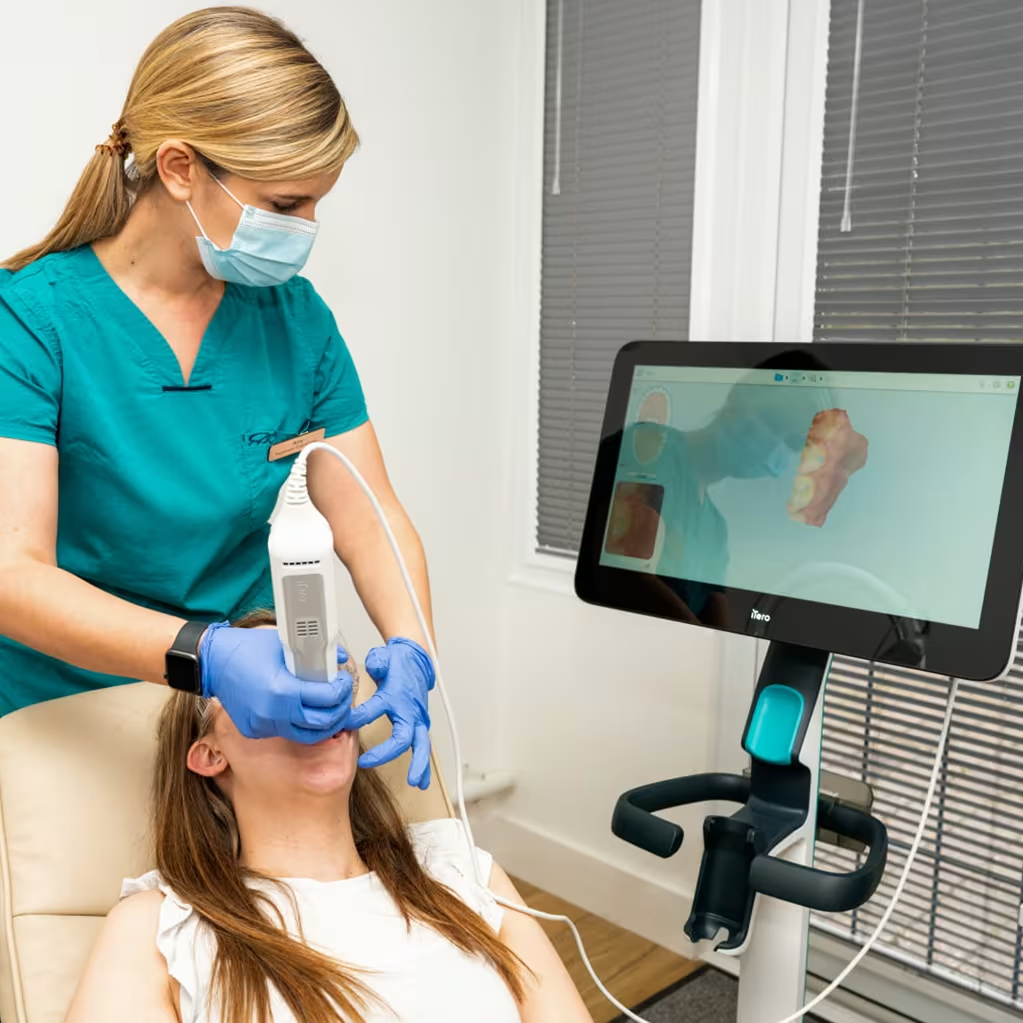
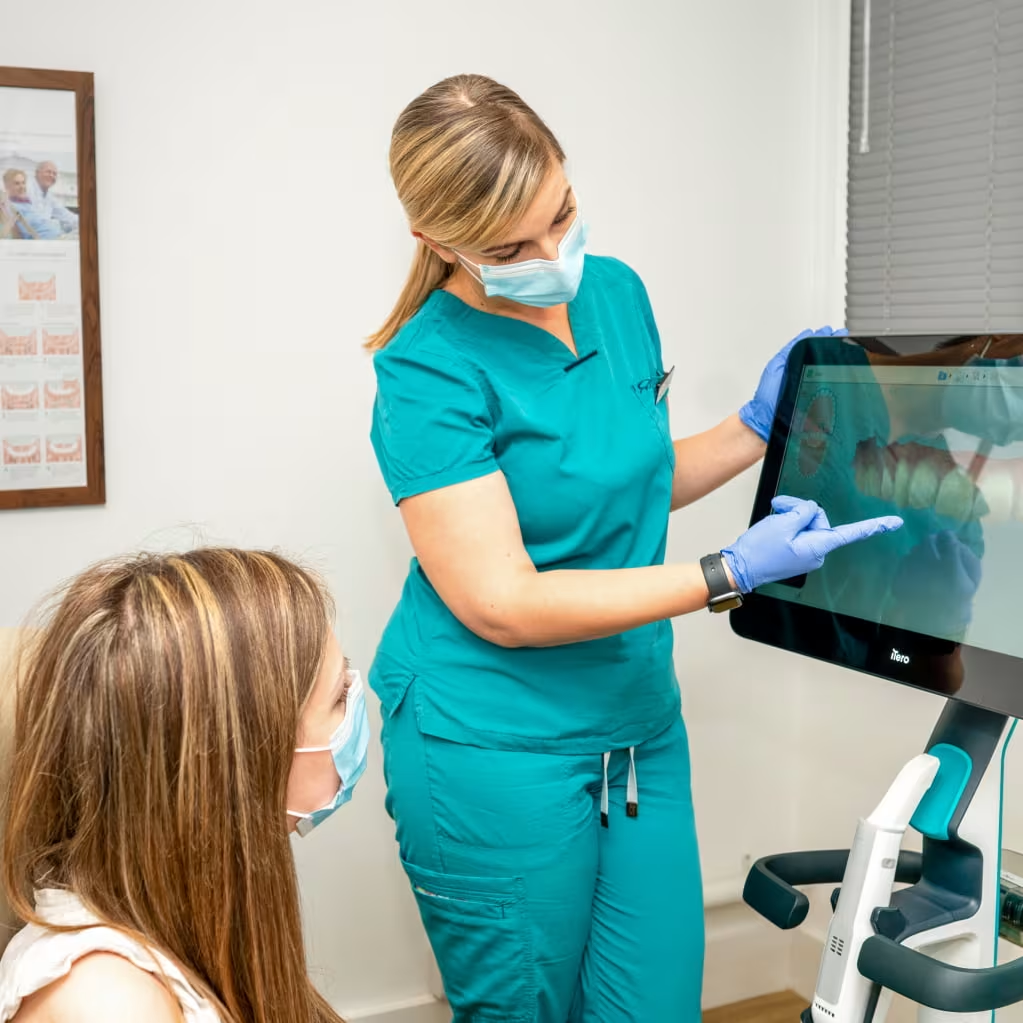
Our team uses advanced digital technology, including CBCT scanning and iTero digital impressions, to ensure every diagnosis and treatment plan is precise. Understanding the language we use helps you appreciate the thoroughness of your care.
Why Don’t You Just Say “Upper Right Molar”?
Whilst this might seem simpler, it’s actually less precise. You have three molars on each side, and saying “upper right” doesn’t specify which one. Using “tooth 16” (first molar), “tooth 17” (second molar), or “tooth 18” (third molar/wisdom tooth) removes all ambiguity.
Do All Dentists Use the Same System?
Most dentists in the UK and Europe use the FDI system we’ve described. However, you might encounter the Palmer notation system at some practices, which uses a different approach with symbols and numbers 1-8. In the United States, dentists typically use a sequential numbering system from 1-32. The FDI system is considered the international standard.
What If I Have Missing Teeth?
The numbering system doesn’t change based on missing teeth. If you’ve had tooth 36 extracted, that number isn’t reassigned to another tooth. This ensures consistency in your records over time.
Can I Ask My Dentist to Explain the Numbers During My Appointment?
Absolutely. At The Briars, we encourage questions. If you hear numbers you don’t understand, simply ask. Our team is here to ensure you’re comfortable and informed throughout your visit.
Now that you know what those numbers mean, your next dental appointment might feel less like listening to a foreign language and more like being part of an informed conversation about your oral health.
Whether you’re hearing BPE scores during a routine hygiene appointment or tooth numbers during a comprehensive examination, you can follow along and understand exactly what’s being recorded. This transparency is central to the patient-centred care we provide at The Briars Dental Centre.
Understanding what the numbers mean empowers you to take an active role in maintaining your dental health. When your hygienist discusses improving areas with higher BPE scores, or your dentist explains treatment needed on specific tooth surfaces, you’ll know precisely what they’re talking about.
Ready to put your new knowledge to use? Book your next appointment at The Briars Dental Centre in Newbury, where our friendly team will help you achieve your dental goals with clear communication every step of the way.
Back to Blog