Cleaning dental implants is one of the most important things you can do to protect them, and one of the most overlooked. An implant cannot decay the way a natural tooth can, so many patients assume it needs less attention. In reality, the gum and bone around it are just as vulnerable to plaque, and that is what decides how long an implant lasts. Here are five essential habits for cleaning dental implants well, whether you have a single implant or a full arch of teeth supported by implants.
The titanium implant itself is not the problem. The risk sits in the soft tissue and bone around it. When plaque builds up along the gum line, the tissue can become inflamed, and over time that inflammation can lead to bone loss. It is the same process that causes gum disease around natural teeth, and it tends to be quiet in its early stages. You may feel nothing at all.
The good news is that cleaning dental implants is not complicated. It is mostly a matter of doing a few simple things consistently, and doing them gently. Patients with a history of gum disease, and patients who smoke, benefit from being especially thorough, because both raise the risk of problems around an implant. None of this needs to feel like a chore. A few minutes morning and evening is enough for most people, provided the technique is right.
Brushing is the foundation of cleaning dental implants. Twice a day, spend two minutes with a soft-bristled brush and a non-abrasive toothpaste, angling the bristles towards the gum line where the implant crown meets the gum. That junction is where plaque collects first.
Gentle is better than hard. Scrubbing firmly will not clean an implant any better, and it can irritate the gum or scratch the surface of the crown. An electric toothbrush can make it easier to do a consistent job, but a good manual technique is just as effective. If you are unsure whether your technique is right, ask your hygienist to watch you brush at your next visit. It takes a minute and often makes a real difference.
A toothbrush cannot reach every surface, and cleaning dental implants properly means reaching the places it misses. Cleaning between your teeth and implants once a day removes the plaque that sits in the gaps, and for many patients that is the step that makes the biggest difference.
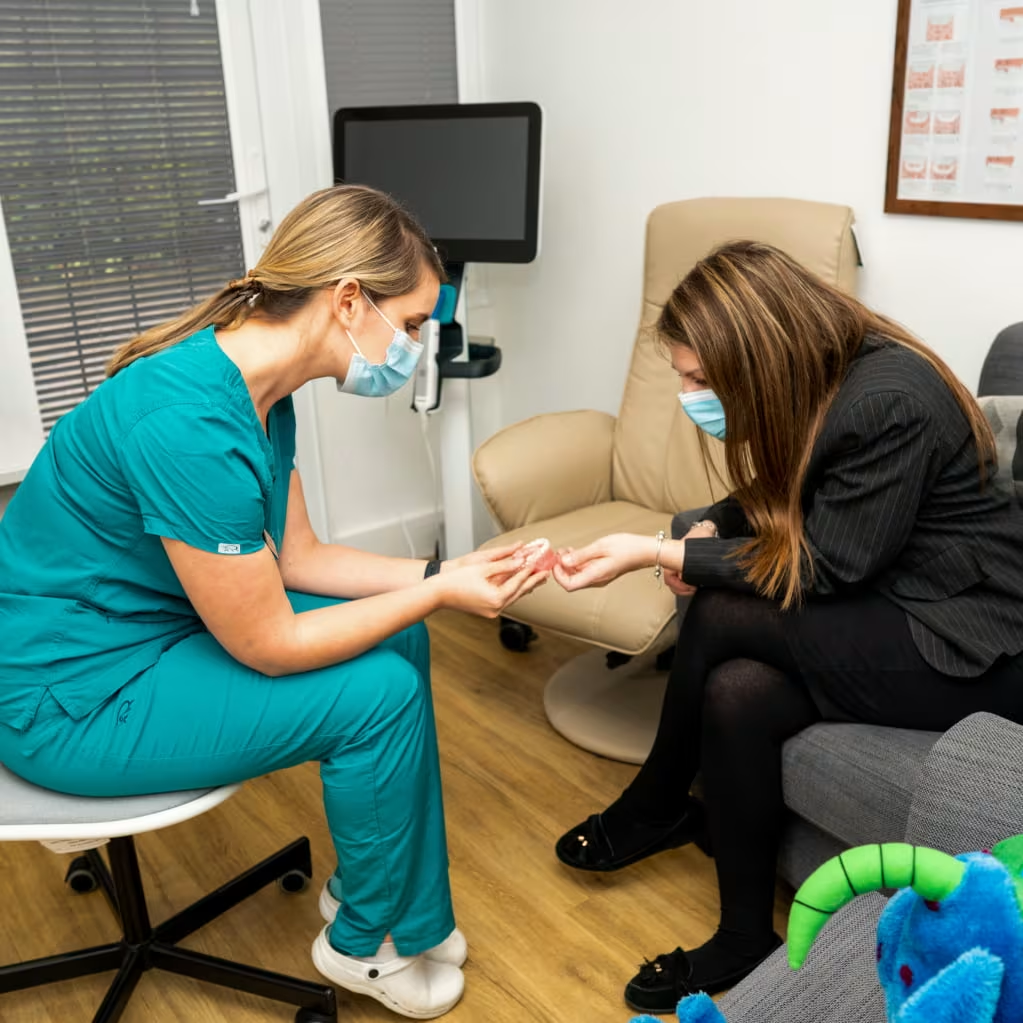
What works best depends on the spaces in your mouth. Small interdental brushes suit many people, while others find floss or a water flosser easier. Your hygienist can show you which size and type fits your mouth. Using the wrong size can be uncomfortable and less effective, so it is worth getting advice rather than guessing.
The Oral Health Foundation, the UK oral health charity, has a clear guide to cleaning between your teeth that is a handy reminder between appointments, although your hygienist can tailor the advice to your own implants. Be patient if your gums bleed a little when you start. If the bleeding settles within a week or so of regular cleaning, that is usually a sign the gum was inflamed and is improving.
If you have a full arch of teeth fixed to implants, such as an All-on-Four bridge, cleaning dental implants involves the area underneath the bridge as well as the teeth you can see. Food and plaque can collect where the bridge meets the gum, and that space needs to be cleaned every day.
The tools and technique are different from caring for natural teeth, which is why we show every patient what to do for their own bridge rather than relying on a leaflet. A bridge that looks spotless from the front can still be hiding plaque beneath it. Learn the routine early, while everything is fresh, and keep it up long after the novelty of your new teeth has worn off. Patients who make it part of their normal day tend to find it becomes second nature within a few weeks.
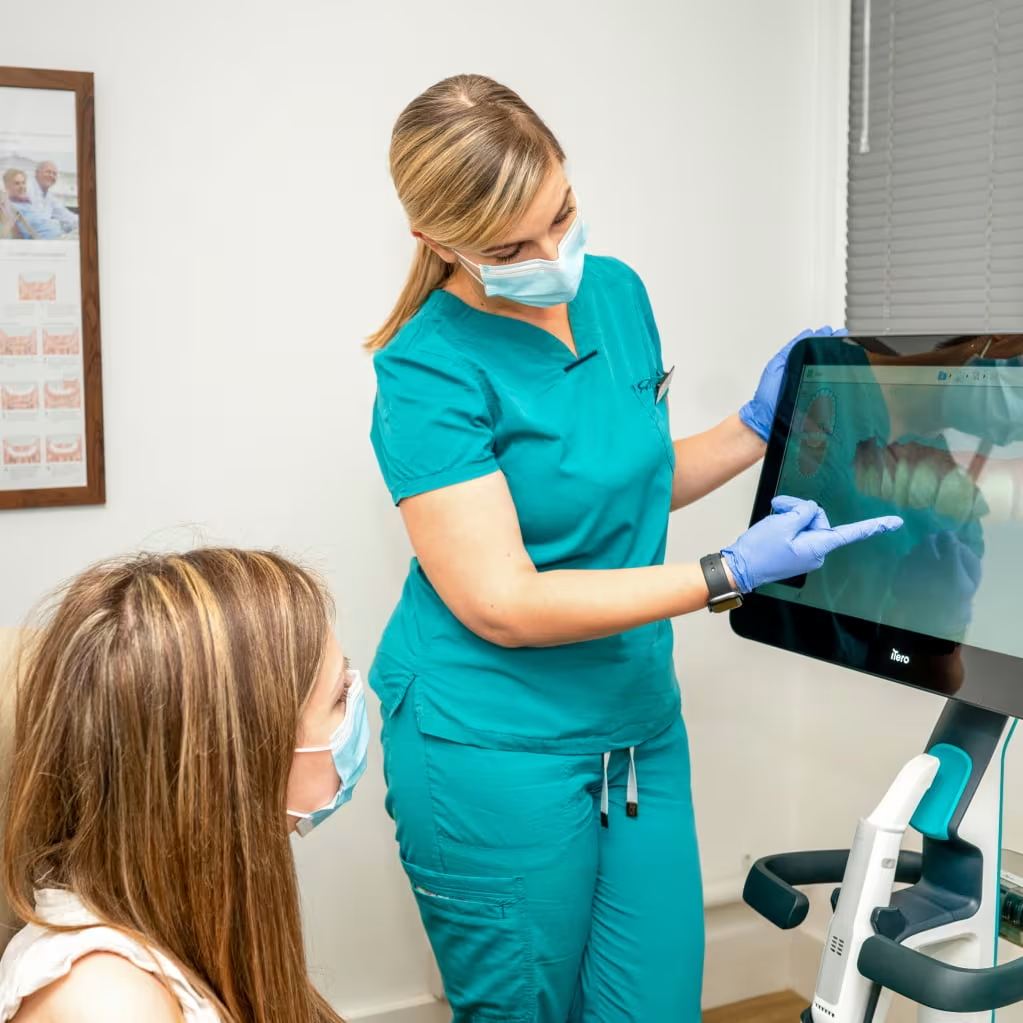
Even excellent cleaning dental implants at home cannot replace professional care. Your hygienist can reach areas you cannot, remove hardened deposits that brushing will not shift, and check the gum around each implant for early signs of trouble. Appointments are also the best time to ask questions and adjust your routine as your mouth changes.
How often you need to be seen depends on your own gum health and the type of implant work you have. Your hygienist or dentist will recommend an interval for you, and it is worth sticking to it, even when everything feels fine. Because early problems around implants are often painless, a routine check is frequently how they are found.
Cleaning dental implants should not hurt. If you notice persistent bleeding, redness, swelling, a bad taste, or an implant that feels different, please do not wait for your next routine appointment. Our article on the warning signs of peri-implantitis explains what to look out for and why catching it early matters.
If you are still considering implants and have not yet started, your journey begins with a free, relaxed conversation with one of our treatment coordinators, followed by an implant consultation. There is no pressure at any stage.
Looking after and cleaning dental implants should feel straightforward, and our team is always happy to go through your routine with you, however long you have had them. If you would like some guidance, we would be glad to help. To speak to our team in Newbury, call 01635 40311 or email enquiries@briarsdentalcentre.com.
Back to blog