Choosing a dental implant surgeon is not a decision to make on price alone – or on the basis of a flashy website and a few five-star reviews. Dental implants are a surgical procedure, a long-term clinical commitment, and a significant financial investment. The person placing them matters enormously, and knowing what to look for before you book a consultation is the first step to making a genuinely informed choice.
This article sets out six crucial things to consider when choosing a dental implant surgeon – not to steer you towards any particular provider, but to give you the framework to ask the right questions and evaluate the answers honestly.
Experience in implant dentistry matters – and not all experience is equal. A clinician who has been placing implants for many years, across a wide range of case complexities, will have encountered and managed the kinds of challenges that a less experienced provider may not have seen. This breadth of experience directly influences the quality of treatment planning, the precision of surgical technique, and the ability to identify and manage complications if they arise.
When researching a dental implant surgeon, it’s reasonable to ask how long they have been placing implants, how many cases they place per year, and whether they have experience with cases similar to yours – whether that’s straightforward single tooth replacement, complex bone augmentation, full arch restoration, or anything in between.
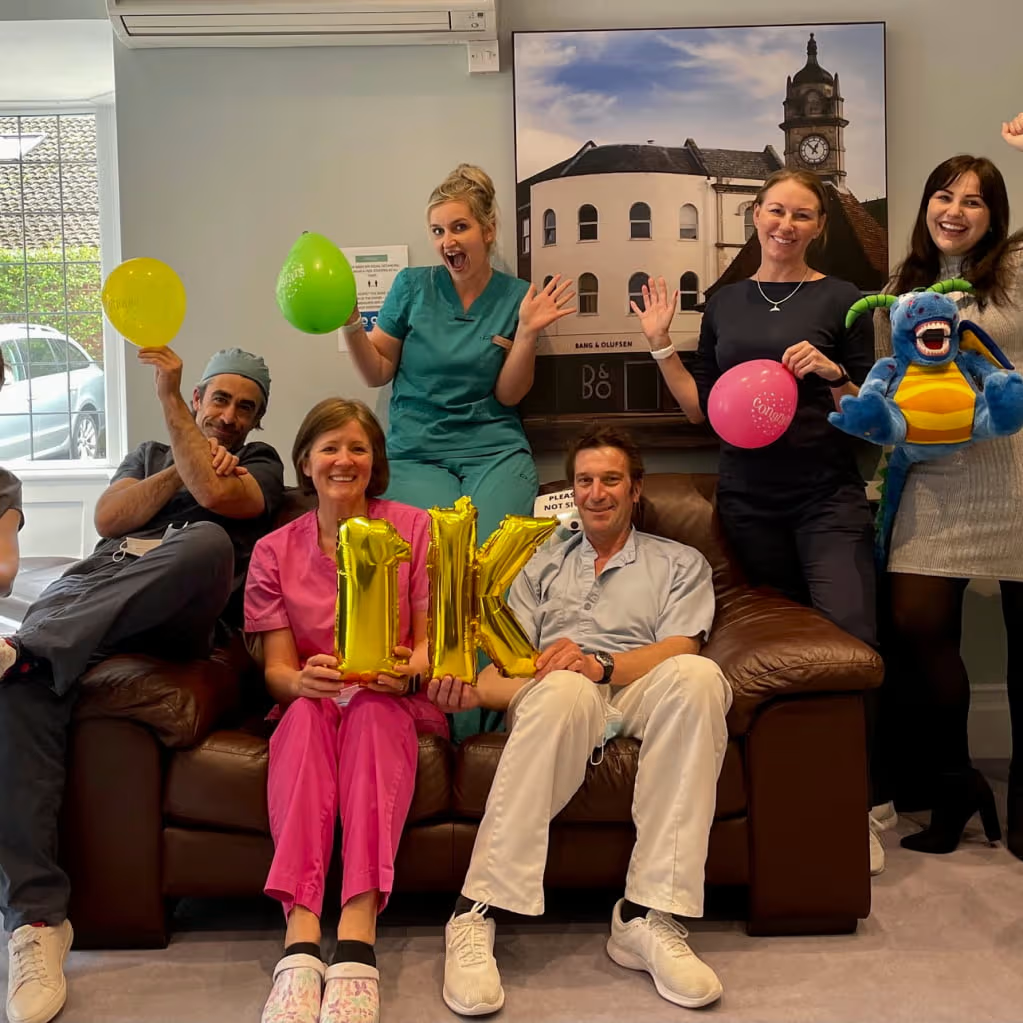
At The Briars, Nick French and Dave Veige lead implant surgery. Between them they bring considerable experience across the full range of implant cases, including complex referred cases involving bone grafting, sinus lifts, and full arch restoration with All-on-Four. Richard Lilleker also places implants for his own patients. This depth of clinical experience – across multiple clinicians – means that whatever your starting point, your case is in experienced hands.
A dental implant surgeon can only plan as well as their diagnostic information allows. Two-dimensional OPG X-rays – the standard panoramic radiograph – provide a useful overview of the jaw but cannot show the three-dimensional picture that precise implant planning requires. Without three-dimensional imaging, the position, angulation, and depth of implant placement cannot be planned with the accuracy that modern implant dentistry demands.
CBCT – cone beam computed tomography – provides a detailed three-dimensional image of the jaw, bone volume, bone density, and the precise location of anatomical structures such as nerves and the sinus cavity. It is now considered the gold standard for implant planning, and any dental implant surgeon you consider should be able to offer it as part of their assessment process.
At The Briars, CBCT imaging is standard for all implant cases. Scans are reported by a consultant radiologist – the same standard you would expect in a hospital setting – ensuring that the diagnostic information underpinning your treatment plan is as accurate and comprehensive as possible.
A reputable dental implant surgeon will not give you a treatment plan or a firm quote at a first appointment without first carrying out a full clinical assessment. This means examining your teeth and gums, reviewing your medical history, taking appropriate radiographs, and considering all the factors that affect your suitability – bone volume, gum health, smoking status, medications, and general health.
Be cautious of any provider who offers a same-day treatment plan or a fixed price without this level of assessment. Dental implants are not one-size-fits-all, and a plan produced without proper diagnostic information is not a plan you can rely on.
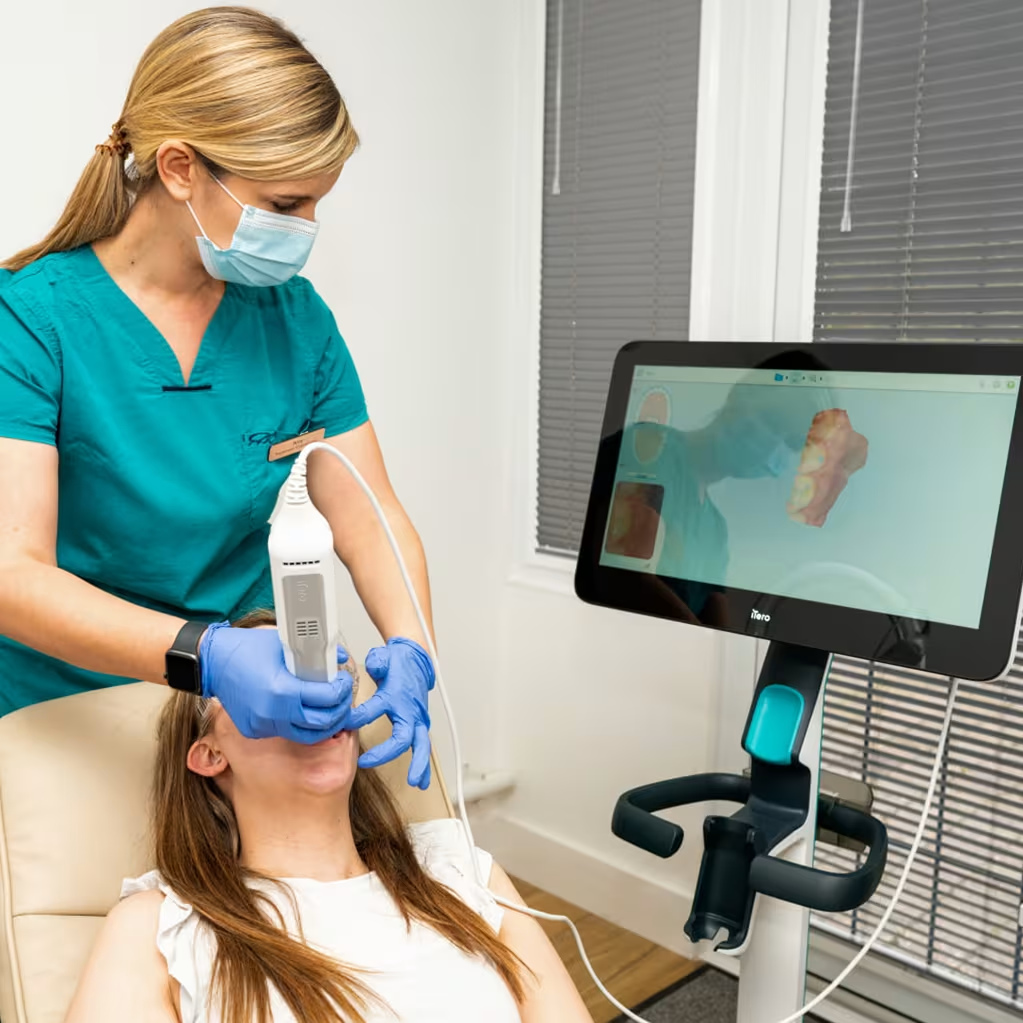
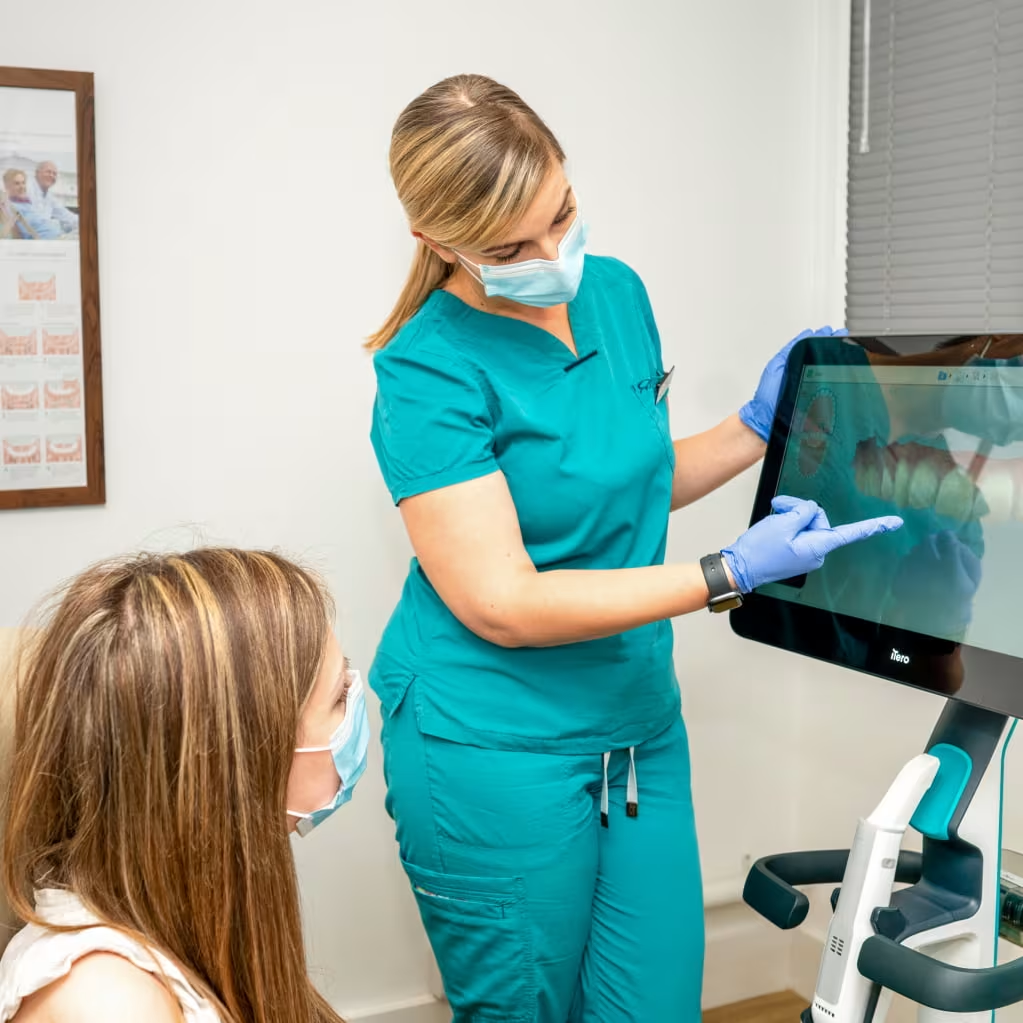
At The Briars, every implant patient begins with a free Treatment Coordinator appointment, followed by a thorough clinical assessment that includes CBCT imaging and digital scanning before any treatment decisions are made. The plan presented to you at the end of that process reflects your actual clinical picture – not a generic template.
Every dental implant surgeon should be willing to have an honest conversation about the risks associated with implant treatment – including the risk of implant failure, the factors that increase that risk, and what would happen if things didn’t go as planned.
Implants fail in a small percentage of cases, and the risk is higher in patients who smoke, have certain medical conditions, or have compromised bone or gum health. A clinician who glosses over these risks, or who gives the impression that failure is impossible with their technique, is not giving you an accurate picture.
At The Briars, we discuss risk openly as part of every implant consultation. If your personal risk profile is higher than average, we’ll tell you – and we’ll explain what that means for your options and your decision. Informed consent is not a formality; it’s a fundamental part of good clinical care.
Implant treatment doesn’t end when the crown is fitted. A good dental implant surgeon – and a good practice – will have a clear plan for your long-term aftercare, including regular professional maintenance to protect your implants and monitor the surrounding tissue and bone over time.
Peri-implantitis – the inflammatory condition that can develop around implants – is both preventable and manageable with appropriate maintenance, but it can progress to implant failure if left unaddressed. Ask any dental implant surgeon you’re considering what their aftercare protocol looks like, how often you’ll be seen for maintenance, and what happens if a problem develops after your treatment is complete.
At The Briars, implant patients are supported by our hygiene team – Meryl Colley, Amiee Mosher, and Monica Robotin – who deliver Guided Biofilm Therapy as standard. This level of professional maintenance is built into the care pathway for every implant patient, not offered as an optional extra.
Any dental implant surgeon practising in the UK must be registered with the General Dental Council. This is a legal requirement, and you can verify any clinician’s registration status at gdc-uk.org. Registration confirms that the clinician has met the educational and professional standards required to practise in the UK and is subject to the GDC’s standards and disciplinary processes.
Beyond registration, it’s worth looking for evidence of continued professional development in implant dentistry – postgraduate training, membership of professional bodies such as the Association of Dental Implantology, and participation in peer review or study groups. These aren’t guarantees of quality, but they’re indicators of a clinician who takes their continuing development seriously.
The Association of Dental Implantology provides patient guidance on choosing an implant provider, including a checklist of questions worth asking before you commit to treatment.
Choosing a dental implant surgeon is one of the most consequential decisions you’ll make in the course of your dental care. Price is a factor – but it’s one factor among many, and it should never be the primary one. The quality of the assessment, the diagnostic technology available, the experience and transparency of the clinician, and the aftercare support on offer are all at least as important as the headline cost.
At The Briars, we welcome patients for implant consultations from across West Berkshire and beyond, including those seeking a second opinion on treatment planned elsewhere. If you’d like to understand your options, get in touch with our team to arrange a consultation – we’ll give you the full picture, honestly and without pressure.
Back to blog