Dental implants bone loss is one of the most common reasons patients are told they might not be suitable for implant treatment. It’s also one of the most misunderstood. Being told you don’t have enough bone can feel like a definitive no – but for the majority of patients, it’s simply the beginning of a more detailed conversation about what is possible.
This article explains why bone loss happens, how it affects implant suitability, and what the options are for patients who have been told their bone volume is a concern. Let’s explore dental implants bone loss, and what that could mean for you.
When a tooth is lost or extracted, the jawbone beneath it begins to shrink. This happens because the bone is no longer being stimulated by the pressure of biting and chewing through a natural tooth root. Without that stimulus, the body gradually resorbs the bone – a process that begins within weeks of tooth loss and continues over months and years if the gap isn’t replaced.
The longer a tooth has been missing, the more bone is typically lost. This is one of the most compelling reasons to consider tooth replacement sooner rather than later – not just for appearance and function, but because preserving bone volume keeps more options available in the future.
Gum disease is another significant cause of dental implants bone loss. Advanced periodontitis destroys the bone supporting the teeth, and patients who have experienced significant gum disease may have considerably reduced bone volume even where natural teeth remain. This is why gum health is assessed so carefully as part of any implant planning process.
A dental implant needs adequate bone to integrate into – both in terms of height and width. If there isn’t enough bone to securely house the implant fixture and allow osseointegration to occur, standard placement isn’t possible without first addressing the deficit.
The good news is that this is rarely an absolute barrier. Bone augmentation procedures – techniques that restore or rebuild the bone before or alongside implant placement – have advanced considerably, and many patients who were once told implants were impossible are now successfully treated.
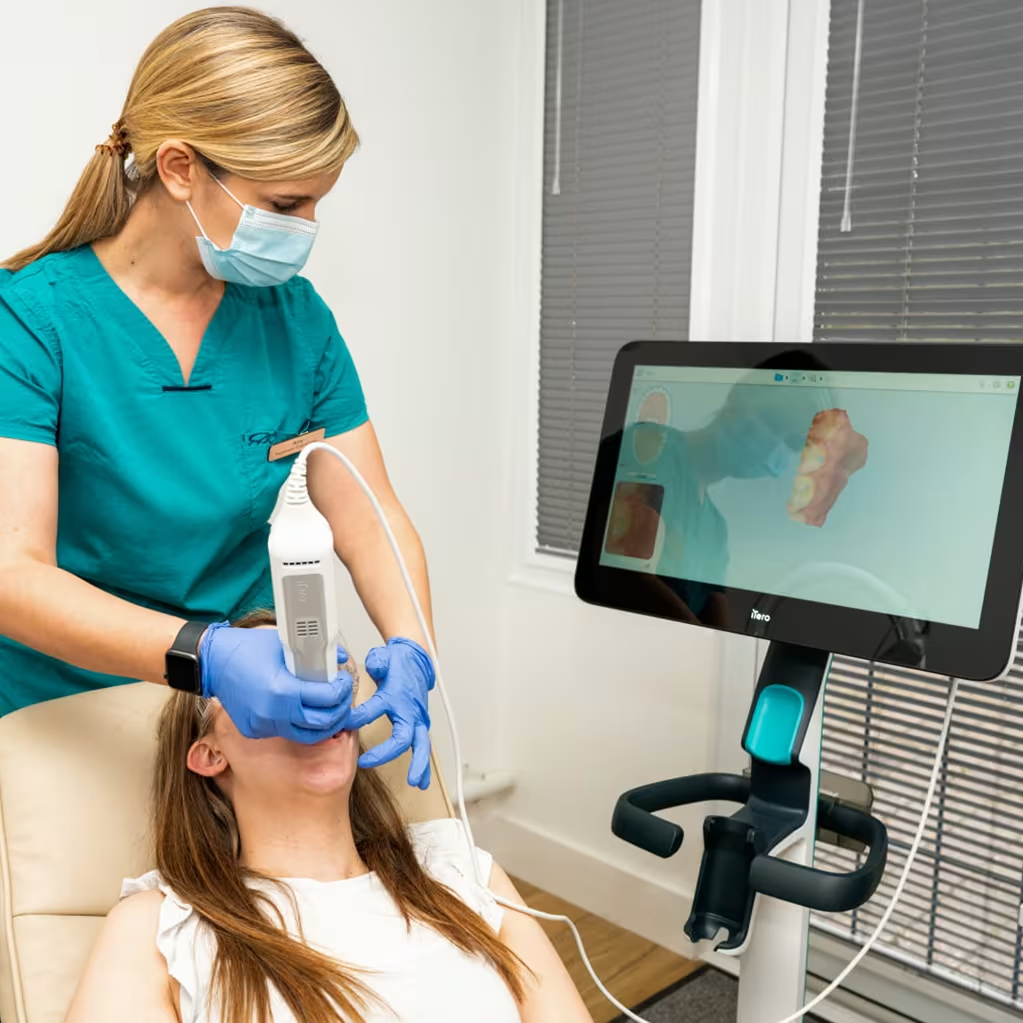
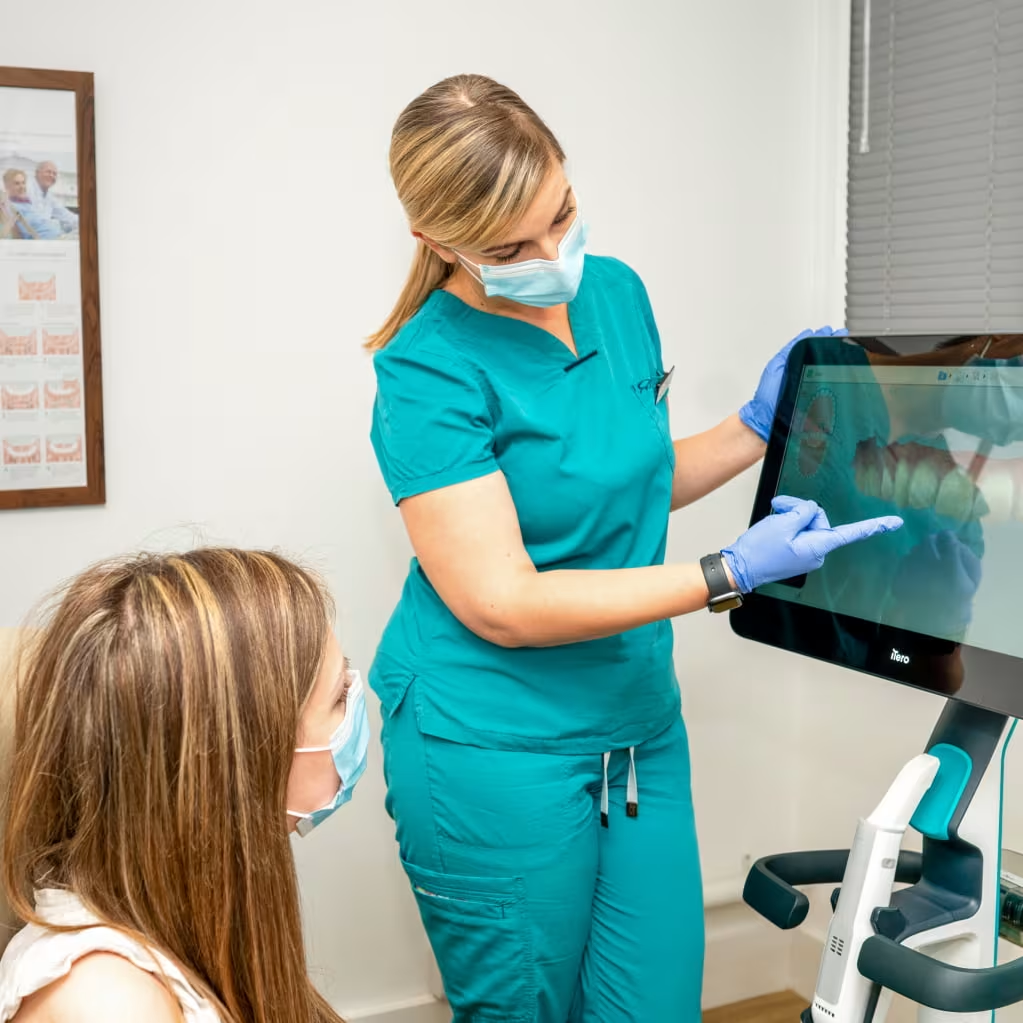
At The Briars, all implant cases are planned using CBCT imaging, which provides a detailed three-dimensional picture of the available bone before any treatment decisions are made. This level of diagnostic precision means we can assess the extent of dental implants bone loss accurately and plan the most appropriate pathway for each individual patient — rather than making assumptions based on a two-dimensional X-ray alone.
A bone graft involves placing bone material into the area of deficit to encourage new bone growth. The grafted material – which may be taken from elsewhere in the patient’s own body, from a donor source, or from a synthetic substitute – acts as a scaffold that the body’s own bone cells grow into over time.
Once the graft has integrated and sufficient bone volume has been established, implant placement can proceed. The timeline varies depending on the extent of the graft needed, but for many patients this is a straightforward procedure that opens the door to implant treatment that would otherwise not have been possible.
At The Briars, bone grafting is carried out by Nick French and Dave Veige, who between them have considerable experience managing complex implant cases involving bone augmentation. The same CBCT-guided planning that underpins all our implant work ensures that grafting is targeted precisely where it’s needed.
For patients with dental implants bone loss in the upper jaw – particularly in the molar and premolar region – the proximity of the sinus cavity can limit the available bone height for implant placement. A sinus lift procedure addresses this by gently lifting the sinus membrane and placing bone graft material in the space created beneath it, effectively increasing the height of available bone.
Sinus lifts are a well-established procedure with a strong evidence base, and Dave Veige performs the majority of sinus lift procedures at The Briars. For patients missing upper back teeth who have been told there isn’t enough bone, a sinus lift is often the procedure that makes implant treatment possible.
For patients with more extensive dental implants bone loss – particularly those who have been missing multiple teeth for some time – the All-on-Four technique offers an elegant solution that often sidesteps the need for bone grafting entirely.
By placing four implants at strategic angles, the All-on-Four technique maximises the use of whatever bone is available, utilising areas of denser bone that haven’t been subject to the same degree of resorption. The angled placement of the posterior implants allows the procedure to work around anatomical structures such as the sinus cavity and nerve pathways that would otherwise restrict placement.
At The Briars, All-on-Four treatment is available for patients requiring full arch restoration, with treatment priced at £15,000 per arch. A free consultation with our Treatment Coordinator is the starting point for anyone considering this route.
Guided bone regeneration is a technique used alongside implant placement – or as a preparatory step – to encourage the body to regenerate bone in areas of deficit. A membrane is placed over the grafting material to protect it and create the right environment for new bone cells to grow, while preventing soft tissue from filling the space instead.
This approach is particularly useful where the bone loss is localised rather than extensive, and it can sometimes be carried out at the same time as implant placement, reducing the overall number of procedures and shortening the treatment timeline.
Where bone loss is significant and the patient isn’t suited to more extensive surgical intervention, implant-retained dentures offer a middle ground that delivers considerably more stability and comfort than conventional dentures, with a more modest surgical requirement.
Rather than replacing every tooth individually, a small number of implants are placed to act as anchors for a removable denture. This approach works with available bone rather than requiring it to be rebuilt to a specific volume, and for many patients it represents a meaningful improvement in quality of life without the complexity of full reconstruction.
The Association of Dental Implantology has detailed patient guidance on implant options, dental implants bone loss, and bone grafting procedures, which is worth reading alongside any clinical advice you receive.
The single most important thing to understand about dental implants bone loss is that a diagnosis of insufficient bone should always be followed by a detailed assessment – not accepted as a final answer without further investigation.
The extent and location of bone loss matters enormously. A patient who has been told they don’t have enough bone for implants by one practice, based on a two-dimensional OPG X-ray, may find that a full CBCT assessment at a practice with more implant experience paints a different picture. It’s always worth seeking a thorough assessment before drawing conclusions.
At The Briars, we’re happy to see patients for a second opinion on implant suitability. Our CBCT imaging gives us the most accurate possible picture of your bone volume and quality, and our team will always give you an honest assessment of what is and isn’t achievable — and what the pathway to treatment looks like if bone augmentation is needed.
If you’d like to find out more about dental implants bone loss, or arrange a consultation, get in touch with our team. We’ll help you understand your options clearly, without pressure in either direction.
Back to blog