One of the most common misconceptions about dental implants is that there comes a point at which you’re simply too old for them. Patients in their sixties, seventies, and beyond regularly arrive at a consultation having been told – or having assumed – that implants aren’t an option at their age. In the vast majority of cases, this isn’t true. Dental implants for older patients are both clinically appropriate and genuinely life-changing, and age alone is rarely the deciding factor in whether treatment is possible.
This article addresses the key facts that older patients – and their families – most commonly want to understand before considering implant treatment. So, are dental implants for older patients possible?
The most important fact about dental implants for older patients is that chronological age is not a clinical contraindication. Implants have been successfully placed in patients well into their eighties and nineties, and the research evidence does not support the idea that age alone predicts implant failure.
What matters far more than age is biological age – the overall state of a patient’s health, bone quality, and healing capacity. A fit and healthy seventy-year-old may be an excellent implant candidate. A younger patient with significant systemic health issues, poor bone density, or uncontrolled gum disease may face more challenges. At The Briars, every patient is assessed as an individual – there are no age-based cut-offs, only clinical assessments based on the full picture.
While age itself isn’t a barrier to dental implants for older patients, the changes that often accompany ageing can be clinically relevant – and bone density is the most significant of these. Bone naturally becomes less dense over time, and this process can be accelerated by conditions such as osteoporosis, prolonged tooth loss, or long-term use of certain medications.
For an implant to integrate successfully, the surrounding bone needs to provide adequate support during the osseointegration period. Where bone density or volume is a concern, this doesn’t automatically rule out implants – but it does make thorough planning essential.
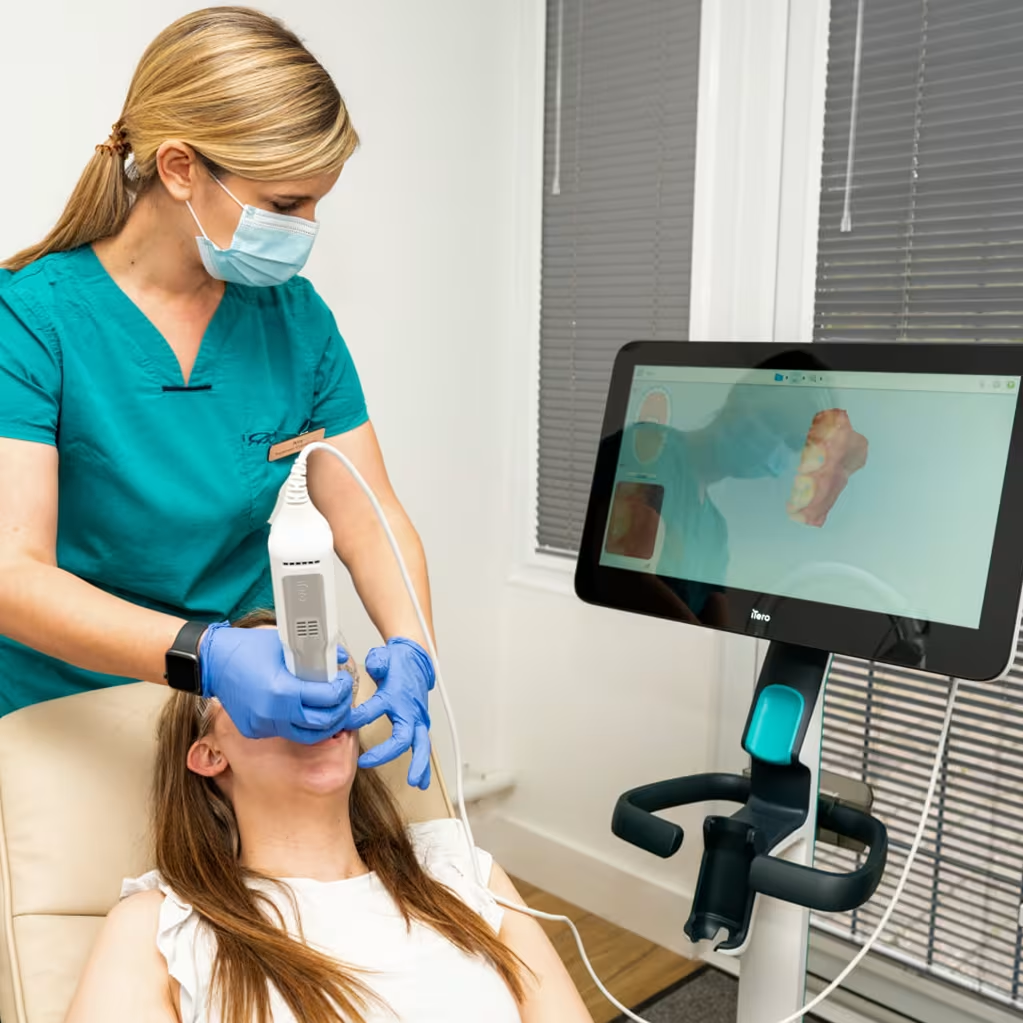
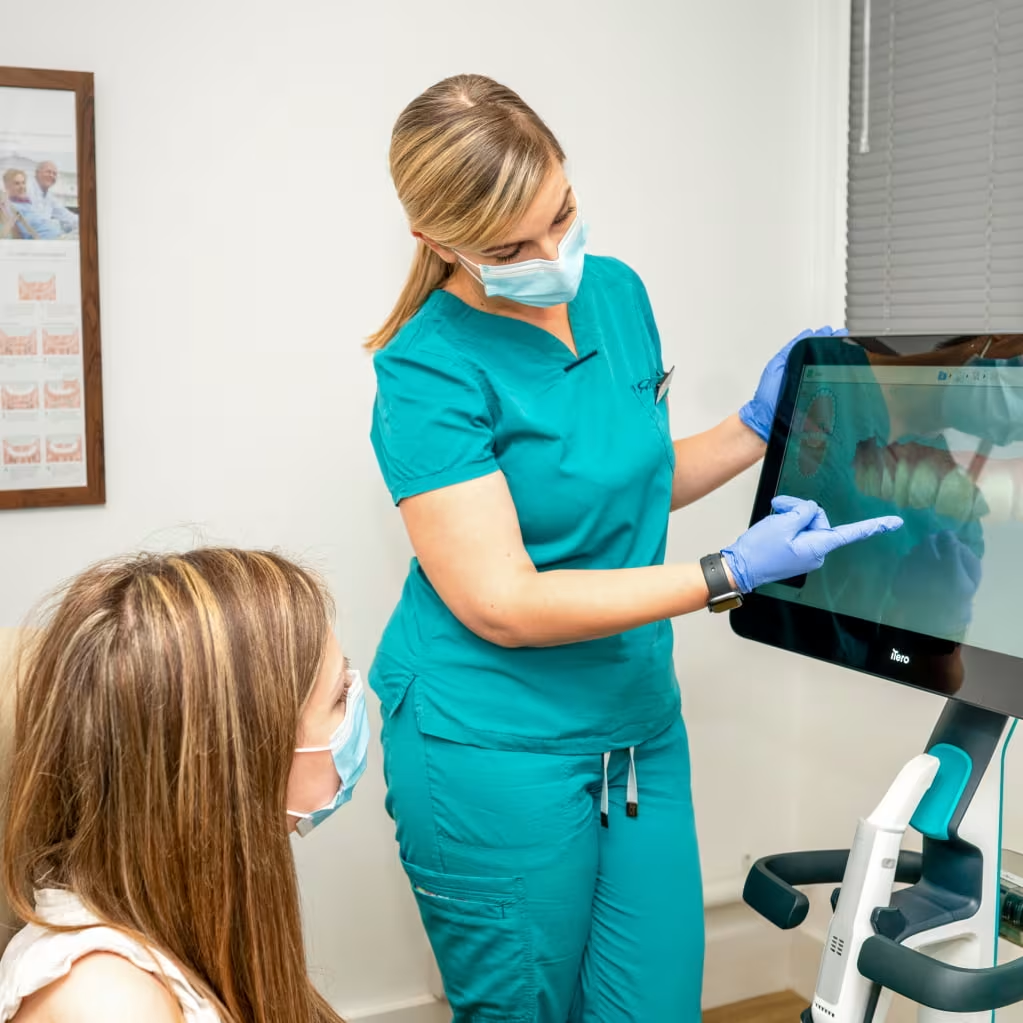
At The Briars, all implant cases are planned using CBCT imaging, which provides a detailed three-dimensional picture of bone volume and density before any decisions are made. This level of diagnostic information allows Nick French and Dave Veige, who lead implant surgery at the practice, to assess whether standard implant placement is appropriate, whether bone augmentation is needed, or whether an alternative approach – such as All-on-Four, which is designed to work with available bone rather than requiring ideal volume – would be more suitable.
Dental implants for older patients require the same thorough medical history review as implant treatment for any patient – but older patients are more likely to have health conditions or medications that are clinically relevant to implant planning.
Conditions such as diabetes, osteoporosis, cardiovascular disease, and autoimmune disorders can all influence healing capacity and implant outcomes. Medications including bisphosphonates – used to treat osteoporosis – and certain immunosuppressants are particularly important to disclose, as they can affect bone metabolism in ways that are directly relevant to osseointegration and healing.
None of these conditions automatically excludes a patient from treatment. What they do is shape the planning process – influencing the timing of surgery, the choice of technique, and the level of post-operative monitoring. At The Briars, we take a careful and unhurried approach to medical history review for all implant patients, and we always involve a patient’s GP or specialist where relevant.
For older patients living with missing teeth, ill-fitting dentures, or the ongoing challenges of a compromised dentition, dental implants can make an enormous difference to everyday life. The ability to eat comfortably, speak confidently, and smile without self-consciousness has a measurable impact on wellbeing – and this impact doesn’t diminish with age. If anything, it becomes more meaningful.
Patients who have lived for years with dentures that slip, rattle, or require adhesive often describe the difference that implant-supported restorations make in terms that go far beyond the clinical. The confidence to eat out, to laugh freely, to engage socially without anxiety about their teeth – these are quality of life gains that are entirely achievable for older patients through dental implants.
For older patients who have experienced significant tooth loss – perhaps living with a full denture for years – the All-on-Four technique is often the most relevant implant option to consider. By using just four strategically placed implants to support a full arch of fixed teeth, All-on-Four can transform the experience of a patient who has adapted to dentures, often without the need for bone grafting.
The angled placement of the posterior implants in the All-on-Four technique makes use of the denser bone that typically exists in the front of the jaw, working with available bone rather than requiring ideal conditions throughout. For dental implants for older patients who have experienced bone resorption from long-term tooth loss, this is a significant advantage.
At The Briars, All-on-Four treatment is available for patients requiring full arch restoration, priced at £15,000 per arch. A free Treatment Coordinator consultation is the starting point for anyone considering this route.
A common concern among older patients considering dental implants is whether the surgical procedure and recovery will be well tolerated. It’s a reasonable question – and the honest answer is that for most older patients in reasonable health, implant surgery is a well-managed procedure with a recovery that, while requiring some care and patience, is entirely manageable.
At The Briars, implant surgery is carried out with the same precision and care regardless of patient age. We use CBCT-guided surgical planning and Waterlase laser technology to maximise precision and minimise tissue disruption. Clear aftercare instructions are provided, and our team is available throughout the recovery period for any questions or concerns.
Longer-term, dental implants for older patients require the same maintenance as implants for any patient – regular professional hygiene appointments, good home care, and monitoring of the surrounding tissue and bone. Our hygiene team deliver Guided Biofilm Therapy as standard, which is particularly effective at maintaining the health of tissue around implants.
The Association of Dental Implantology has patient information on implant suitability, which includes guidance relevant to older patients considering treatment.
If you’re an older patient who has been wondering whether dental implants might still be possible for you – or if you have a parent or family member in this situation – the answer is almost always: it’s worth finding out. The only way to know whether dental implants for older patients are appropriate in your specific case is through a thorough clinical assessment.
At The Briars, we welcome patients of all ages for implant consultations, and are certainly happy to look at dental implants for older patients. We’ll give you an honest, unhurried assessment of your options. Get in touch to arrange a free Treatment Coordinator consultation – we’ll help you understand what’s possible and what the pathway to treatment looks like.
Back to blog