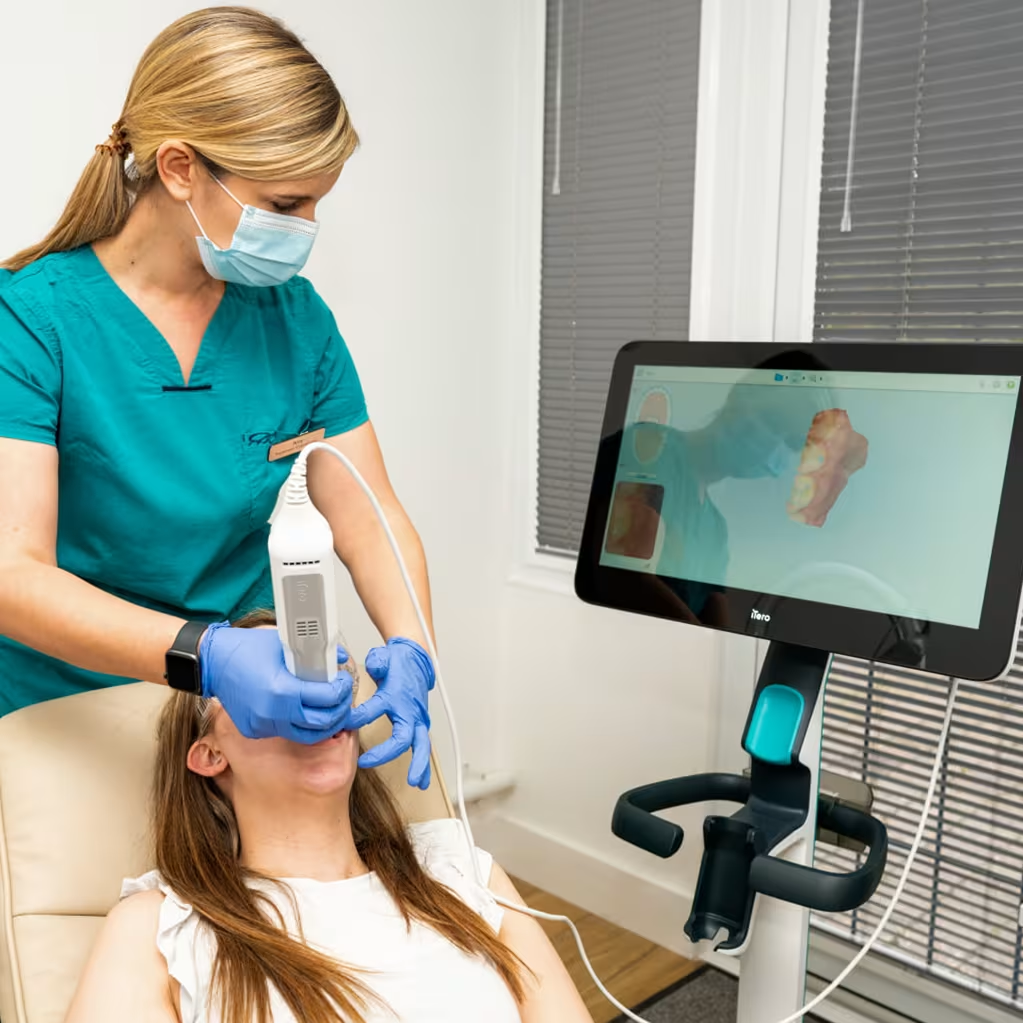
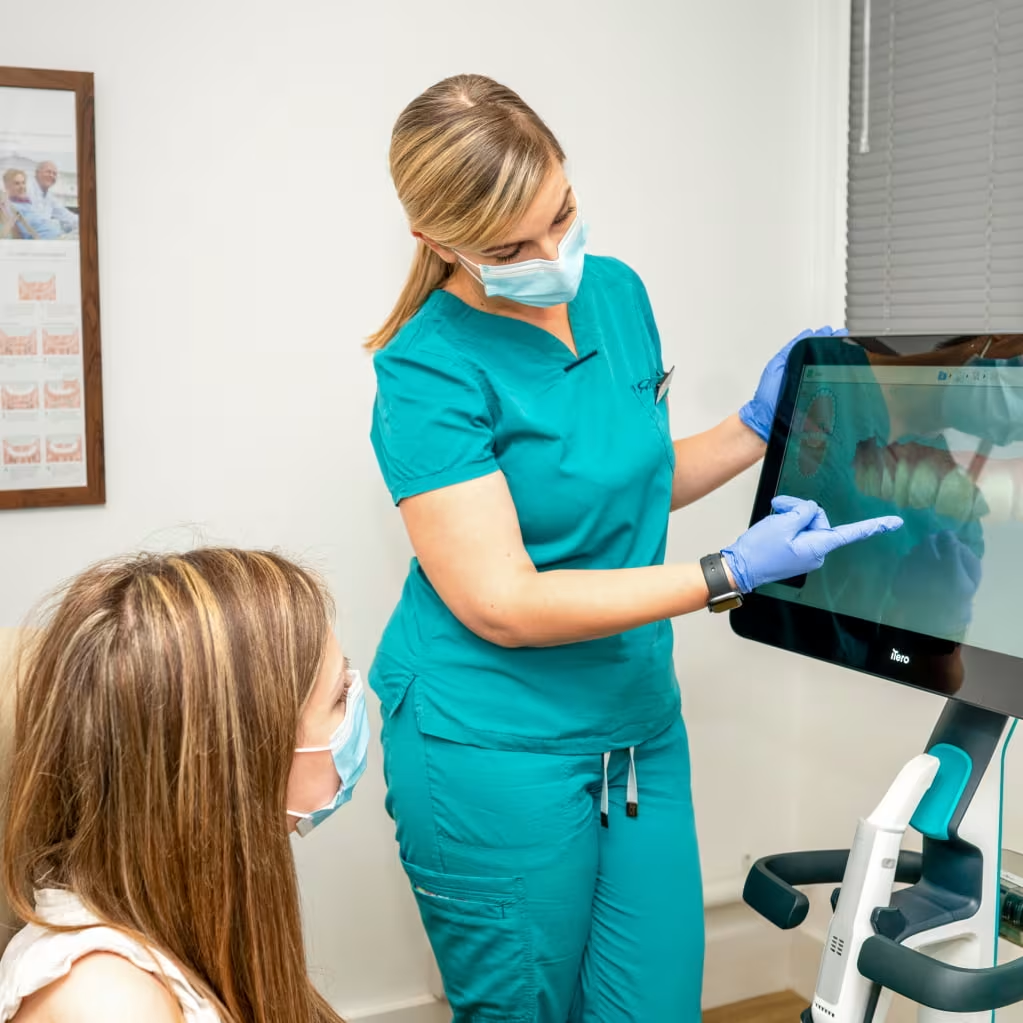
For many patients, the prospect of dental treatment is manageable with reassurance, a good clinical relationship, and a team that takes anxiety seriously. For others, that isn’t enough – and no amount of breathing techniques or gentle explanations fully removes the barrier to sitting in the chair. Dental sedation exists for exactly this group of patients, and at The Briars it’s something we discuss openly and without judgement.
This article answers the five questions patients most commonly ask about dental sedation – what it is, who it’s for, what the options are, and what to expect.
This is one of the most common points of confusion around dental sedation. Local anaesthetic numbs a specific area of the mouth so that treatment is pain-free – but it doesn’t affect your level of consciousness or your awareness of what’s happening around you. You remain fully awake, you can hear, and you can feel pressure and movement even if you can’t feel pain.
Dental sedation works differently. It reduces your level of consciousness – not to the point of being fully asleep, but to a state of deep relaxation in which you’re calm, less aware of your surroundings, and often have little or no memory of the procedure afterwards. Most patients who receive dental sedation describe it as feeling as though almost no time has passed between sitting down and the treatment being finished.
The two are not mutually exclusive. Dental sedation is typically used alongside local anaesthetic – so you’re both sedated and numb, meaning you’re relaxed and the treatment is pain-free.
Dental sedation is appropriate for a range of patients and situations – it isn’t reserved only for those with severe phobias.
Patients with significant dental anxiety – where fear has been preventing them from attending or completing treatment – are the most common candidates. Dental sedation removes the conscious experience of anxiety during treatment, and many patients find that completing treatment successfully with sedation helps to gradually reduce their anxiety over time.
Patients undergoing longer or more complex procedures may also benefit, even without significant anxiety. A lengthy implant placement, a complex extraction, or a surgical procedure that would require a patient to sit still for an extended period can be considerably more comfortable with dental sedation than without.
Patients with a strong gag reflex, with certain physical or neurological conditions that make remaining still difficult, or who have had a traumatic dental experience in the past are all patients for whom dental sedation is worth discussing.
At The Briars, the decision about whether dental sedation is appropriate is always made on an individual basis. Your medical history, the treatment planned, and your own preferences all factor into the discussion – and there’s never any pressure to accept or decline.
At The Briars, we offer two forms of dental sedation depending on your clinical needs and the treatment being carried out.
Oral sedation involves taking a prescribed sedative medication – typically a tablet or liquid – before your appointment. It produces a state of relaxation and drowsiness that makes the appointment much more manageable, and it’s appropriate for patients with mild to moderate anxiety or for shorter procedures. Oral sedation is provided in-house and is discussed and prescribed by your clinician as part of your treatment planning.
Intravenous sedation – commonly known as IV sedation – is administered directly into the bloodstream via a small cannula, usually in the back of the hand. It works more quickly and produces a deeper state of relaxation than oral sedation, and it can be precisely controlled throughout the procedure. IV sedation is particularly appropriate for patients with significant anxiety or for longer and more complex treatment. At The Briars, IV sedation is provided by an experienced external sedationist who works with our clinical team – ensuring that a specialist is dedicated entirely to monitoring your comfort and safety throughout the appointment.
Both forms of dental sedation leave you in a conscious but deeply relaxed state – you can respond to instructions from your clinical team, but you’re unlikely to have a clear memory of the procedure afterwards. This is sometimes called “twilight sedation” or “conscious sedation.”
Dental sedation has an excellent safety record when carried out by appropriately trained professionals with the right monitoring in place. Both oral sedation and IV sedation are well-established, widely used approaches that have been used safely in dental settings for many years.
At The Briars, IV sedation is always carried out with a dedicated sedationist present whose sole focus is your monitoring and welfare – not the clinical procedure. This is an important distinction: it means your treating clinician can focus entirely on the treatment while a separate specialist monitors your vital signs, level of sedation, and overall comfort throughout.
As with any medical procedure, dental sedation does carry some risk – and these risks are discussed with you as part of the consent process before treatment begins. Certain medical conditions or medications can affect the suitability of sedation, which is why a thorough medical history review is essential before any sedation appointment is confirmed.
You’ll also need to arrange for a responsible adult to accompany you to and from your appointment and to stay with you for the remainder of the day. You shouldn’t drive, operate machinery, or make significant decisions for 24 hours after receiving dental sedation, as the effects can persist even after you feel alert again.
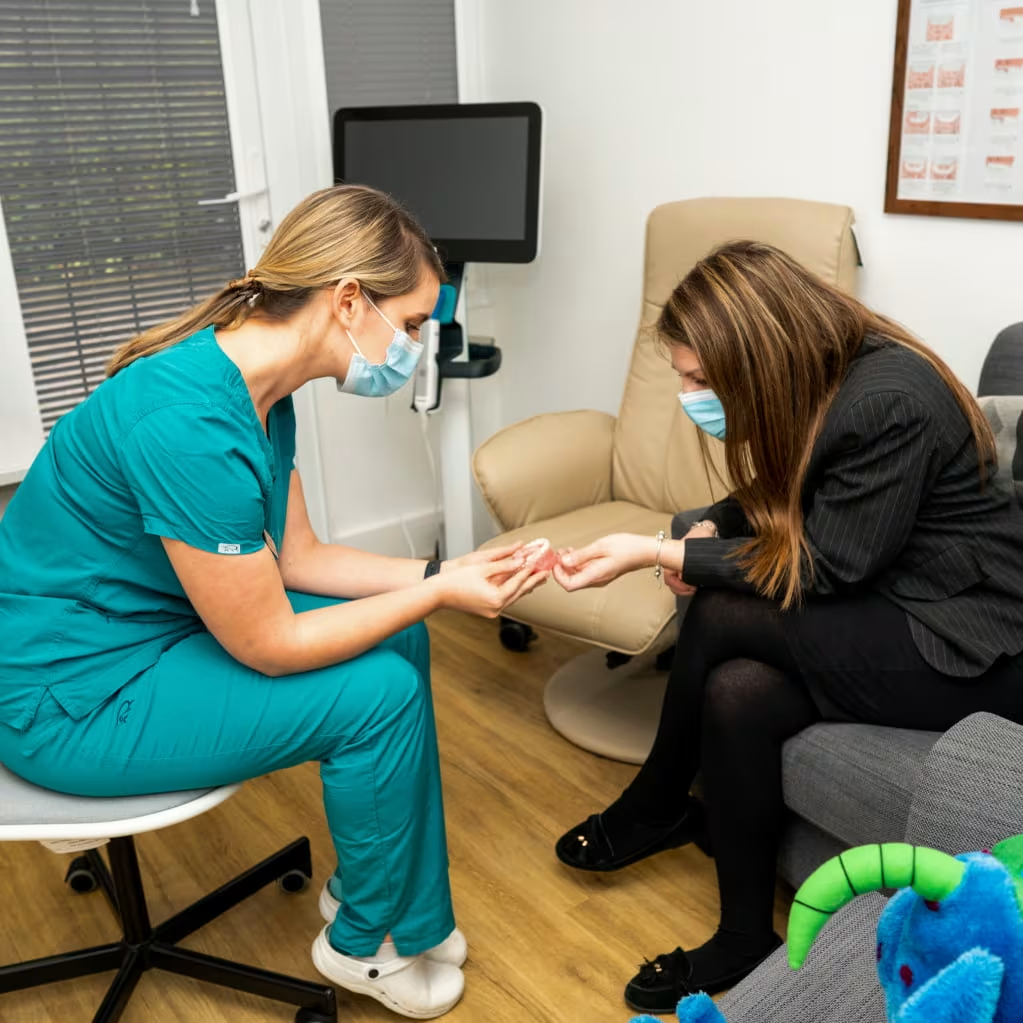
The best starting point is a conversation – and at The Briars, that conversation begins with our Treatment Coordinator. Our TCO appointment is free, carries no obligation, and gives you the space to talk openly about your anxiety, your treatment history, and what you’re hoping for from your care.
From there, if dental sedation is appropriate for your situation, your clinician will discuss the options in detail – which type of sedation is most suitable, what the appointment will involve, and what you’ll need to arrange beforehand. Nothing is confirmed until you’re fully informed and comfortable with the plan.
If you’ve been putting off dental treatment because anxiety has felt like an insurmountable barrier, dental sedation may be the thing that changes that. Many patients at The Briars who have used sedation describe it as the turning point that allowed them to access care they’d been avoiding for years – and to build confidence in attending more straightforwardly afterwards.
The British Dental Association has patient information on sedation in dentistry, which provides a useful overview of what conscious sedation involves and what to expect.
If you’d like to talk through your options, our team is here to help. Get in touch to arrange a free Treatment Coordinator consultation – it’s a conversation, nothing more, and it could be the first step towards the dental care you’ve been putting off.
Back to blog