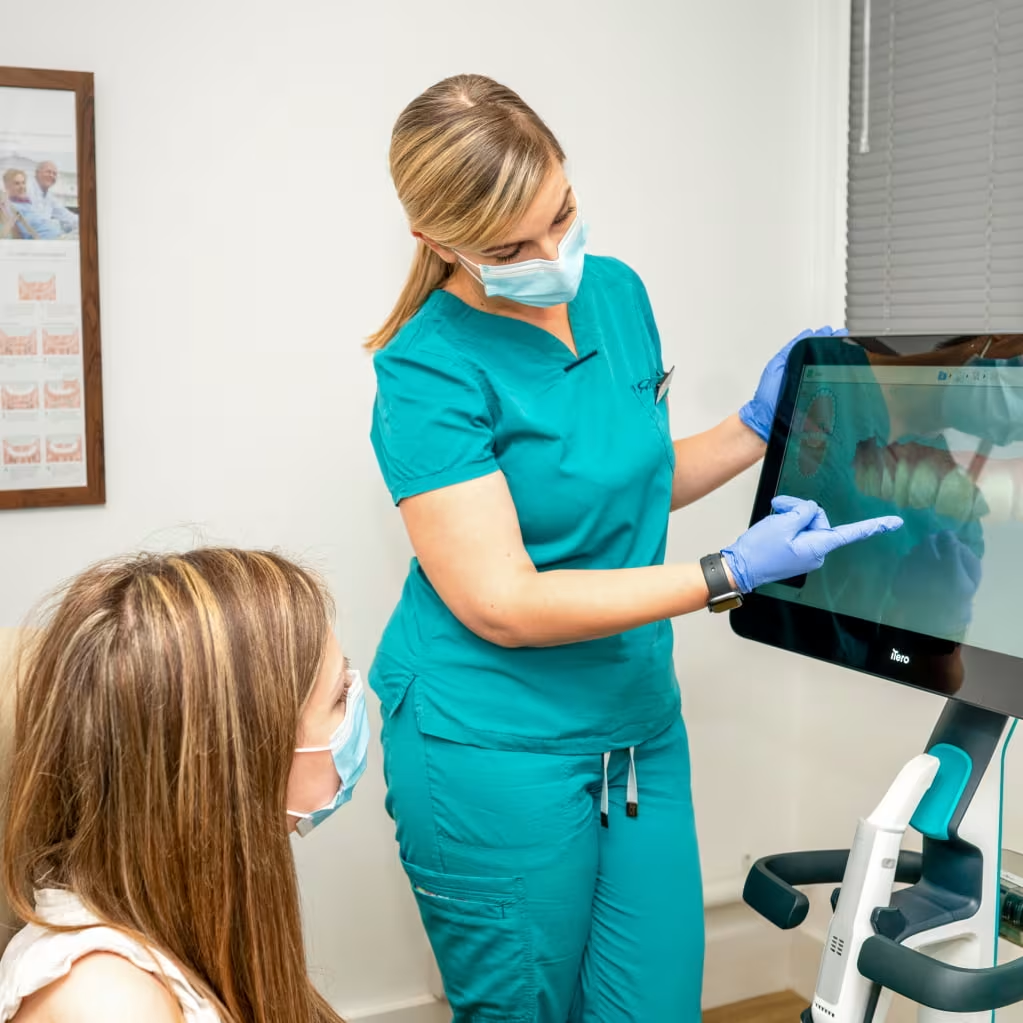
For many people, a first hygiene appointment brings a mixture of curiosity and mild apprehension. Whether you’re new to private dentistry, haven’t seen a hygienist in a while, or are simply not sure what the appointment involves, knowing what to expect before you arrive makes a real difference to how the whole experience feels.
The good news is that a hygiene appointment at The Briars is considerably more comfortable, more thorough, and more informative than many patients anticipate – and most people leave wondering why they waited so long to book one.
Here’s exactly what your first hygiene appointment involves, from start to finish.
Before walking through what happens, it’s worth understanding why a separate hygiene appointment exists alongside your regular dental check-up. A dental examination and a hygiene appointment serve different purposes. Your dentist assesses the health of your teeth, bone, and soft tissues, identifies any clinical concerns, and plans treatment. Your hygienist focuses specifically on the health of your gums, the cleanliness of your teeth, the removal of biofilm and deposits, and your home care routine.
The two appointments complement each other – but a check-up alone, however thorough, doesn’t replace professional cleaning. For most patients, regular hygiene appointments are the single most important thing they can do to maintain their oral health between examinations, and a first hygiene appointment is the starting point for building that routine.
Your first hygiene appointment will begin with a short review of your dental and medical history. This isn’t paperwork for its own sake – it gives your hygienist the context they need to provide safe, appropriate care. Certain medical conditions and medications can affect your gum health or influence how your appointment is conducted, and your hygienist will want to know about these before they begin.
If you’re returning to dental care after a longer gap, this is also a good moment to mention that – along with any concerns you have about your teeth or gums, or any areas that you know tend to be problematic. The more your hygienist knows at the start of your first hygiene appointment, the more targeted and useful the whole session will be.
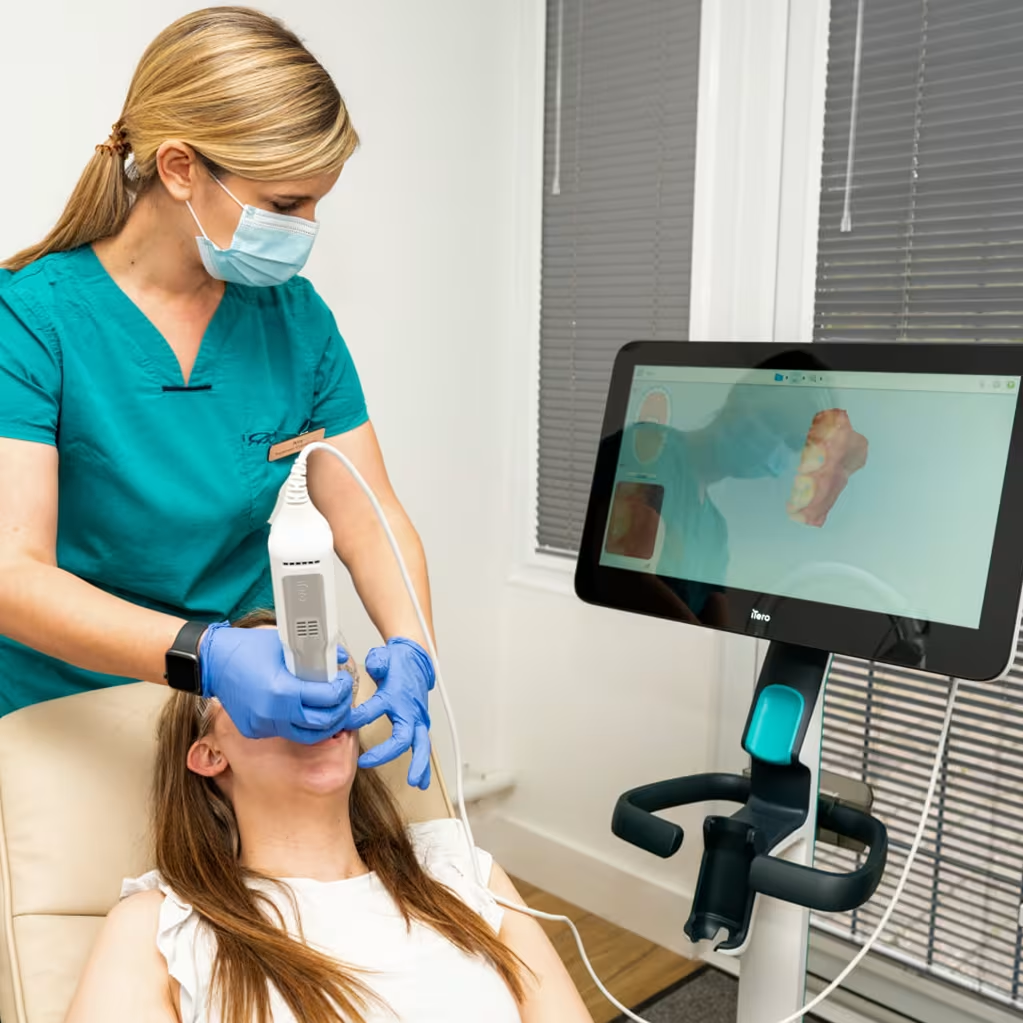
One of the most important elements of your first hygiene appointment is a proper assessment of your gum health. This typically involves pocket charting – using a small, blunt probe to gently measure the depth of the space between your gum and each tooth. Healthy pockets measure between one and three millimetres; deeper pockets can indicate gum disease or inflammation that needs to be addressed.
This assessment gives your hygienist a baseline picture of your gum health that can be compared at future appointments – allowing them to monitor trends over time and identify any changes that warrant attention. If your first hygiene appointment reveals deeper pockets or signs of gum disease, your hygienist will explain what this means and what the next steps might involve, whether that’s more frequent professional cleaning, a referral to our specialist periodontist Sharmila Khopade, or simply an improved home care routine.
At The Briars, every hygiene appointment includes Guided Biofilm Therapy as standard. If you’ve had traditional scaling and polishing at a previous practice, GBT is likely to feel quite different – and most patients find it considerably more comfortable.
Your first hygiene appointment with GBT begins with a disclosing step – a harmless dye that reveals the biofilm present on your teeth, making it visible so that both you and your hygienist can see exactly where it is and how much of it there is. This isn’t intended to make you feel bad about your brushing – it’s a clinical tool that guides the cleaning and gives you genuinely useful feedback about your home care routine.
From there, your hygienist uses a combination of a fine powder airflow device and ultrasonic instruments to remove the biofilm and any calculus deposits thoroughly and gently. The airflow works particularly well in the areas a toothbrush and interdental tools can’t fully reach – around the gum margins and between the teeth – which is precisely where the bacteria that cause gum disease tend to accumulate.
The result is a level of cleanliness that home care alone simply can’t achieve, regardless of how diligent your brushing routine is.
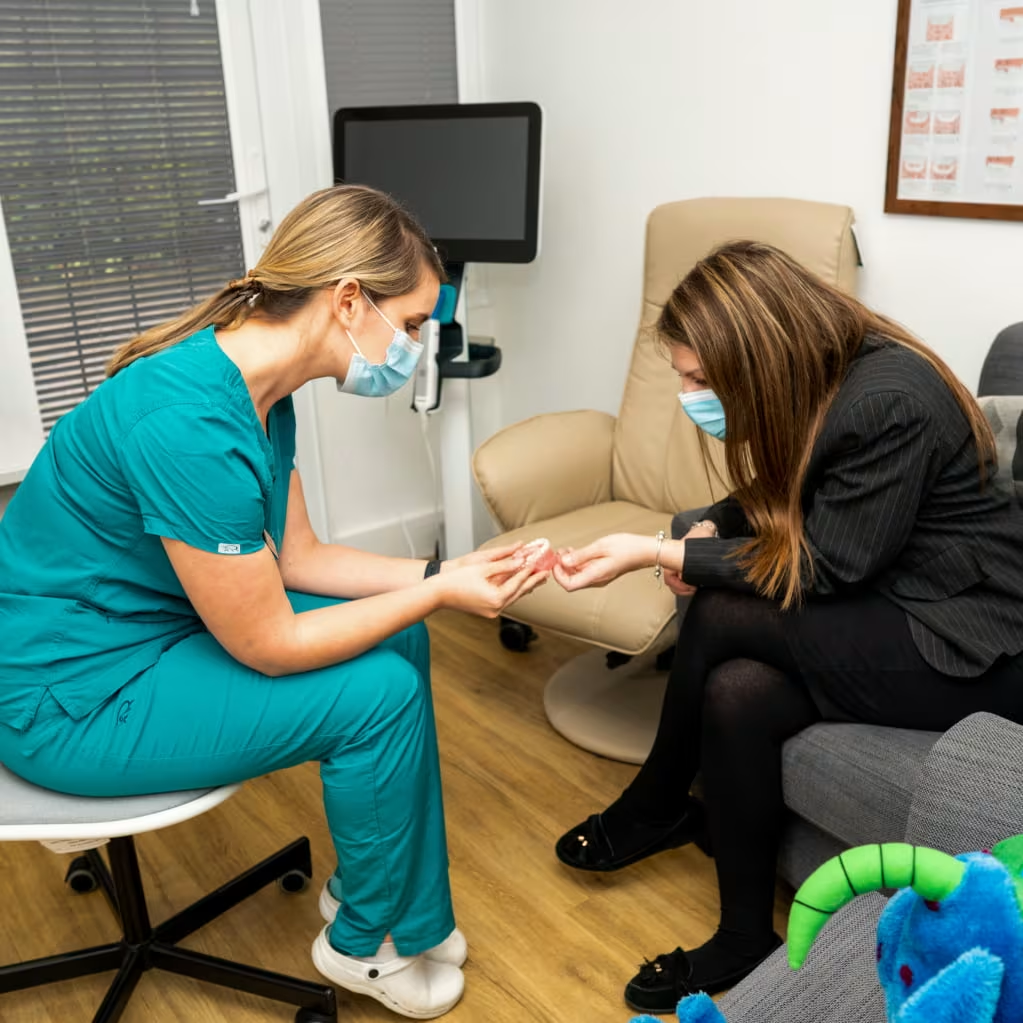
Your first hygiene appointment isn’t just about what happens in the chair – it’s also about equipping you with the knowledge and tools to look after your teeth and gums effectively at home. This is one of the aspects of a hygiene appointment that patients most consistently find valuable, particularly if they’ve never had this kind of personalised guidance before.
Your hygienist will review your brushing technique, discuss the most appropriate interdental cleaning tools for your specific teeth and gum architecture, and make practical recommendations that are tailored to you rather than generic. If the disclosing step revealed particular areas where biofilm is consistently building up, they’ll focus their advice there.
Meryl Colley, Amiee Mosher, and Monica Robotin – our hygienists at The Briars – all take this part of the appointment seriously. The difference between a patient who leaves with genuinely useful, personalised advice and one who leaves with a vague reminder to floss more is significant – and it’s a difference that shows up in gum health over time.
At the end of your first hygiene appointment, your hygienist will discuss the interval at which they’d recommend you return. As we explored in our article on how often you should see a hygienist, this isn’t the same for everyone – it depends on your gum health, your risk factors, whether you have implants or are undergoing orthodontic treatment, and how quickly calculus builds up on your teeth.
For a straightforward, low-risk patient with healthy gums, six-monthly appointments may be entirely appropriate. For patients with a history of gum problems, dental implants, or other risk factors, a more frequent interval is likely to be recommended. Whatever your hygienist advises, this recommendation is based on your individual clinical picture – not a one-size-fits-all schedule.
Most patients leave their first hygiene appointment with noticeably cleaner, smoother teeth – and often a greater awareness of their oral health than they had before. Some mild sensitivity for a day or two after a thorough clean is entirely normal and nothing to be concerned about, particularly if it’s been a while since your last professional cleaning. This settles quickly.
If your hygienist identified any areas of concern during your first hygiene appointment – deeper pockets, signs of early gum disease, or anything else that warrants further investigation – they’ll either note this for your dentist to review at your next check-up or, where appropriate, recommend a more urgent follow-up. You’ll always leave knowing exactly what was found and what, if anything, needs to happen next.
The Oral Health Foundation has useful guidance on the role of the dental hygienist and what to look for in a professional cleaning appointment.
A first hygiene appointment at The Briars is a straightforward, comfortable, and genuinely informative experience – and it’s the beginning of an ongoing relationship with your oral health that pays dividends for years to come.
Whether you’re a new patient joining us from another practice, returning to dental care after a gap, or simply overdue a hygiene visit, Meryl, Amiee, and Monica would be delighted to welcome you. Get in touch with our team to book your appointment – we’ll take good care of you from the very first visit.
Back to blog