Invisalign and Gum Health: 5 Incredible Facts You Must Know
When people think about starting Invisalign treatment, the conversation tends to focus on straightening teeth – the aesthetics, the timeline, the wear routine. Gum health, if it comes up at all, is often treated as a footnote. In reality, the relationship between Invisalign and gum health is one of the most important things to understand before you begin, and during treatment too.
This article explains exactly what you need to know – whether you’re considering Invisalign, already mid-treatment, or wondering whether a history of gum problems rules you out altogether.
The first and most important fact about Invisalign and gum health is that your gums need to be in a stable condition before aligner treatment can start. This isn’t a formality – it’s a clinical requirement that directly affects both the safety and the success of your treatment.
Moving teeth through bone is a biological process, and that process depends on healthy supporting structures – the gum tissue and the bone beneath it – responding predictably to the forces the aligners apply. Where active gum disease is present, those structures are already under attack from bacterial infection and inflammation. Moving teeth in this environment increases the risk of accelerated bone loss and can cause lasting damage that outlasts the treatment itself.
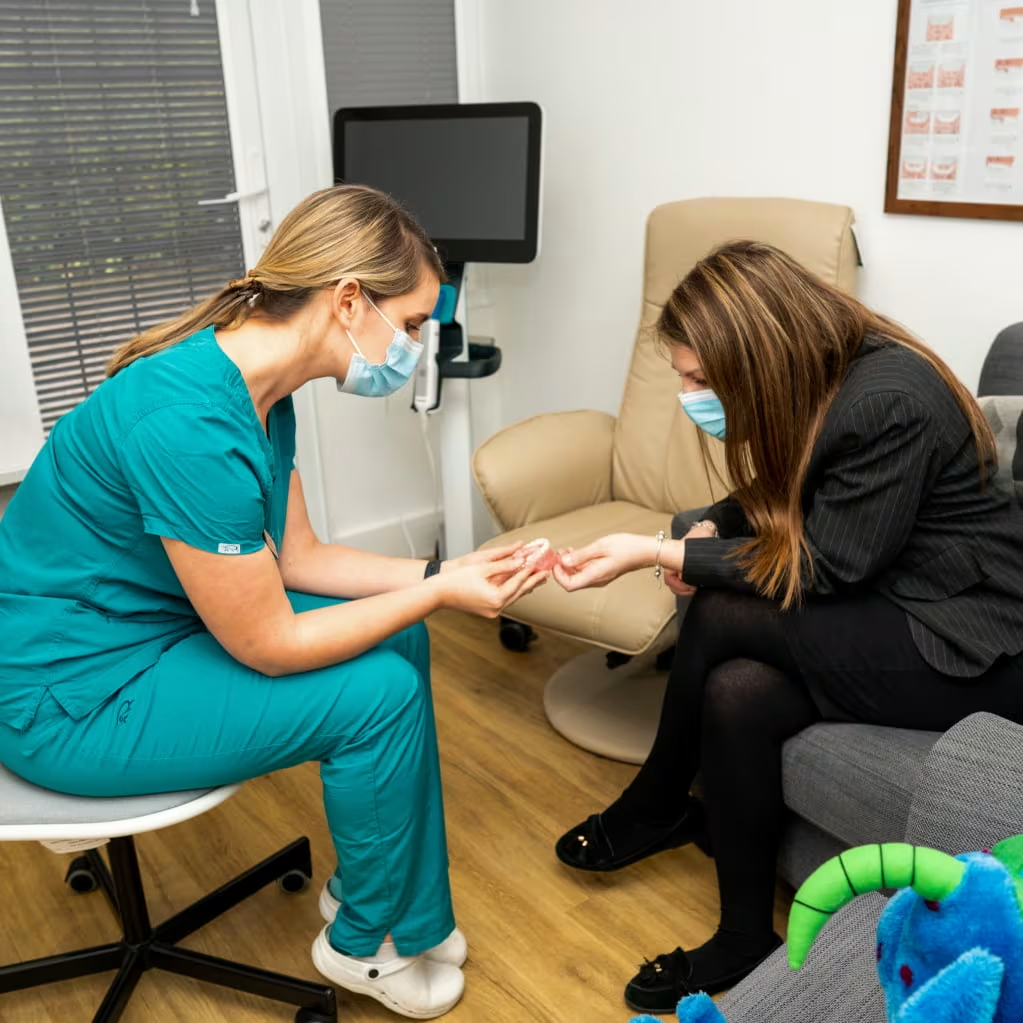
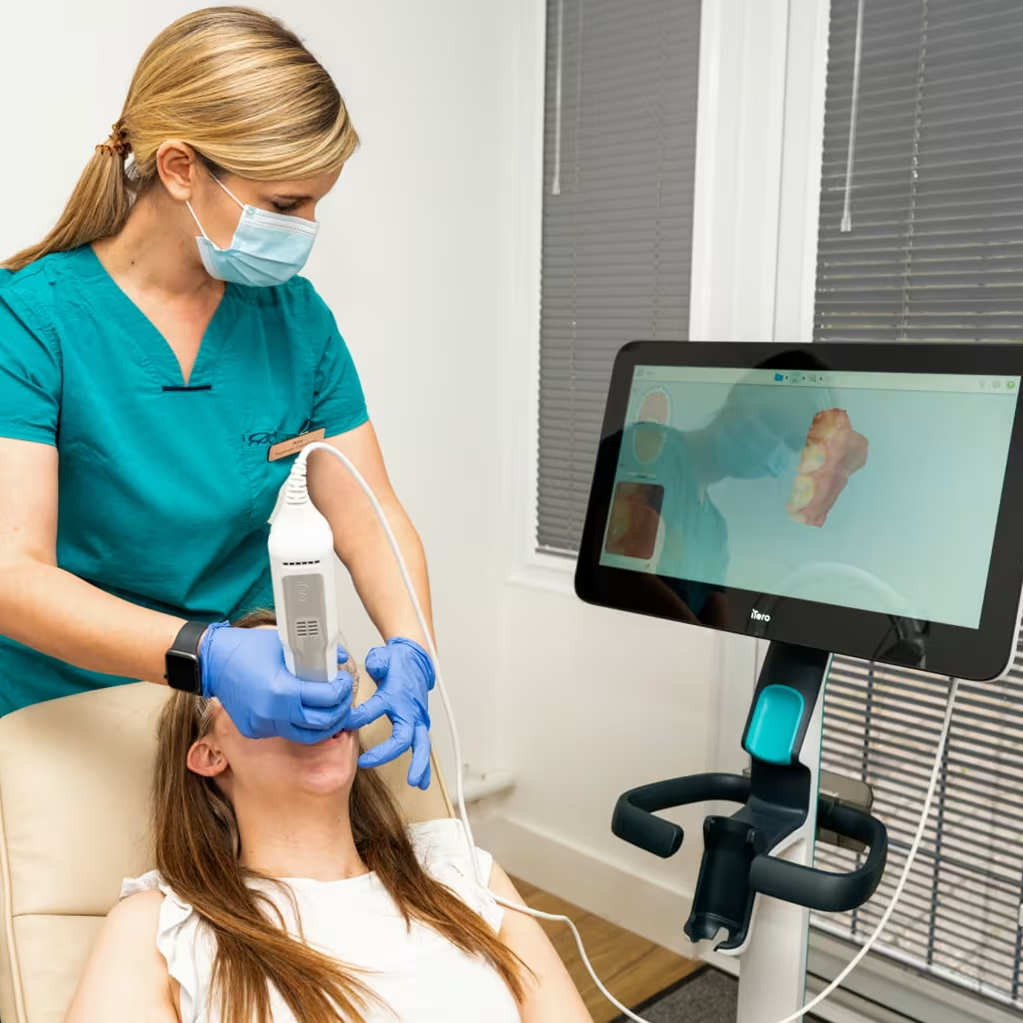
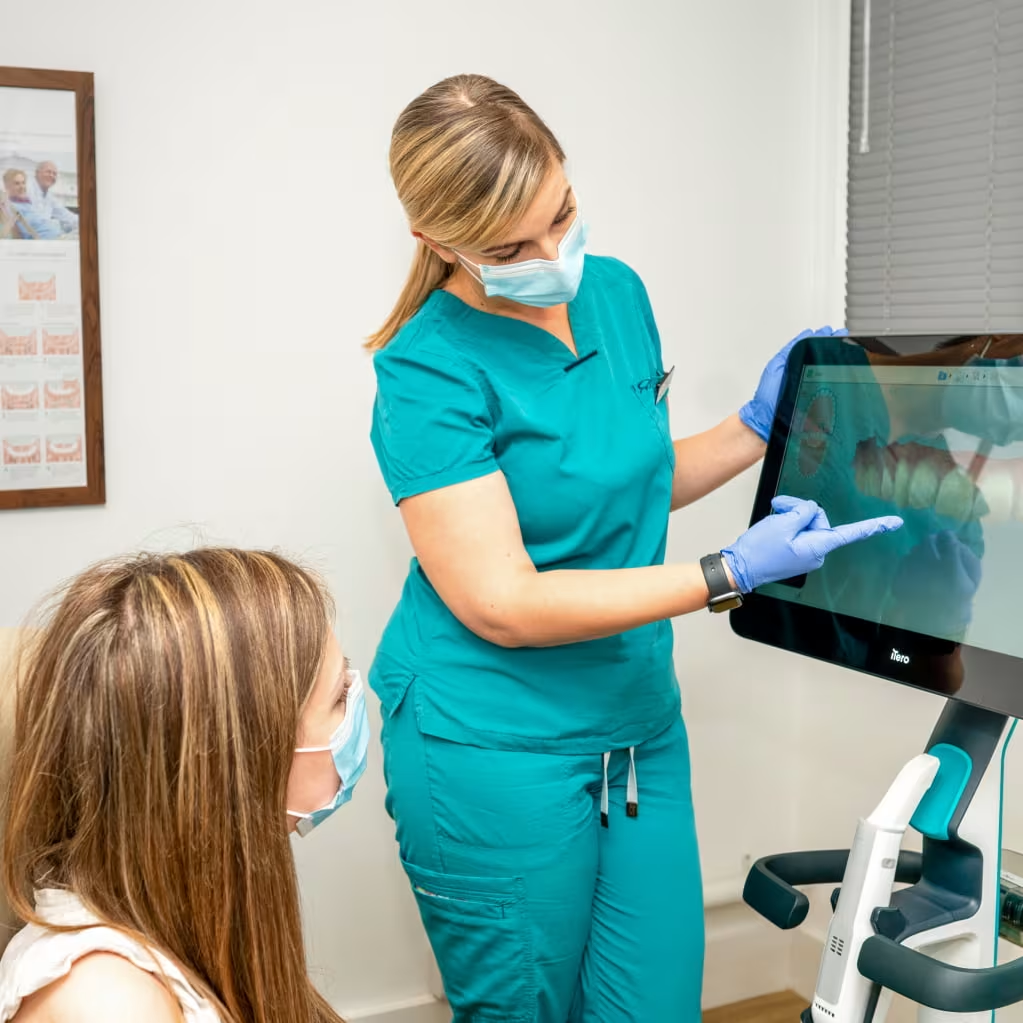
At The Briars, Invisalign and gum health are assessed together from the very beginning. Victoria Holden, who leads clear aligner treatment, considers the full clinical picture at the assessment stage – not just tooth alignment. If there are signs of gum disease or significant inflammation, treatment won’t begin until the periodontal situation is stable.
This is where the picture becomes more nuanced, and where having the right team around you makes a real difference. A diagnosis of gum disease doesn’t automatically close the door on Invisalign it – means that gum disease needs to be treated and stabilised first, as part of the pathway to aligner treatment.
At The Briars, Sharmila Khopade, our specialist periodontist, works alongside Victoria to manage exactly this situation. Patients who need periodontal treatment before their aligners can begin don’t have to go elsewhere for that care – it happens under the same roof, with the clinical teams communicating directly. Once Sharmila is satisfied that gum health is stable, Victoria can assess Invisalign suitability with confidence.
This joined-up approach to Invisalign and gum health is one of the genuine advantages of a multidisciplinary practice, and it’s something that simply isn’t possible at many aligner-only or orthodontic-only providers.
One of the less widely known facts about Invisalign and gum health is that straightening your teeth can have a genuinely positive effect on your gums – not just your smile.
Crowded, overlapping, or misaligned teeth are significantly harder to clean effectively. Toothbrush bristles and interdental tools struggle to reach into tight spaces, biofilm accumulates in areas that can’t be properly maintained, and the risk of gum inflammation rises as a result. By moving teeth into better alignment, Invisalign can improve access for cleaning and reduce the areas where plaque is able to build up undisturbed.
This doesn’t mean Invisalign is a treatment for gum disease – it isn’t. But for patients whose gum problems are at least partly driven by difficult-to-clean crowding, completing aligner treatment and maintaining the result can be a meaningful contribution to long-term gum health.
Understanding the connection between Invisalign and gum health doesn’t stop at the assessment stage – it continues throughout treatment. Wearing aligners for 20 to 22 hours a day creates an environment that, without proper hygiene, can increase the risk of gum inflammation.
Aligners sit closely against the teeth and gum margins, and if bacteria and food debris are allowed to accumulate beneath them, the gums can become irritated. This is why cleaning your teeth thoroughly before replacing your aligners after every meal or drink is so important – and why maintaining your regular hygiene appointments throughout treatment is not optional.
At The Briars, our hygienists deliver Guided Biofilm Therapy as standard at every hygiene appointment. GBT is particularly effective at removing biofilm from the gum margins and between teeth – exactly the areas most at risk during aligner treatment. Many of our Invisalign patients schedule a GBT appointment mid-treatment to keep their gum health in optimal condition, and we’d always encourage this as part of a sensible approach to the relationship between Invisalign and gum health.
The story of Invisalign and gum health doesn’t end when your final aligner comes out. The retention phase – wearing your retainers consistently to maintain the new position of your teeth – is also relevant to gum health, because teeth that are allowed to drift back toward crowded positions gradually recreate the same cleaning challenges that may have contributed to gum problems in the first place.
At The Briars, we recommend Vivera retainers for patients completing Invisalign treatment. These are made by Invisalign using the same precision scanning process as your aligners, and they’re provided in sets of three – priced at £613 for upper and lower – giving you a reliable supply that makes consistent retainer wear straightforward. Maintaining your result is maintaining your gum health too.
The Oral Health Foundation has useful patient information about gum disease and how to protect your gums, which is worth reading alongside the guidance your clinical team provides.
The relationship between Invisalign and gum health is one that runs through the entire treatment journey — from the initial assessment to the retention phase and beyond. At The Briars, we take that relationship seriously at every stage, because the best aligner outcomes are built on healthy foundations.
If you’re considering Invisalign and have concerns about your gum health, the best starting point is a conversation with our Treatment Coordinator. It’s free, it’s relaxed, and it will give you a clear picture of where you are and what – if anything – needs to be addressed before treatment can begin. Get in touch to arrange your appointment.
Back to blog