Jaw clicking is one of those things people tend to notice and then quietly ignore. It happens when you open your mouth wide, when you yawn, or sometimes just when you’re eating – a click, pop, or grating sensation that comes and goes without any obvious explanation. For some people it’s been there for years. For others it appears suddenly and then seems to disappear again.
Most jaw clicking is not a sign of anything serious. But some of it is worth investigating, and knowing the difference can save you from a condition that’s much simpler to manage in its early stages than its later ones.
The jaw joint – known as the temporomandibular joint, or TMJ – is one of the most complex joints in the body. It doesn’t just hinge open and close; it also slides forward and rotates, allowing the full range of movements involved in chewing, speaking, and yawning. The disc of cartilage that sits between the bones of the joint acts as a cushion, keeping the movement smooth.
Jaw clicking typically occurs when something disrupts the smooth movement of that disc. Understanding what causes that disruption is the starting point for understanding whether your jaw clicking is something to watch, something to manage, or something to investigate promptly.
The most common cause of jaw clicking is displacement of the articular disc – the cartilage cushion within the joint. When the disc shifts slightly out of its normal position, the click or pop you hear is often the condyle – the rounded head of the lower jaw – moving over or past the edge of the displaced disc.
In many cases this is a benign mechanical issue that causes no pain and no long-term damage. The jaw clicking comes and goes, the joint functions normally, and no treatment is needed beyond monitoring.
Where disc displacement becomes more concerning is when it’s accompanied by pain, when the clicking progresses to locking – where the jaw becomes stuck open or closed – or when the range of movement becomes restricted. At this stage, the condition benefits from professional assessment and, often, active management.
Bruxism – the habit of grinding or clenching the teeth, most commonly during sleep – places significant and repetitive strain on the TMJ. Over time, this can affect the position and condition of the disc, the surrounding ligaments, and the muscles of the jaw, all of which can contribute to jaw clicking, aching, and stiffness.
Many patients who present with jaw clicking have no idea they grind their teeth. The signs – worn biting surfaces, jaw muscle tenderness on waking, morning headaches, and sensitivity – aren’t always obviously connected. If you’re noticing jaw clicking alongside any of these symptoms, bruxism is worth considering as a contributing factor.
At The Briars, a custom-made occlusal splint can be provided to protect the joint and teeth from the forces of grinding. This doesn’t resolve all cases of jaw clicking, but for bruxism-related TMJ strain it’s often a meaningful part of management.
The muscles that control jaw movement – the masseter, temporalis, and pterygoid muscles – are directly affected by stress. Many people clench their jaw when they’re anxious, concentrated, or tense without being aware of it. Over time, chronically tight jaw muscles can alter the mechanics of the joint and contribute to jaw clicking, aching, and restricted movement.
This is one of the most underappreciated causes of TMJ symptoms generally, and jaw clicking specifically. Patients are often surprised to find that their jaw symptoms fluctuate with their stress levels – worse during difficult periods at work or in life, better when things ease off.
Management in these cases is broader than purely dental – stress reduction, physiotherapy, and muscle relaxation techniques all have a role alongside any dental intervention.
Some patients have naturally hypermobile joints – joints that move beyond their normal range of motion. In the jaw this can manifest as a jaw that opens very wide, clicks regularly, or occasionally dislocates temporarily on wide opening.
Jaw clicking from hypermobility is typically painless and has been present for many years, often since childhood or adolescence. It’s worth mentioning to your dentist so that it’s noted and monitored, but for most patients with hypermobile jaw joints it doesn’t require active treatment unless symptoms change.
Osteoarthritis and rheumatoid arthritis can both affect the TMJ, and jaw clicking – particularly a grating or crunching sound rather than a clean pop – can be one of the signs. Arthritic changes in the joint alter the smooth surfaces of the bones, producing noise and sometimes pain during movement.
TMJ arthritis is more common in older patients and in those with a history of joint disease elsewhere in the body. If your jaw clicking has developed alongside joint symptoms in other parts of your body, or if it’s accompanied by swelling or significant pain around the joint, it’s worth discussing with both your dentist and your GP.
Jaw clicking on its own, without any other symptoms, is usually not urgent. Many people have a click they’ve lived with comfortably for years. That said, it’s always worth mentioning to your dentist so that it can be noted and monitored over time.
There are situations where jaw clicking warrants a prompt assessment rather than a wait-and-see approach:
When the clicking is accompanied by pain – in the joint itself, in the jaw muscles, in the ear, or as a headache. When the jaw locks or catches, even temporarily. When the range of movement is reduced – difficulty opening wide, or the jaw deviating to one side on opening. When the clicking has appeared suddenly following an injury, a dental procedure, or a period of significant stress. When it’s getting progressively worse rather than staying stable.
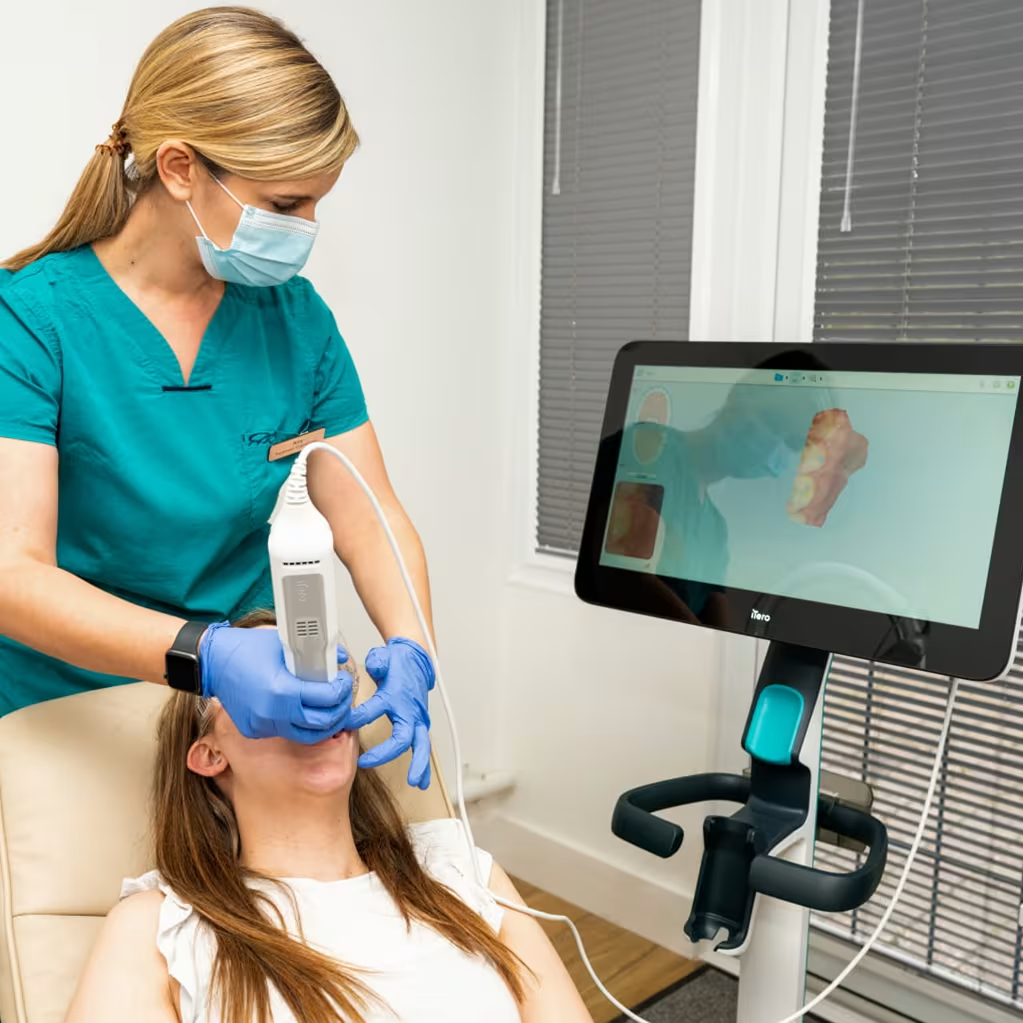
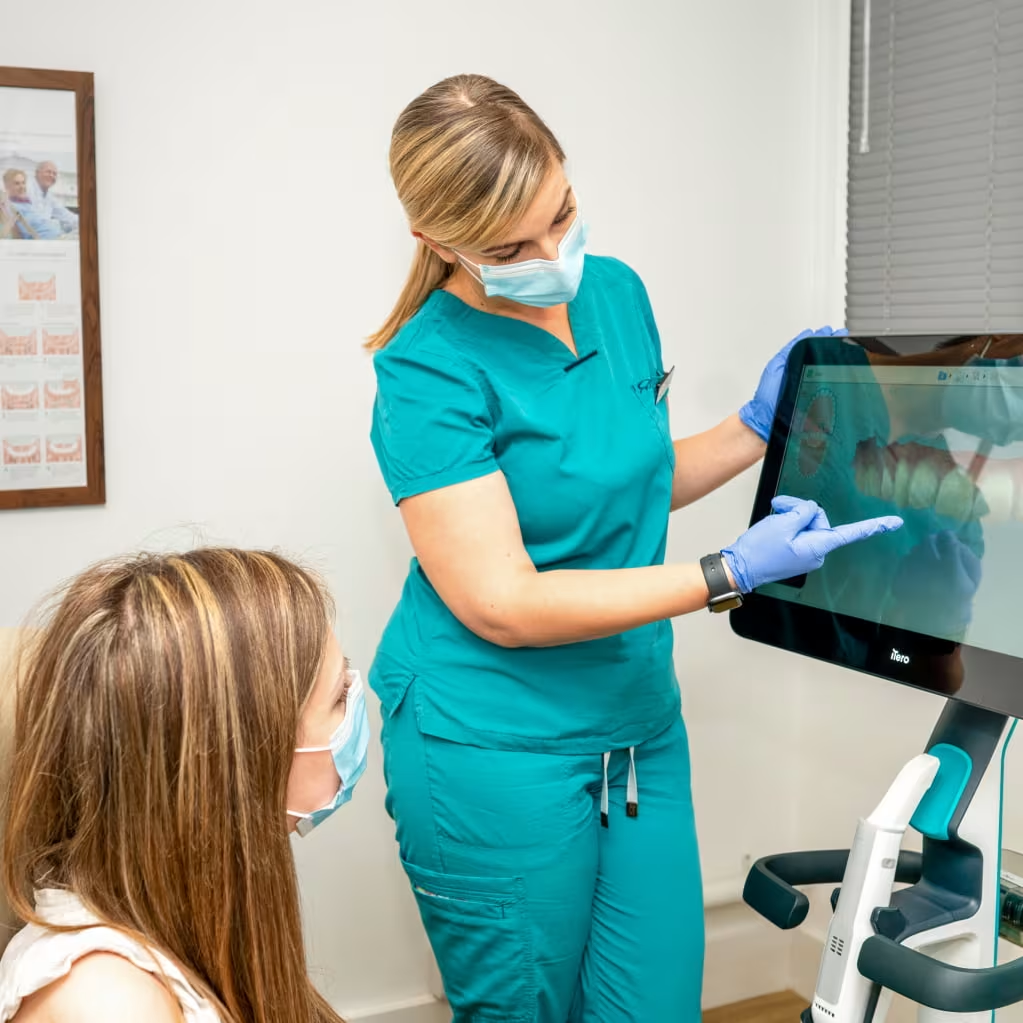
At The Briars, jaw joint health is assessed as part of every routine examination. If you have jaw clicking that concerns you, or if you’ve noticed any of the symptoms above, it’s worth raising it at your next appointment. A clinical assessment – and where appropriate, CBCT imaging of the joint – gives a clear picture of what’s happening and what, if anything, needs to be done.
The British Dental Association has general patient information about jaw problems and TMJ disorders.
The most important message about jaw clicking is that it needs context. A long-standing, painless click in an otherwise comfortable jaw is usually not a problem. A new, painful click with restricted movement is a different matter. Your dentist can help you understand which category you’re in – and what to do about it if action is needed.
If you’d like to discuss jaw clicking or any other concerns about your jaw, get in touch with our team at The Briars to arrange an assessment.
Back to blog