One of the most appealing things about Invisalign is that the aligners are removable. You can take them out to eat, drink, brush, and for the occasional special occasion. That flexibility is genuinely one of the system’s strengths – but it also introduces a risk that fixed braces simply don’t carry. Not wearing Invisalign for the recommended 20 to 22 hours per day is one of the most common reasons treatment takes longer than planned, produces suboptimal results, or runs into problems that require additional intervention to resolve.
This article explains exactly what happens when aligners aren’t worn consistently, what the consequences look like in practice, and what to do if you’ve already fallen behind on your wear time.
Before looking at the consequences of not wearing Invisalign as prescribed, it helps to understand why the 20 to 22 hour guideline exists in the first place.
Invisalign works by applying a precise, continuous force to the teeth – gently moving them through bone in a carefully planned sequence. That force only exists when the aligner is in the mouth and seated against the teeth. The moment the aligner comes out, the force stops. Bone remodelling – the biological process that allows teeth to move – requires consistent, sustained pressure over time. Inconsistent wear disrupts this process, and the consequences can range from minor delays to significant clinical complications.
The most immediate and universal consequence of not wearing Invisalign consistently is that treatment takes longer. Every aligner in your series is designed to be worn for a specific period before progressing to the next. When wear time is insufficient, the teeth don’t move as far as they were meant to before the next aligner is fitted – and an aligner that doesn’t fit correctly because the teeth haven’t moved enough can’t do its job properly.
This typically manifests as aligners feeling tight or ill-fitting when you try to progress, and it often results in the need for additional aligners – refinements – to complete the tooth movement that should have been achieved earlier in treatment. Refinements add time and, in some cases, additional cost to your treatment journey. At The Briars, Virtual Monitoring allows Victoria to track progress between appointments and identify compliance issues early – which means that not wearing Invisalign consistently is often picked up before it becomes a significant problem.
Invisalign treatment is planned digitally – a precise sequence of movements mapped out in advance, with each aligner building on the last. Not wearing Invisalign for sufficient hours disrupts this sequence. When teeth don’t reach their planned position within the expected timeframe, subsequent aligners are no longer accurately matched to where the teeth actually are.
This is known as poor tracking, and it’s one of the most common clinical challenges in aligner treatment. Poorly tracking aligners don’t apply force in the intended direction, which can lead to unexpected tooth movements, spaces opening where they shouldn’t, or certain teeth simply not moving as planned. The further behind tracking gets, the more difficult it becomes to correct – and the more likely that refinements or intervention will be needed.
In cases where not wearing Invisalign consistently has been an ongoing pattern throughout treatment – rather than an occasional lapse – the final result may fall short of what was planned. If the teeth haven’t moved through the full sequence of positions that the treatment was designed to achieve, the outcome won’t match the digital preview that was shown at the start of treatment.
This is one of the most important things to understand about Invisalign before starting: the system is highly effective, but it is not self-correcting. The aligners follow a plan – they don’t adapt to compensate for missed wear time. The plan and the patient’s compliance have to work together for the result to be what was intended.
An aligner that fits correctly should seat smoothly and fully against the teeth with moderate pressure. When not wearing Invisalign has allowed the teeth to drift slightly back from their intended position, the next aligner in the series may feel excessively tight, painful to insert, or simply impossible to seat properly.
Forcing an aligner that doesn’t fit is not the solution – it can apply force in unintended directions and cause problems rather than solving them. If you find that an aligner isn’t seating properly, the right course of action is to contact your clinical team rather than persisting. At The Briars, Victoria and the team are always available to advise on the best approach – whether that’s going back to a previous aligner for a period, extending the wear time of the current one, or ordering refinements.
The consequences of not wearing Invisalign aren’t limited to the active treatment phase. Patients who have had compliance issues during treatment – where teeth haven’t fully reached their planned positions – may find that the retention phase is more challenging as a result. Teeth that haven’t moved cleanly through their planned positions can be less stable at the end of treatment, increasing the tendency to drift and making consistent retainer wear even more important.
This is another reason why Vivera retainers – provided as standard for Invisalign patients at The Briars – are such an important part of the treatment package. They’re made from the same precision data as your aligners and offer a level of retention that keeps your result protected even where the journey to get there wasn’t perfectly smooth.
If you’ve realised that not wearing Invisalign consistently has become a pattern, the most important thing to do is be honest with your clinical team rather than trying to catch up by rushing through aligners faster than planned. Speeding through aligners to make up for lost time is one of the most counterproductive things a patient can do – it compounds the tracking issues rather than resolving them.
At The Briars, there’s no judgement around compliance difficulties. Life gets in the way, habits slip, and the removable nature of aligners means that inconsistent wear is a reality for many patients at some point during treatment. What matters is catching it early, assessing where things stand, and adjusting the plan accordingly.
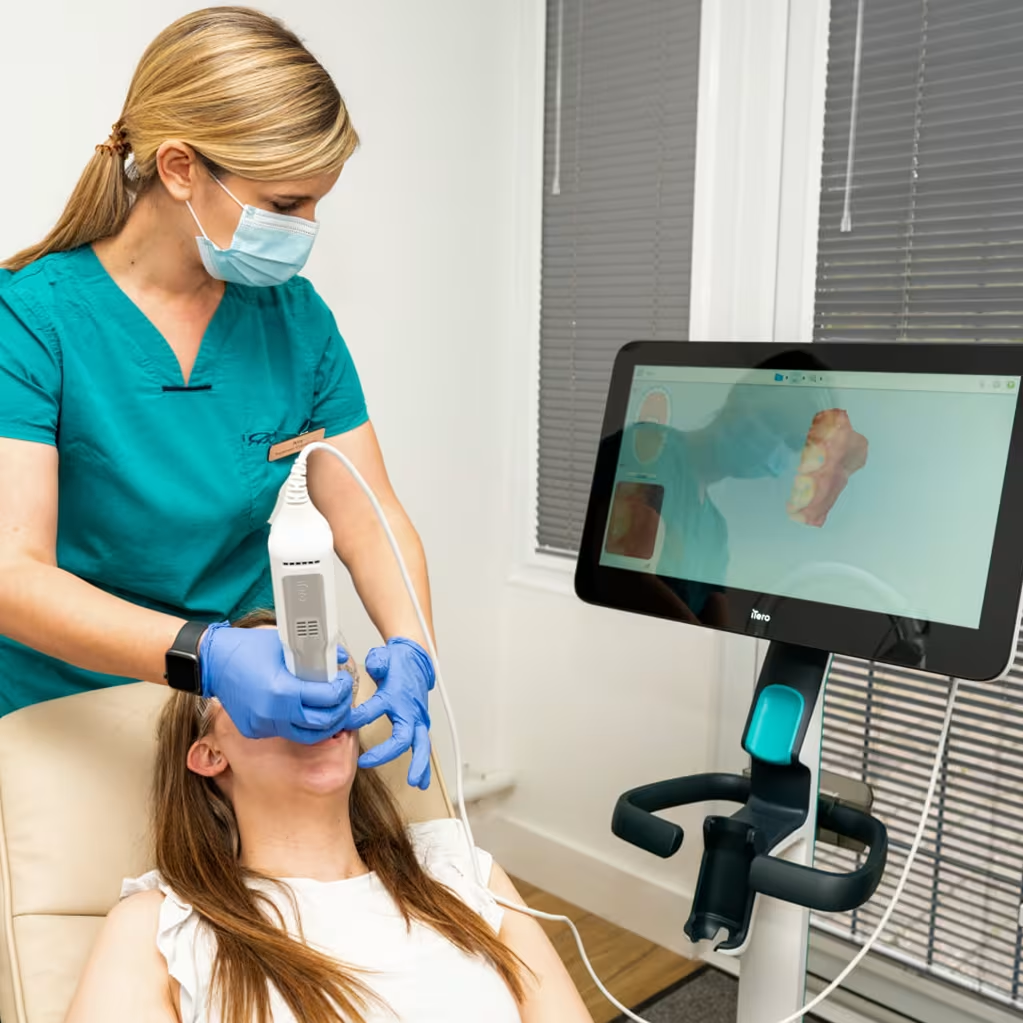
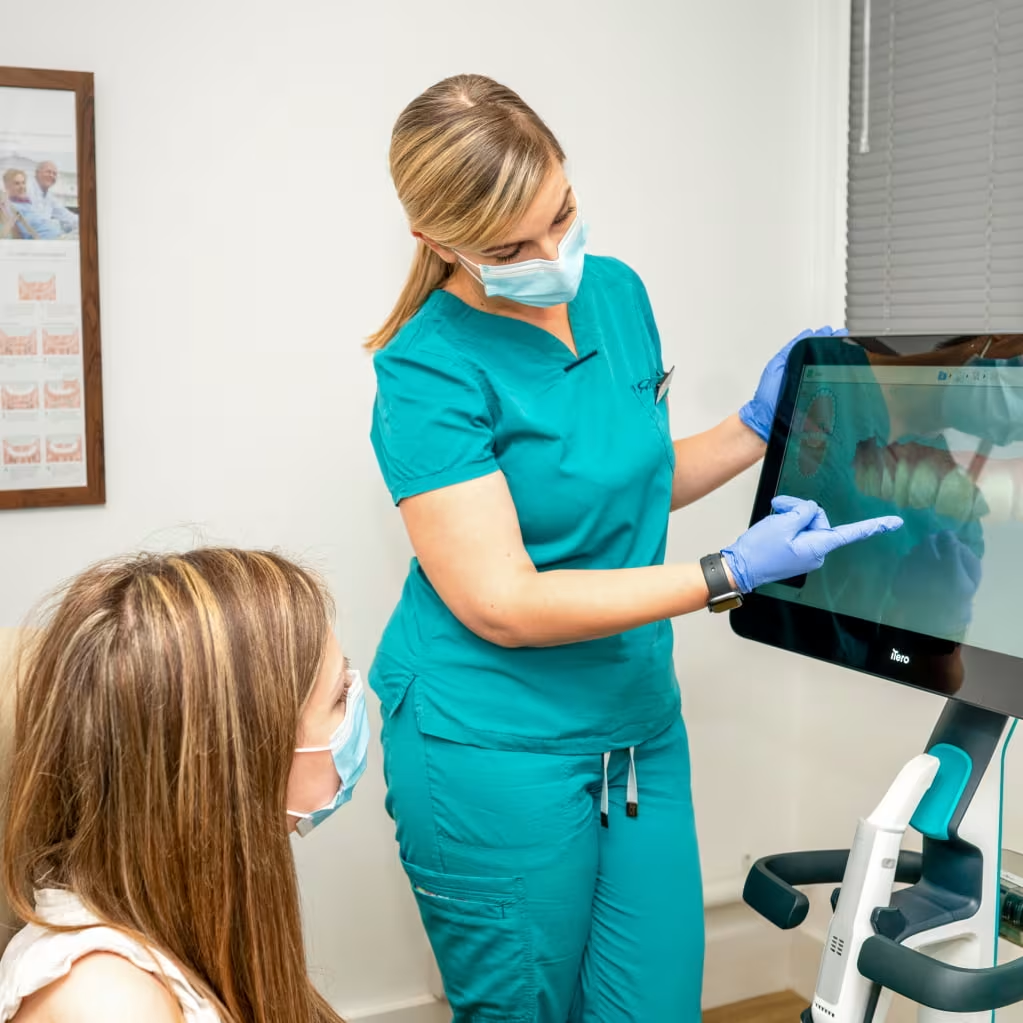
If you’re using Virtual Monitoring, your progress scans will already be giving Victoria a picture of how your teeth are tracking – which means any issues can often be identified and addressed before they’ve had a significant impact on the outcome.
The British Orthodontic Society has useful patient guidance on making the most of aligner treatment, including practical tips on building a consistent wear routine.
The cost of Invisalign treatment represents a significant investment – and not wearing Invisalign as prescribed risks reducing the return on that investment. The good news is that with a consistent routine, good communication with your clinical team, and the support of Virtual Monitoring between appointments, the vast majority of patients complete treatment successfully and achieve the result they were hoping for.
If you have concerns about your compliance or would like to discuss how your treatment is progressing, get in touch with our team at The Briars. We’re here to support you through every stage of your Invisalign journey.
Back to blog