Specialist Periodontist: 6 Brilliant Reasons You Might Need One
Most people are familiar with the idea of seeing a dentist and a hygienist. Fewer are aware that a specialist periodontist exists as a distinct clinical role – and even fewer know when seeing one might make a meaningful difference to their oral health. Yet for patients with moderate to severe gum disease, a history of periodontal problems, or complex dental treatment planned, the input of a specialist periodontist can be genuinely transformative.
This article explains what a specialist periodontist does, how they differ from a general dentist or hygienist, and the six most common reasons a patient might benefit from their care.
A specialist periodontist is a dentist who has completed additional postgraduate training – typically a three-year Masters or equivalent programme – specifically in the prevention, diagnosis, and treatment of periodontal disease and the conditions affecting the supporting structures of the teeth. In the UK, specialist periodontists are listed on the GDC’s specialist register, which you can verify here.
This level of training goes considerably beyond what a general dentist or hygienist undertakes. A specialist periodontist has in-depth knowledge of the biology of gum disease, the factors that drive it, and the full range of surgical and non-surgical options for managing it – including complex procedures that fall outside the scope of general dental practice.
At The Briars, Sharmila Khopade is our specialist periodontist. With over twelve years of experience and postgraduate training at some of the most respected institutions in the world – including advanced reconstructive and plastic surgery at the Zucchelli Institute in Bologna – Sharmila sees both patients referred from other practices and those who self-refer directly.
The most common reason a patient is referred to a specialist periodontist is that their gum disease hasn’t responded adequately to the treatment provided at a general dental practice. This isn’t unusual – periodontitis is a complex condition, and some cases require a level of expertise and technique that goes beyond what routine hygiene appointments can deliver.
Where standard scaling and root surface debridement hasn’t achieved the stability needed, a specialist periodontist can assess why – whether that’s due to the severity of the disease, the anatomy of specific teeth or root surfaces, the presence of risk factors that haven’t been fully addressed, or the need for surgical intervention to access areas that can’t be reached non-surgically.
Not all gum disease is equal. Mild gingivitis – inflammation of the gum tissue without bone loss – is manageable with good home care and professional cleaning. But moderate to severe periodontitis, which involves loss of the bone supporting the teeth, is a different clinical challenge that benefits from specialist management.
A specialist periodontist has the training and experience to manage complex periodontal presentations – including patients with significant bone loss, deep pockets around multiple teeth, furcation involvement (where gum disease has progressed into the area where the roots of multi-rooted teeth divide), and cases requiring surgical access to achieve thorough root debridement.
Some patients with advanced gum disease require surgical intervention to stabilise the condition. This might involve resective surgery – reducing pocket depths to make them more manageable long term – or regenerative surgery, which aims to restore lost bone and attachment using specialist materials and techniques.
Periodontal surgery is firmly within the scope of a specialist periodontist and generally outside the scope of general dental practice. At The Briars, Sharmila performs a range of periodontal surgical procedures, including soft and hard tissue surgeries, with a focus on achieving the best possible clinical and aesthetic outcome for each patient.
Patients with a history of periodontitis are at higher risk of developing peri-implantitis – the inflammatory condition that affects the tissue and bone around implants and can lead to implant failure. Before dental implants are placed in a patient with a periodontal history, ensuring that the gum disease is fully stable is essential.
At The Briars, Sharmila works closely with Nick French and Dave Veige, who lead implant surgery, to manage exactly this situation. Patients who need periodontal treatment before implant placement don’t have to be referred elsewhere – the specialist periodontist and the implant team work together under one roof, coordinating care so that the implant pathway progresses in the right order and at the right pace.
A specialist periodontist’s expertise isn’t limited to disease management. Periodontal plastic surgery – procedures that reshape or reposition gum tissue for aesthetic as well as functional reasons – is a significant part of specialist periodontal practice.
Patients with a gummy smile, where an excess of gum tissue is visible when smiling, can benefit from crown lengthening or gum contouring procedures that create a more balanced, proportionate appearance. Patients with gum recession – where the gum has pulled away from the tooth, exposing the root surface – may be candidates for soft tissue grafting to restore coverage and protect the tooth root.
Sharmila has particular expertise in periodontal plastic procedures, and these treatments are available at The Briars for patients seeking both functional and aesthetic improvement.
Many patients see a specialist periodontist not because they’ve self-referred, but because their general dentist or hygienist has identified a level of gum disease or complexity that warrants specialist input. This is an entirely normal and appropriate pathway – and if you’ve been told that a referral to a specialist periodontist is recommended, it’s worth taking that advice seriously rather than deferring it.
At The Briars, Sharmila accepts referrals from general dental practices across West Berkshire and beyond. If you’ve been referred for specialist periodontal care, or if you’d like to self-refer directly, you’re welcome to get in touch with our team to arrange an appointment.
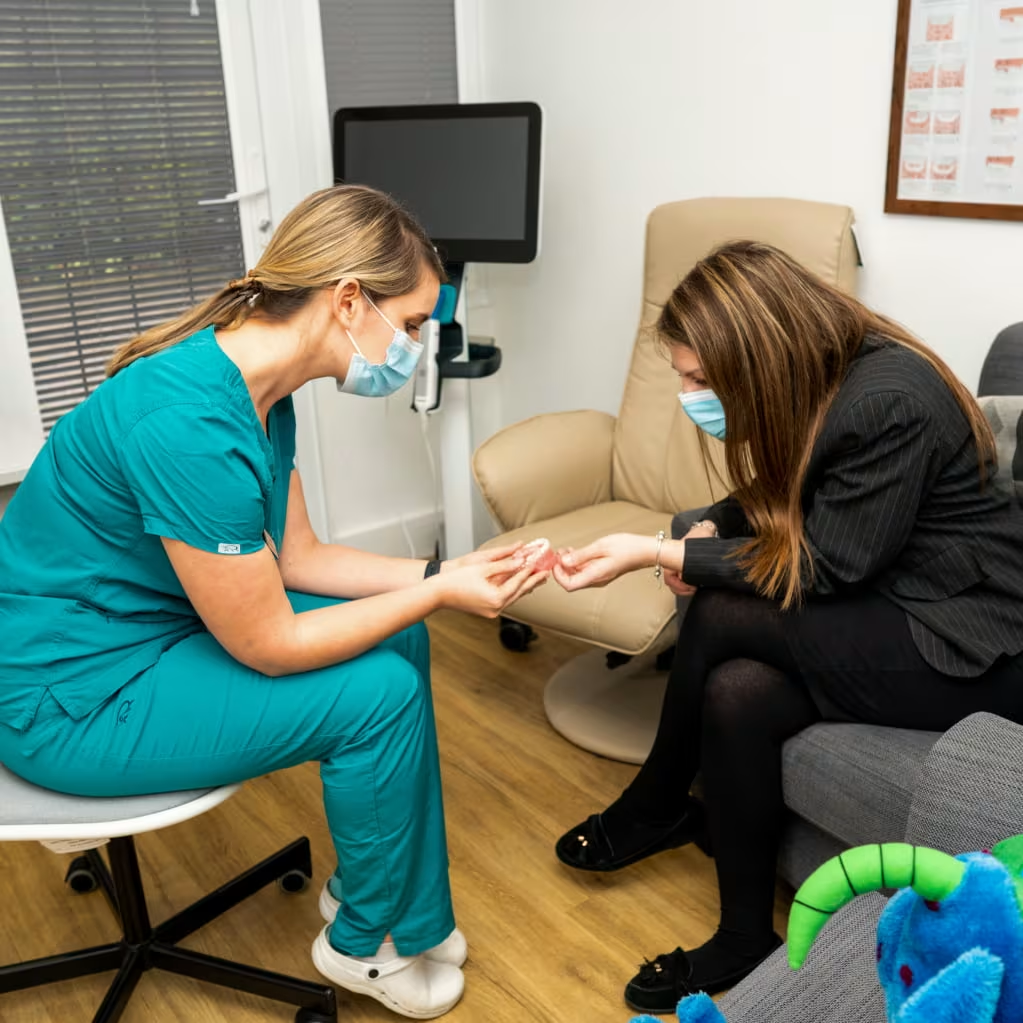
A first appointment with a specialist periodontist is primarily an assessment. Sharmila will review your dental and medical history, carry out a thorough examination of your gum health including full pocket charting, assess any X-rays or scans, and discuss her findings with you clearly and honestly.
From that assessment, she’ll outline the treatment options available – both non-surgical and surgical where relevant – along with the expected outcomes, the timeline, and any associated costs. Nothing is decided without your full understanding and agreement, and you’ll leave the appointment with a clear picture of your periodontal health and the path forward.
A periodontal consultation at The Briars is priced at £222. Sharmila also works closely with our hygiene team – Meryl Colley, Amiee Mosher, and Monica Robotin – to ensure that patients receiving specialist treatment have the professional maintenance support they need throughout and beyond their active treatment.
The British Society of Periodontology has comprehensive patient information about gum disease, specialist care, and what to expect from a specialist periodontist at bsperio.org.uk.
If you’ve been struggling with gum disease, have been told your pockets are deep or your bone levels are reduced, are planning implants with a periodontal history, or simply want the reassurance of a specialist opinion on your gum health, seeing a specialist periodontist is always a worthwhile step.
At The Briars, Sharmila is available for both direct and referred appointments. Get in touch with our team to arrange your periodontal consultation – we’ll make sure you’re in the right hands from the very first appointment.
Back to blog